
The short answer
Camp David produced two frameworks on 17 September 1978, not a single comprehensive peace settlement. Jimmy Carter’s mediation helped Anwar Sadat and Menachem Begin reach an agreement, alongside sustained work by their diplomatic teams. One track led toward an Egypt–Israel treaty; the broader Palestinian autonomy track did not achieve its intended settlement. Reading the tracks separately makes the achievement and its limits clearer.
Three documents, different functions
Frameworks, treaty and implementation are not interchangeable
The documents had different scopes, participants and next steps.
| Document or stage | Purpose | What remained to be done |
|---|---|---|
| 1978 regional framework | Proposed negotiations and transitional Palestinian self-government | Agree participation, powers, security and final status |
| 1978 Egypt–Israel framework | Set principles and a three-month treaty target | Negotiate and conclude the actual treaty |
| 1979 Egypt–Israel treaty | Specified bilateral peace, recognition, withdrawal and security obligations | Exchange ratification instruments and implement phased changes |
Chronology
A timeline of the turning points
Sadat opened direct contact
His journey to Jerusalem created an opening, but subsequent talks did not resolve the main territorial and political differences.
The summit began
Carter hosted Sadat, Begin and their delegations at the presidential retreat in Maryland.
Diplomatic teams examined regional obstacles
A surviving Vance–Kamel memorandum records concerns over sovereignty, Palestinian rights and wider Arab participation.
Two frameworks were agreed
Sadat and Begin signed the documents, witnessed by Carter, setting a bilateral treaty goal and a broader negotiating framework.
Treaty negotiations continued
Disputes over implementation and regional obligations delayed the treaty beyond the frameworks’ three-month target.
Egypt and Israel signed the treaty
The separate agreement prescribed peace, recognition, phased Sinai withdrawal and security arrangements; it did not complete the wider autonomy process.
The summit followed an opening that had not yet become a settlement
The Camp David talks grew from earlier diplomacy rather than beginning with an isolated presidential invitation. Carter and Secretary of State Cyrus Vance had pursued negotiations during 1977. Sadat’s visit to Jerusalem that November opened direct Egyptian–Israeli contact, but meetings afterward left major differences unresolved. Egypt sought the recovery of territory and a wider settlement; Israel’s government insisted on security arrangements and disputed the terms of withdrawal and Palestinian self-government.
A September 1978 memorandum of an American–Egyptian meeting shows how regional concerns complicated the bilateral opening. Foreign minister Mohamed Ibrahim Kamel stressed sovereignty and the need to safeguard Palestinian rights. Participants discussed Jordanian involvement and support from other Arab governments. These were questions about who could accept and implement an agreement, not simply whether three leaders could announce one.
Carter’s mediation depended on diplomatic teams and difficult bargaining
The summit ran from 5 to 17 September at Camp David in Maryland. Carter devoted sustained attention to the negotiations and helped keep the process moving when direct discussions became difficult. American drafts and revisions offered ways to narrow disagreements. The American role was substantial, but Sadat and Begin had to make decisions their own governments would defend, and their delegations brought different priorities to the table.
The record also makes the supporting work visible. The 6 September meeting included Vance, Brzezinski, Atherton, Saunders, Quandt and Ambassador Eilts, alongside Kamel and other Egyptian officials. They considered schedules, regional participation and the risks of failure. Diplomacy consisted of preparatory exchanges, separate meetings, drafting and consultation as well as the leaders’ personal interventions. A successful summit required positions to become workable commitments.
The Egypt–Israel framework set a treaty goal, not immediate withdrawal
One document was the Framework for the Conclusion of a Peace Treaty between Egypt and Israel. It set a goal of negotiating a treaty within three months. Its central exchange linked Egyptian sovereignty and Israeli withdrawal from the Sinai with normal relations and security provisions. It also addressed navigation, airfields and the placement of forces. The timetable separated reaching an agreement from carrying out territorial and military changes.
The later treaty gave those commitments a more detailed legal and operational form. It required withdrawal of Israeli forces and civilians from Sinai, limited-force arrangements and a process for establishing normal relations. These provisions demonstrate why a declaration of agreement did not itself move armies, transfer facilities or create diplomatic relations overnight. Those changes needed agreed procedures and implementation.
The broader framework proposed Palestinian autonomy through stages
The other document, a Framework for Peace in the Middle East, proposed a negotiating process for the West Bank and Gaza. It envisaged elected self-government and a transitional period lasting no more than five years. That period would begin when the elected authority was established and inaugurated, not automatically on the day the framework was signed. Negotiations on final status were to begin by the transition’s third year.
The arrangements anticipated participation by Egypt, Israel, Jordan and Palestinian representatives, with powers and security details still to be negotiated. The document did not establish a Palestinian state or resolve final borders. Its combination of promised participation, transitional authority and deferred final decisions left major political questions open. The autonomy track consequently depended on further agreements, not merely on implementing an already completed settlement.
Sources for this section: [1]
A separate treaty required another round of negotiations in 1979
The hoped-for treaty was not completed within three months. Further negotiations encountered disputes over withdrawal timing, Egypt’s regional commitments and other implementation questions. Carter returned to intensive mediation in March 1979. Egypt and Israel finally signed their peace treaty in Washington on 26 March, with Carter witnessing the agreement. The interval between summit and treaty was part of the diplomatic work, not an administrative formality.
The treaty’s own terms separated signature, ratification and withdrawal. Article I tied the ending of the state of war to the exchange of ratification instruments. The withdrawal protocol prescribed phases and a final deadline measured from that exchange. Normal relations and security arrangements likewise had procedures. The sequence matters: frameworks in 1978 provided a path; a treaty in 1979 specified binding bilateral obligations and how to carry them out.
The bilateral achievement did not complete the broader peace project
The two tracks did not advance equally. Egypt and Israel obtained a treaty regulating their relationship, while later autonomy negotiations failed to bridge disagreements over Palestinian self-government, settlements and other issues. The framework’s proposed negotiating participants and territorial process were not the same thing as a comprehensive agreement accepted and implemented by all concerned. That gap limited the broader ambitions attached to Camp David.
Carter deserves recognition for persistent mediation without becoming the only actor in the story. Sadat’s initiative, Begin’s decisions and the work of diplomatic teams were essential, while regional objections and unresolved Palestinian questions shaped the limits. The central historical distinction is between a major bilateral peace agreement and a completed settlement of the Arab–Israeli conflict. Camp David advanced the former through further negotiations; it did not deliver the latter.
Biography context
Explore United States through connected lives
Connected biographies
Place the summit within Carter’s public life
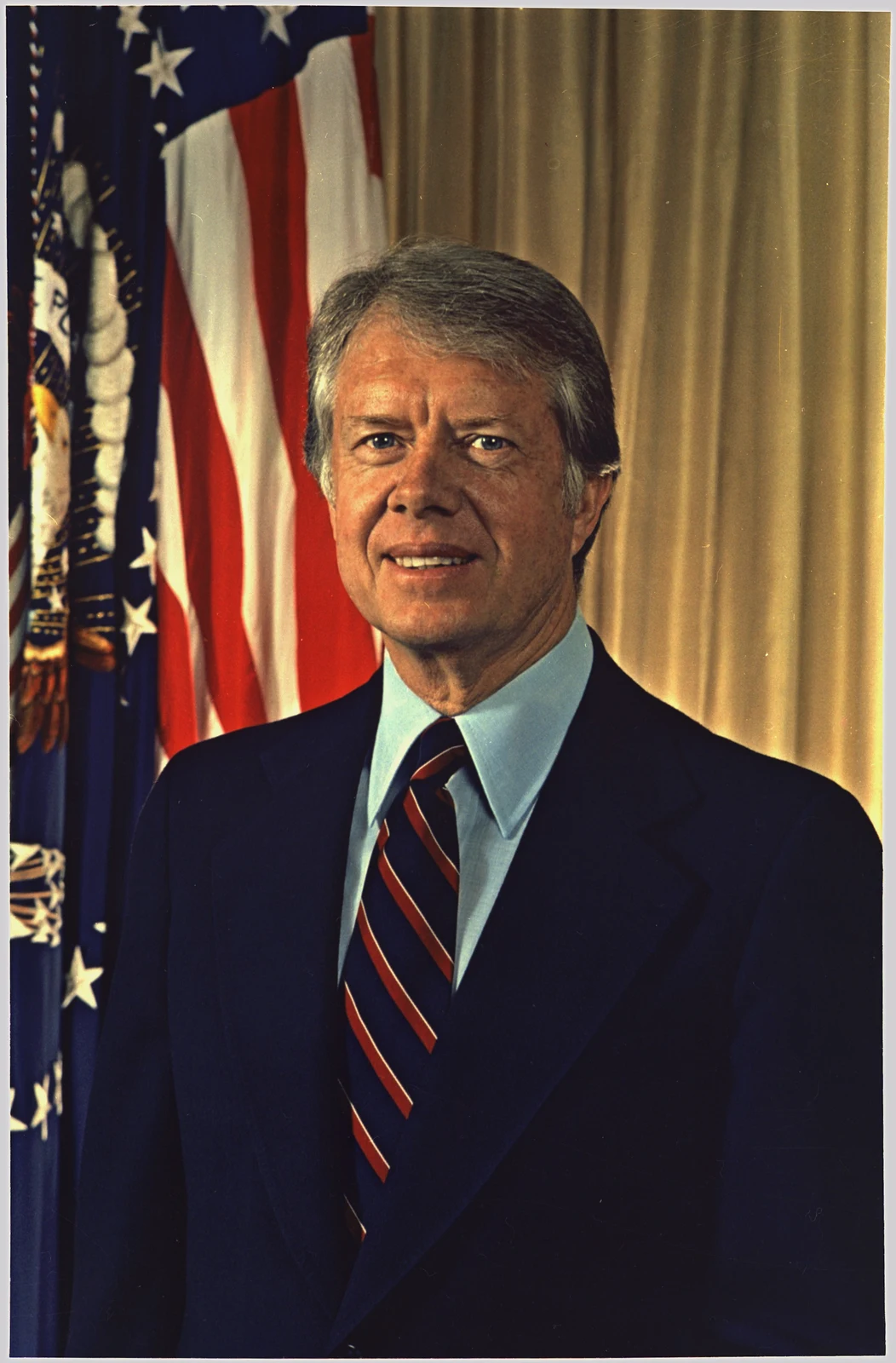
1924–2024
Jimmy Carter
39th United States president, former Georgia governor and humanitarianA naval officer and Georgia farmer who became president, then built a long second public career in conflict mediation, election observation, health and housing.Read biographyQuick answers
Common questions
- When were the Camp David Accords agreed?
- The two frameworks were agreed on 17 September 1978 after the summit held from 5 to 17 September. The separate Egyptian–Israeli treaty was signed on 26 March 1979.
- Was Carter the only person responsible for the agreement?
- No. His mediation was important, but Sadat, Begin, their delegations, American diplomats and earlier initiatives all contributed. The decisions and implementation required more than one leader’s efforts.
- Did the autonomy framework create a Palestinian state?
- No. It proposed a staged process for elected self-government and further negotiations on final status. It did not establish statehood or settle the major unresolved territorial and political questions.
- Did Israel withdraw from Sinai as soon as the frameworks were signed?
- No. The 1978 documents set principles for a treaty. The 1979 treaty and its protocol prescribed phased withdrawal and security arrangements tied to ratification and implementation.
Primary and institutional sources
How this history was checked
The original frameworks and treaty govern the document comparison. A contemporaneous diplomatic memorandum reveals the teams and regional concerns; the State Department historical account supplies sequence and outcomes and was accessed as substantive cached/indexed HTML rather than assumed live-page availability. This article was reviewed on 21 October 2026.
- Public Papers of Jimmy Carter, via American Presidency ProjectCamp David: documents agreed, 17 September 1978
- U.S. Department of State, Foreign Relations of the United StatesDocument 30: Vance–Kamel memorandum of conversation, 6 September 1978
- U.S. Department of State, Office of the HistorianCamp David Accords and the Arab-Israeli Peace Process; substantive cached historical body
- Yale Law School, Avalon ProjectPeace Treaty between Israel and Egypt, 26 March 1979
- National Archives cooperation mirror, Wikimedia CommonsCarter portrait 558522: exact original, provenance and rights