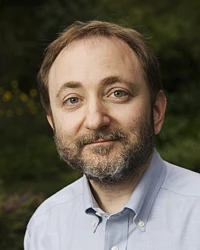
In this biography
Quick facts
- Born
- 1948
- Birthplace
- Alice, TX, USA
- Country
- United States
- Nationality
- Not independently established
- Known for
- Development of CTLA-4 checkpoint blockade as an approach to cancer immunotherapy
Why this life matters
This profile concerns that research history and its evidence, rather than advice about choosing or receiving a treatment.
Timeline
Key moments
Birth
Born in Alice, TX, USA.
Nobel recognition
Received the Nobel Prize in Physiology or Medicine.
An immunologist asking how T cells are controlled
James Allison was born in Alice, Texas, in 1948 and received his doctorate at the University of Texas at Austin in 1973. His official career account includes research at Scripps, the University of Texas, Berkeley and Memorial Sloan Kettering. The path centres on immunology rather than the direct chemical destruction of tumour cells. Understanding how a T cell becomes activated, and how that activation is restrained, supplied a basis for asking whether an immune response against a tumour could be altered.
Releasing an inhibitory signal
Dana Leach, Matthew Krummel and Allison reported a CTLA-4-blockade study in 1996. Their paper treated CTLA-4 as a negative regulator of T-cell activation and investigated what happened when that inhibitory function was blocked. The reported tumour responses included rejection and resistance to a subsequent tumour exposure in the experimental setting. The proposed target was immune regulation. This differs from claiming that an antibody simply poisoned tumour cells, and it does not make a preclinical result identical to a demonstrated outcome in patients.
Sources for this section: [4]
A new treatment principle with defined limits
Allison and Tasuku Honjo shared the 2018 medicine prize for cancer therapy through inhibition of negative immune regulation. Their work established a powerful treatment principle, but the award does not imply that every tumour responds or that removing an immune restraint is harmless. Allison's historical contribution becomes clearer when its stages remain distinct: investigation of T-cell control, experimental interference with an inhibitory pathway and later therapeutic development. This profile concerns that research history and its evidence, rather than advice about choosing or receiving a treatment.
Quick answers
Frequently asked questions about James P. Allison
- What is James P. Allison known for?
- Development of CTLA-4 checkpoint blockade as an approach to cancer immunotherapy.
Keep exploring
Lives connected to this story
- E. Donnall Thomas
Compare the related experimental question and research career.
- Peter J. Ratcliffe
Compare the related experimental question and research career.
Sources and further reading
Explore the evidence
These references support the biography and offer further reading. Official records, first-person accounts and independent reporting provide different perspectives; image records document attribution and licensing.
- 1. Nobel Prize OutreachJames P. Allison — Facts
Source scope: Birth/death and award metadata; short official work summary.
- 2. Nobel FoundationJames P. Allison — Biographical
Source scope: Selected historical passages, as recorded in the research evidence ledger; not a full-document reading claim.
- 3. Nobel FoundationJames P. Allison — Nobel lecture
Source scope: Selected historical passages, as recorded in the research evidence ledger; not a full-document reading claim.
- 4. Leach, Krummel and Allison / Science, 1996; indexed primary abstract via CiNiiEnhancement of Antitumor Immunity by CTLA-4 Blockade
Source scope: Primary abstract read: negative T-cell regulation, in-vivo tumour rejection and secondary-exposure resistance. No clinical response percentage or detailed protocol inferred.