In this biography
Quick facts
- Born
- 1920
- Died
- 2012
- Birthplace
- Mart, TX, USA
- Country
- United States
- Nationality
- Not independently established
- Known for
- Development of bone-marrow transplantation as a treatment for human disease
Why this life matters
The history involved establishing donor-cell survival, managing compatibility and evaluating whether the disease was controlled—related achievements that could not be inferred from one another without evidence.
Timeline
Key moments
Birth
Born in Mart, TX, USA.
Nobel recognition
Received the Nobel Prize in Physiology or Medicine.
A medical family and an interest in marrow
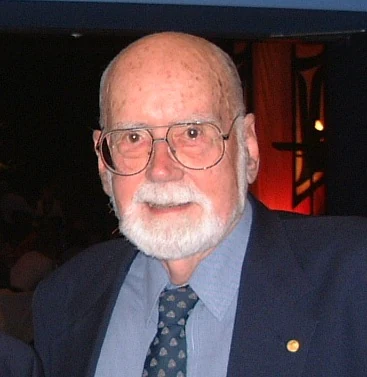
Edward Donnall Thomas was born in Mart, Texas, in 1920. His father was a rural physician, and his education took him through chemistry at Texas and medical study at Harvard. His Nobel autobiography describes an early interest in bone marrow and leukaemia, influenced by Sydney Farber and by experiments on protection from irradiation. He became interested in whether living donor cells, rather than merely a soluble stimulating factor, explained the protective effect of marrow infusions.
A graft that cannot be sewn into place
Thomas's programme pursued marrow transplantation through experimental work and clinical investigation. His lecture distinguishes this problem from organ surgery: the infused cells must survive and establish function rather than be attached as one intact organ. Early identical-twin marrow grafts demonstrated recovery after intensive irradiation, but recurrence of leukaemia raised a separate question about controlling the underlying disease. That distinction between engraftment and disease outcome remained essential as the programme addressed compatibility and graft-versus-host effects.
A collaborative clinical research history
Thomas shared the 1990 medicine prize with Murray for organ and cell transplantation. His award affiliation was the Fred Hutchinson Cancer Research Center in Seattle, and he died in 2012. His autobiographical account credits an extended history of animal experiments, clinical colleagues and cell-based observations. The contribution should not be compressed into a claim that an infusion automatically replaces a patient's marrow successfully. The history involved establishing donor-cell survival, managing compatibility and evaluating whether the disease was controlled—related achievements that could not be inferred from one another without evidence.
Quick answers
Frequently asked questions about E. Donnall Thomas
- What is E. Donnall Thomas known for?
- Development of bone-marrow transplantation as a treatment for human disease.
Keep exploring
Lives connected to this story
- Joseph E. Murray
Compare the related experimental question and research career.
- George H. Hitchings
Compare the related experimental question and research career.
Sources and further reading
Explore the evidence
These references support the biography and offer further reading. Official records, first-person accounts and independent reporting provide different perspectives; image records document attribution and licensing.
- 1. Nobel Prize OutreachE. Donnall Thomas — Facts
Source scope: Birth/death and award metadata; short official work summary.
- 2. Nobel FoundationE. Donnall Thomas — Biographical
Source scope: Selected historical passages, as recorded in the research evidence ledger; not a full-document reading claim.
- 3. Nobel FoundationE. Donnall Thomas — Nobel lecture
Source scope: Selected historical passages, as recorded in the research evidence ledger; not a full-document reading claim.