In this biography
Quick facts
- Born
- 16 March 1751
- Died
- 28 June 1836
- Birthplace
- Port Conway, Virginia, British America
- Country
- United States
- Nationality
- Not independently established
- Known for
- Constitutional design, the Bill of Rights and the War of 1812.
- College graduation
- College of New Jersey, 1771
- Constitutional Convention
- Delegate, 1787
- Secretary of state
- 1801–1809
- Presidency
- 1809–1817
Why this life matters
His career connects constitution making, legislative negotiation, party organisation and the difficult exercise of executive power.
Timeline
Key moments
Birth
Born at Port Conway on 16 March.
College
Graduated from the College of New Jersey, later Princeton.
Constitutional Convention
Helped develop and negotiate a stronger federal system.
Amendments
Advanced a bill of rights in the first federal Congress.
Public debt debate
Proposed a compromise between original and present debt holders.
Secretary of state
Served under Thomas Jefferson.
Presidency
Led the government through the War of 1812.
Death
Died on 28 June.
Education and revolutionary government
James Madison was born at Port Conway, Virginia, on 16 March 1751. His family’s plantation resources supported an education that included the College of New Jersey, from which he graduated in 1771. Enslaved labour at Montpelier formed part of the material foundation of that privileged political life.
He entered Virginia politics during the Revolution and supported religious liberty rather than an established church’s control of civic standing. Service in the Continental Congress exposed him to the Confederation’s difficulties in raising revenue and coordinating the states. These practical problems helped direct his attention toward a federal government with reliable powers of its own.
Designing and defending a new Constitution
In 1787 Madison arrived at the Philadelphia convention with extensive preparation and helped develop the Virginia Plan. He argued for a stronger national government, but the resulting Constitution emerged from bargaining among delegates, including compromises he did not initially favour. His importance lies in sustained preparation, argument and negotiation rather than sole authorship.
During ratification he joined Alexander Hamilton and John Jay in writing The Federalist. He also confronted demands for a declaration of rights. In the first federal Congress he advanced amendments, helping to turn a contested ratification promise into the protections later known as the Bill of Rights. Constitution making continued through legislation and public debate after the convention closed.
Sources for this section: [1]
A government supporter becomes an opposition organiser
Madison soon disagreed with Hamilton about the direction of federal policy. Their 1790 dispute over public debt concerned both national credit and the treatment of people who had sold their wartime securities. Hamilton defended the claims of present holders; Madison proposed dividing the recognised benefit between current owners and original sufferers.
Madison’s reported speech distinguished four groups rather than simply condemning every buyer as a speculator. He recognised that current holders had valid claims while arguing that wartime sellers had suffered from the government’s earlier failures. The disagreement over finance, together with wider constitutional and foreign-policy divisions, helped bring Madison and Jefferson together in Republican opposition.
From Jefferson’s cabinet to wartime president
As secretary of state from 1801 to 1809, Madison worked within Jefferson’s administration during territorial expansion and growing disputes over Atlantic commerce. British interference with American shipping and the European wars created pressures that diplomacy and commercial restrictions failed to resolve.
Madison succeeded Jefferson as president in 1809. In 1812 he asked Congress for war, and Congress declared it against Britain. Military preparation proved inadequate, and British forces burned public buildings in Washington in 1814. The conflict demonstrated how constitutional authority to conduct war could coexist with shortages, divided opinion and serious administrative weakness.
Sources for this section: [1]
Retirement and the limits of the republican settlement
Madison left the presidency in 1817. In retirement he remained involved in public questions and the University of Virginia, becoming its rector after Jefferson’s death. He died on 28 June 1836, having lived long enough to see the constitutional system face conflicts far beyond the convention’s immediate concerns.
His defence of liberty did not dismantle slavery in his own household. He also supported colonisation schemes that proposed removing free Black Americans to Africa, a policy grounded in racial assumptions and contested by many of those it purported to assist. The institution he helped build offered resources for later rights claims while preserving exclusions that his own public career did not overcome.
Sources for this section: [1]
Quick answers
Frequently asked questions about James Madison
- Did Madison write the Constitution alone?
- No. He prepared, proposed and negotiated influential ideas within a convention whose final text reflected many delegates and compromises.
- Did Madison propose paying every debt holder twice?
- No. His reported 1790 speech proposed a composition between present holders and original sellers, not two full payments of the same claim.
Keep exploring
Lives connected to this story
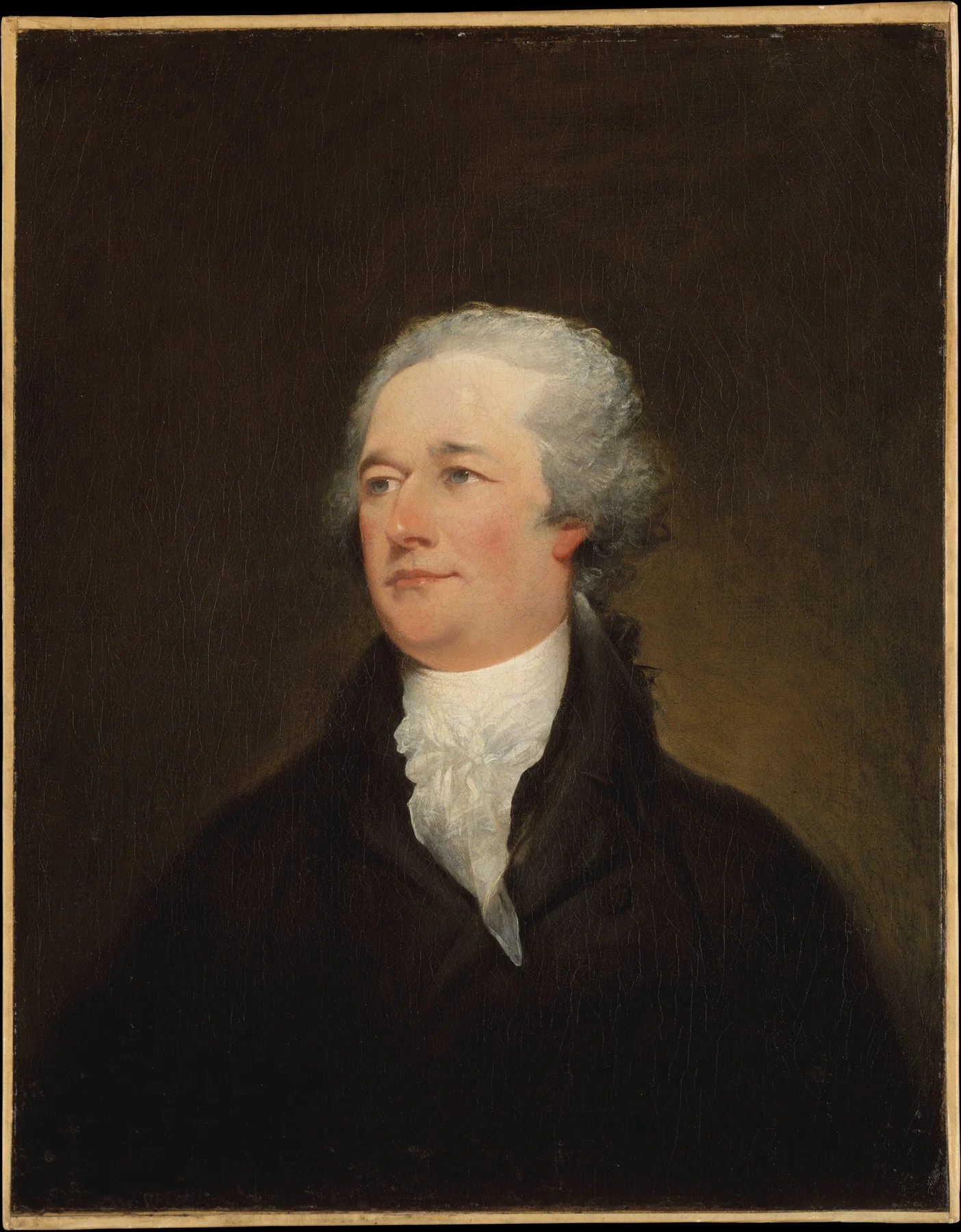
- Alexander Hamilton
Compare collaborators in ratification who divided over federal finance.
- Thomas Jefferson
Madison organised a party and served in the cabinet with Jefferson.
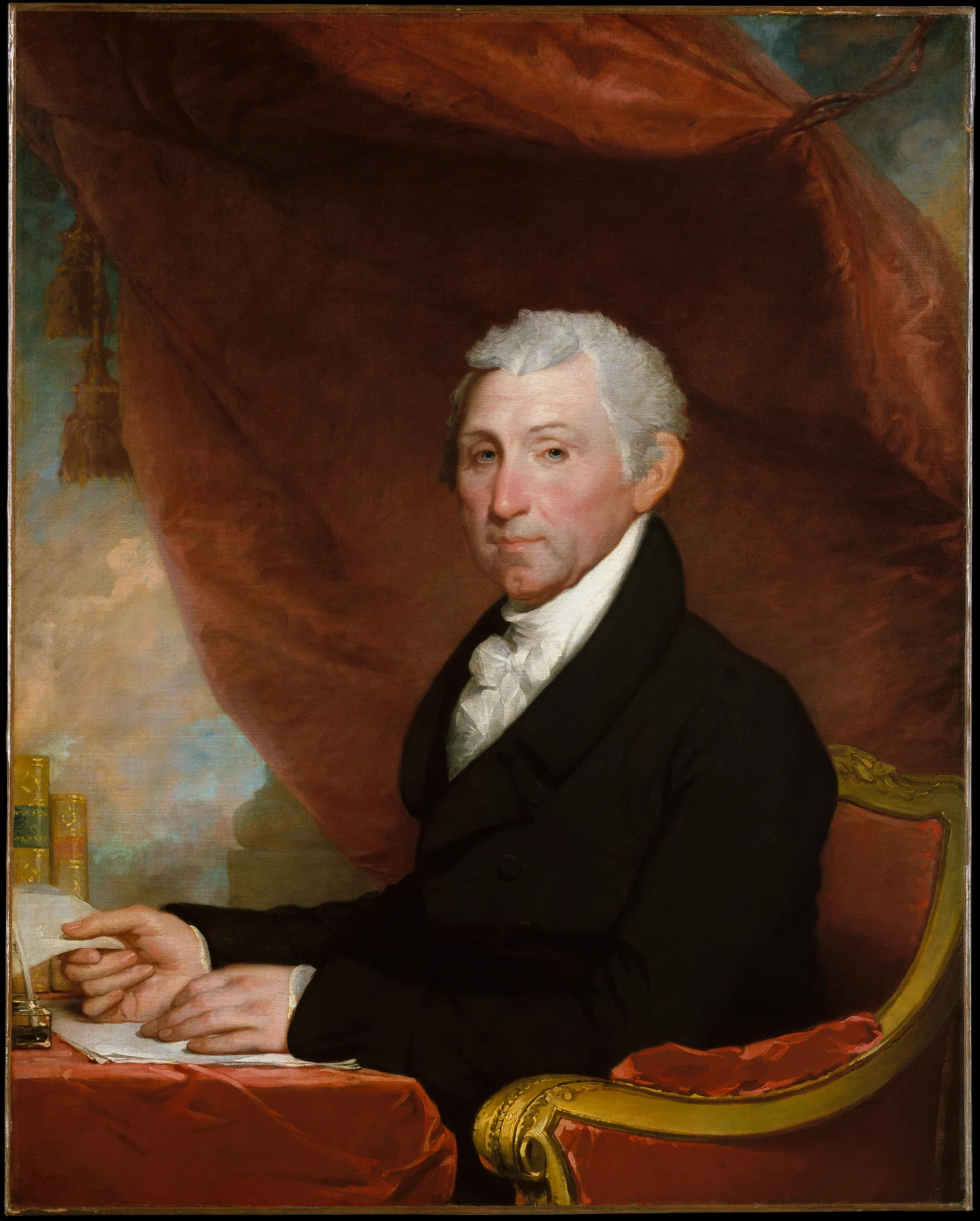
- James Monroe
Monroe joined Madison’s wartime administration and succeeded him as president.
Sources and further reading
Explore the evidence
These references support the biography and offer further reading. Official records, first-person accounts and independent reporting provide different perspectives; image records document attribution and licensing.
- 1. Miller Center, University of VirginiaJames Madison: Life in Brief
Complete Tyson Reeder biographical essay read. Father-of-Constitution/prime-minister shorthand is replaced with actual roles; no complete convention diary claimed read.
- 2. U.S. House of Representatives, History Art & ArchivesMadison, James, Jr.: biographical directory
Actual indexed directory opening body read for Port Conway, 16 March 1751, 1771 graduation and early official roles. Full bibliography not read.
- 3. Founders Online, National Archives / Madison PapersDiscrimination between Present and Original Holders of the Public Debt,[11 February]1790
Actual document lines 26–78 read, including four creditor classes, proposed composition and editorial provenance. It is the Congressional Register’s report; Lloyd’s surviving notes do not include this speech. Not a verbatim audio transcript. Direct origin 202 empty.
- 4. Founders Online, National Archives / Hamilton PapersReport Relative to a Provision for the Support of Public Credit,[9 January 1790]
Actual web-tool original text lines 30–125 read: report date/14 January communication, borrowing/credit rationale, original and current holders, transfer security and discrimination. Full report/enclosures not read; direct origin 202 empty.