In this biography
Quick facts
- Born
- 20 October 1977
- Birthplace
- Cambodia
- Country
- Cambodia
- Nationality
- Cambodian
- Known for
- Succeeding Hun Sen in 2023 after a career in the Royal Cambodian Armed Forces
- Prime minister
- From 22 August 2023
- Political party
- Cambodian People’s Party
- Military role
- Former commander of the Royal Cambodian Army
- Education
- West Point, NYU and the University of Bristol
Why this life matters
Hun Manet’s rise links elite education and military command with Cambodia’s first transfer of the premiership in nearly four decades, while leaving the ruling party’s dominance intact.
Timeline
Key moments
Graduated from West Point
Completed the United States Military Academy before postgraduate study in economics.
Dated his Bristol doctoral dissertation
His economics dissertation examined firm-size distribution and structural integration across countries; this is the document’s date, not an asserted degree-conferral date.
Became army commander
Took command of the Royal Cambodian Army and continued rising through the armed forces.
Named future CPP candidate
The ruling party endorsed him as its future candidate for prime minister.
Became prime minister
The National Assembly approved his government on 22 August after Hun Sen stepped down.
Presented the Pentagonal Strategy
Introduced Phase I of the new government’s development strategy at the first plenary cabinet meeting.
Met the US defence secretary
Discussed military training exchanges, peacekeeping and demining with Lloyd Austin in Phnom Penh.
Set out civil-service reform priorities
Addressed ASEAN civil-service leaders on public administration, digital capacity and service delivery.
West Point and postgraduate economics
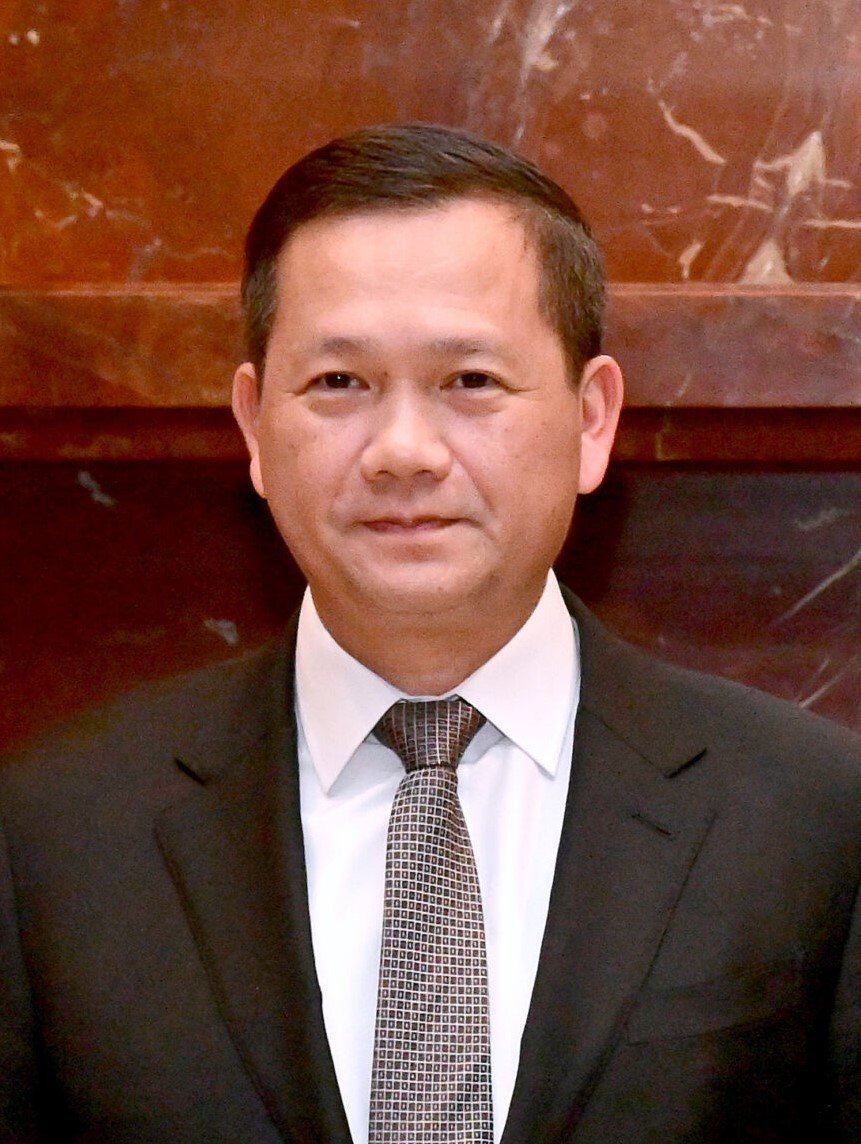
Hun Manet, the son of Hun Sen and Bun Rany, combined military education with postgraduate study in economics. He graduated from the United States Military Academy at West Point in 1999 and obtained a master’s degree in economics from New York University. His subsequent doctoral work was undertaken at the University of Bristol.
The dissertation published by Cambodia’s Council of Ministers bears the name Manet Hun and is dated April 2009. It examines why countries have different distributions of small and large firms, and how agriculture relates to other economic sectors. That original document offers a more specific view of his academic work than the generic label “Western-educated”; its cover date should not be confused with an independently verified graduation ceremony or degree-conferral date.
Army commander, not sole commander of all armed forces
Hun Manet rose to army leadership in 2018 before entering the premiership. His titles included commander of the Royal Cambodian Army and deputy commander-in-chief of the Royal Cambodian Armed Forces. The army is one component of the wider armed forces; these appointments did not make him their sole commander-in-chief.
A Singapore Ministry of Defence record from June 2019 identifies both offices and his then rank of lieutenant-general. It documents meetings with Defence Minister Ng Eng Hen, the chief of defence force and the chief of army during a three-day visit. The record shows that his pre-premiership career included international military engagement as well as domestic command, without establishing any subsequent political outcome from those contacts.
The August 2023 succession and its political context
The Cambodian People’s Party endorsed Hun Manet as a future prime-ministerial candidate in 2021. He became prime minister on 22 August 2023 after the National Assembly approved the new government, ending Hun Sen’s long premiership. The handover changed the officeholder, not the ruling party, and Hun Sen retained significant political influence.
The electoral setting is important to that distinction. In its statement of 24 July 2023, the UK Foreign, Commonwealth and Development Office criticised the disqualification of the main opposition Candlelight Party and described the election as neither free nor fair. This is an attributed assessment, separate from the Cambodian government’s account of an orderly succession. A generational transfer should not be presented as evidence of more competitive elections by itself.
The Pentagonal Strategy and public-administration reform
Two days after taking office, Hun Manet introduced Phase I of the Pentagonal Strategy at the first plenary cabinet meeting. It set a framework for development and reform rather than a list of achievements already delivered. His government’s stated priorities combine people, roads, water, electricity and technology, with governance and reforms at the centre.
In an address to ASEAN civil-service leaders on 5 August 2026, he connected that agenda to recruitment standards, institutional coordination, performance incentives and digital skills. He also discussed changing public expectations and competition for skilled staff. These speeches identify what his administration says it intends to pursue; assessing improvements in public services requires evidence beyond the government’s own claims.
Diplomacy after the move from military to civilian office
Hun Manet continued defence diplomacy as prime minister. On 4 June 2024, US Defence Secretary Lloyd Austin met him in Phnom Penh and separately met Defence Minister Tea Seiha and Hun Sen, then president of the Senate. The US readout identified possible cooperation in disaster assistance, UN peacekeeping, demining and professional military education.
The separate meetings illustrate how the premiership, defence ministry and Senate remained distinct offices after the succession. Discussion of exchanges did not mean that every proposal had been implemented or that Cambodia had abandoned its other international relationships. His record is best followed through particular decisions and dated diplomatic records, alongside the continuing domestic questions about ruling-party dominance and institutional accountability.
Quick answers
Frequently asked questions about Hun Manet
- When did Hun Manet become prime minister?
- He became Cambodia’s prime minister on 22 August 2023 after the National Assembly approved his government. He succeeded Hun Sen within the Cambodian People’s Party rather than taking office through a change of governing party.
- Was Hun Manet commander of the Cambodian army?
- Yes. He commanded the Royal Cambodian Army and also served as deputy commander-in-chief of the Royal Cambodian Armed Forces. The army command and the wider armed-forces leadership are distinct positions; Singapore’s June 2019 record lists both of his offices.
- Where did Hun Manet study?
- He graduated from West Point in 1999, studied economics at New York University and undertook doctoral research at Bristol. His published Bristol dissertation is dated April 2009; that date is the document’s date, not a separately verified degree-conferral date.
- When was Hun Manet born?
- Hun Manet was born on 20 October 1977. The birth date is more useful for calculating his age at a particular event than an undated age figure that becomes outdated each year.
Keep exploring
Lives connected to this story
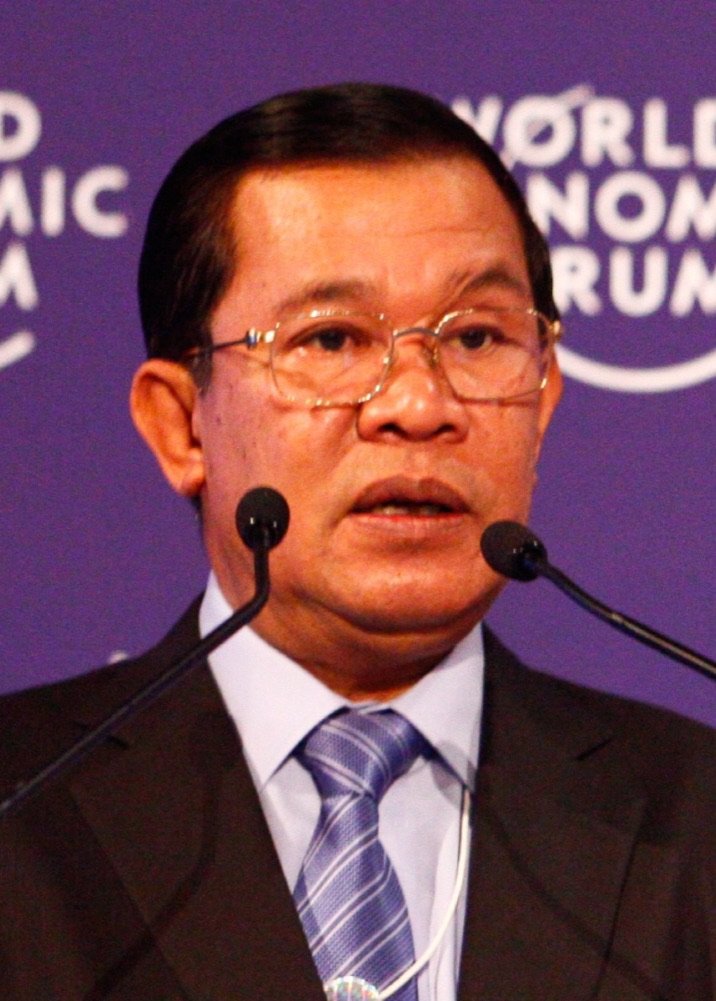
- Hun Sen
Follow the long premiership and continuing political role of the predecessor whose government Hun Manet succeeded.
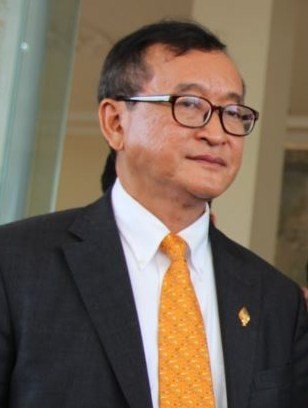
- Sam Rainsy
Read the opposition history that provides context for debates about political competition under CPP rule.
Sources and further reading
Explore the evidence
These references support the biography and offer further reading. Official records, first-person accounts and independent reporting provide different perspectives; image records document attribution and licensing.
- 1. Office of the Council of Ministers, CambodiaHun Sen’s comments on the handover — 22 August 2023
These are Hun Sen’s selected handover comments in an unofficial English translation, not National Assembly minutes or an independent assessment of electoral competition.
- 2. Manet Hun / University of Bristol; hosted by the Council of MinistersWhat Determines the Firm Size Distribution and Structural Integration? — doctoral dissertation
The original dissertation’s cover states April 2009 and names Manet Hun. It supports the subject and document date; this review does not claim to have inspected a degree-conferral register.
- 3. TIMEEducation and background of Cambodia’s incoming leader
Used for West Point and NYU education. Its reported Bristol year differs from the dissertation’s 2009 cover date; the profile does not silently equate either with a verified award date.
- 4. The Phnom Penh PostHun Manet promoted after a royal decree — September 2018
- 5. Ministry of Defence, SingaporeHun Manet’s army-command roles during his June 2019 visit
A contemporaneous foreign-government record distinguishes army commander from deputy commander-in-chief of the broader armed forces. It does not support calling him sole commander of all Cambodian forces.
- 6. UK Foreign, Commonwealth and Development OfficeStatement on the July 2023 Cambodian election
The criticism of the 2023 election is explicitly attributed to the UK government, rather than presented as a Cambodian government finding.
- 7. Office of the Council of Ministers, CambodiaIntroducing the Pentagonal Strategy — 24 August 2023
- 8. Office of the Council of Ministers, CambodiaAddress to ASEAN civil-service leaders — 5 August 2026
The dated 2026 address confirms the ongoing premiership and stated reform priorities. Government self-assessments are not treated as independently demonstrated public-service outcomes.
- 9. US Department of DefenseReadout of Lloyd Austin’s meetings with Cambodian leaders — 4 June 2024
- 10. Wikimedia CommonsPortrait and public-domain record