In this biography
Quick facts
- Born
- 5 June 1829
- Died
- 29 November 1921
- Birthplace
- Near Dufftown, Banffshire, Scotland
- Country
- Canada
- Nationality
- Not independently established
- Known for
- Financing the Canadian Pacific Railway and supporting hospitals in Montréal and Britain
- Migration
- Scotland to Montréal in 1850, after work in London
- Bank presidency
- Bank of Montreal, 1876–1881
- Railway presidency
- Canadian Pacific Railway, 1881–1888
- Later title
- Baron Mount Stephen, created in 1891
Why this life matters
His career shows how investment networks, government policy and public subsidies combined in railway development, alongside the tensions between commercial power and public responsibility.
Timeline
Key moments
Scotland, London and Montréal
Born near Dufftown, trains in commerce and joins his cousin’s importing business.
Textiles and finance
Establishes his own firm and becomes president of the Bank of Montreal.
A United States railway partnership
Works with Smith, Hill, Kittson and Kennedy on the line reorganized as the Manitoba railway.
The Canadian Pacific undertaking
Negotiates the contract, becomes first president and seeks financing through repeated crises.
Succession and philanthropy
Leaves the presidency, becomes Baron Mount Stephen and sees the Royal Victoria Hospital open.
Death in England
Dies at Brocket Hall on 29 November.
Commercial training connected Scotland with Montréal
George Stephen was born near Dufftown, Banffshire, on 5 June 1829. His father was a carpenter. After parish schooling, he apprenticed in the textile trade in Aberdeen and worked in London before joining family members in Montréal in 1850. Employment with his cousin William Stephen’s importing firm gave him a foothold in the city’s commercial networks.
He became a buyer and eventually took over the business with his brother Francis. In 1866 he established George Stephen and Company, concerned with cloth manufacturing and sales. His subsequent railway reputation grew out of this earlier experience arranging purchases, investment and credit, rather than from a career building locomotives or directing construction gangs.
Industrial investments led to a prominent banking role
Stephen’s interests extended into woollen mills, cotton manufacturing and iron production. He worked with other investors, including his cousin Donald Smith, rather than owning every enterprise alone. The Québec heritage record describes his involvement in reorganizing the Montreal Rolling Mills Company’s capital in 1869 and his expanding interests in textile companies.
He became president of the Bank of Montreal in 1876. The office brought him into contact with financiers in London and New York during a difficult economic period. His banking position and industrial investments reinforced each other, while also exposing him to scrutiny over the relationship between access to credit and the businesses in which he held personal interests.
An American railway partnership preceded the Canadian Pacific
Stephen joined Donald Smith, James J. Hill, Norman Kittson and banker John Stewart Kennedy in a venture involving the unfinished St. Paul and Pacific line. Its reorganization as the St. Paul, Minneapolis and Manitoba Railroad created a profitable connection serving the Canadian border and Winnipeg.
That American investment remained a major source of his wealth. It must be distinguished from the Canadian Pacific Railway, whose construction consumed much of his attention and collateral. The same associates could pursue overlapping interests, yet routes competing for traffic eventually strained their cooperation. Successful investment in one railway did not guarantee sufficient cash for another.
The Canadian Pacific required public help and repeated financing
A syndicate negotiated its construction contract with John A. Macdonald’s government in 1880. Stephen became the incorporated company’s first president in 1881 and left the Bank of Montreal’s board. The original package included cash, land, existing railway works and privileges; later government assistance was additional to that starting agreement.
Stephen sought investors, borrowed against assets and eventually pledged his Montréal house. Financial crises intensified as construction proceeded, and further public support proved essential. He coordinated finance while William Cornelius Van Horne managed construction and operations. Completion in 1885 was consequently the work of a company, government, contractors and many labourers, whose experience differed sharply from that of its financiers.
Political influence and the railway monopoly drew opposition
Stephen was closely associated with Conservative leaders and defended the railway’s commercial independence despite its subsidies. Its protection against competing southern lines provoked opposition in Manitoba. The monopoly was relaxed in 1888 with compensation from the federal government, illustrating that railway development also involved disputes over rates, competition and public obligations.
The scholarly biography documents political donations and the cultivation of influential allies. These relationships should be examined alongside his financial skill, without converting every contemporary accusation into a proven offence. He resigned the CPR presidency in August 1888, supporting Van Horne’s succession, and remained a director until 1893.
An English retirement included sustained hospital giving
Stephen settled in England and became Baron Mount Stephen in 1891, after receiving a baronetcy in 1886. He married Annie Charlotte Kane in 1853 and, after her death, Gian Tufnell in 1897. His family and investments continued to connect Britain, Canada and the United States.
In 1887 Stephen and Donald Smith jointly committed C$1 million towards Montréal’s Royal Victoria Hospital, which opened in 1893. He also supported the Montreal General Hospital and hospitals in Britain, including the King Edward’s Hospital Fund. He died at Brocket Hall on 29 November 1921. His philanthropy and the contested financing of his railways are both substantial parts of his historical record.
Quick answers
Frequently asked questions about George Stephen
- Was George Stephen the person who drove the last spike?
- No. Donald Smith performed that ceremony in November 1885. Stephen’s principal contribution was financing and corporate leadership.
- Did he finance the Canadian Pacific entirely from his own fortune?
- No. Personal assets mattered, but investors, borrowing, government grants and later public assistance all contributed.
- When did he stop being CPR president?
- He resigned in August 1888 and was succeeded by William Cornelius Van Horne. He remained a director until 1893.
Keep exploring
Lives connected to this story
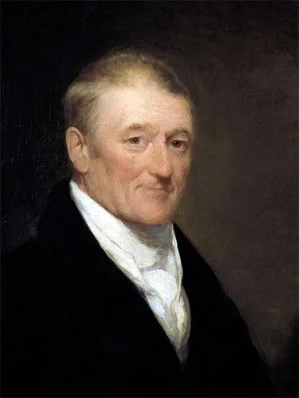
- John Molson
Compare an earlier Montréal businessman’s transport investments, banking and support for hospitals.
- John A. Macdonald
Read about the prime minister whose government negotiated the railway contract and later assistance.
Sources and further reading
Explore the evidence
These references support the biography and offer further reading. Official records, first-person accounts and independent reporting provide different perspectives; image records document attribution and licensing.
- 1. Alexander Reford / Dictionary of Canadian BiographyGeorge Stephen: textiles, banking, railway finance, political influence and later life
Actual complete biography read in the browser. Financial controversies are distinguished from established criminal findings; Stephen’s financing is separated from Van Horne’s operating role.
- 2. Parks CanadaSir George Stephen National Historic Person: 1850 migration and bank and railway presidencies
The directory contains old and newer plaque texts with different retirement wording. Departure from the CPR presidency is clearly 1888; no single precise date for all aspects of retirement is invented.
- 3. Québec Ministry of Culture and CommunicationsGeorge Stephen: Scottish origins, industrial investments, peerage and family
Useful for industrial investments and family, but its 1873 bank-presidency date conflicts with Parks Canada and the scholarly biography. The corroborated 1876 date is retained.
- 4. Ville de Montréal / Mont-RoyalGeorge Stephen and Donald Smith: the 1887 hospital commitment and 1893 opening
- 5. Reford Gardens / archived Library and Archives Canada digital collectionGeorge Stephen: textile career, banking, Estevan Lodge and later English life
Archived institutional account corroborates the textile, lodge and British-life sequence. Its death date of 27 November conflicts with the scholarly and Québec records; 29 November 1921 is used. Old museum-use wording is not treated as a current operating status.
- 6. Canadian Pacific Railway Company / Canadiana1882 printed contract and railway acts: original act, construction obligations and monopoly clauses
- 7. D. R. Owram / Royal Commission on National Passenger TransportationDirections, volume 3: historical study of CPR cash, land and privilege subsidies and later assistance
- 8. Parks CanadaChinese construction workers: Onderdonk’s contracts, unequal pay and dangerous living and working conditions
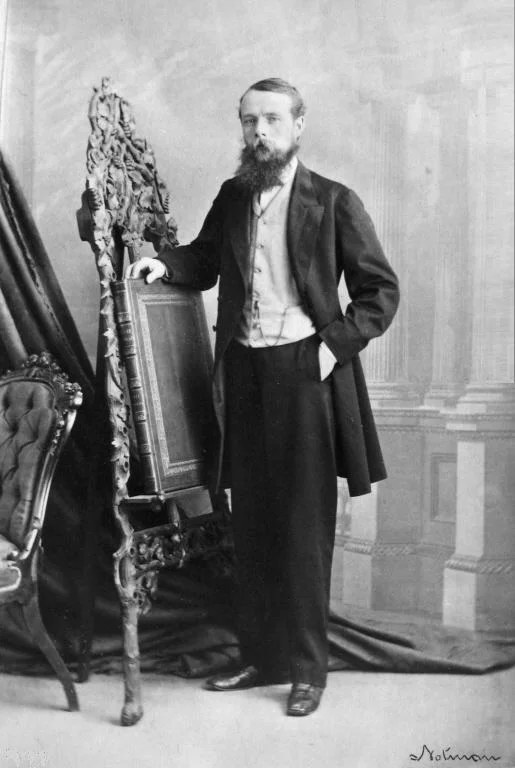
- 9. Wikimedia Commons / McCord Stewart MuseumGeorge Stephen, Montréal, 1865, by William Notman: accession I-14179.1 and uncropped file history
Named photographer William Notman died in 1891. The actual full 515 × 768 historical file precedes the 2014 crop and retains the chair, surrounding studio and signature. Public domain is grounded in the named creator’s death and the item’s explicit status, not hosting or capture year alone.
- 10. Wikimedia CommonsPD-old-100: public-domain status after the creator’s death more than a century ago