In this biography
Quick facts
- Born
- 7 September 1912
- Died
- 26 March 1996
- Birthplace
- Pueblo, Colorado, United States
- Country
- United States
- Nationality
- American
- Known for
- Building Hewlett-Packard with Bill Hewlett, developing its management practices and supporting scientific and community institutions
- Born
- 7 September 1912 in Pueblo, Colorado
- Education
- Stanford University, electrical engineering
- HP partnership
- Formalized with Bill Hewlett on 1 January 1939
- Incorporation
- Hewlett-Packard incorporated on 18 August 1947
- Federal service
- Deputy secretary of defense, 24 January 1969–13 December 1971
- Family foundation
- Established with Lucile Packard in 1964
Why this life matters
Packard’s influence extended beyond individual devices to the organization of technical work. HP’s growth, his public-service responsibilities and his support for ocean research reveal different uses—and obligations—of industrial leadership.
Timeline
Key moments
Pueblo and Stanford
Born in Colorado, Packard studied electrical engineering at Stanford and graduated in 1934.
A workshop becomes a partnership
After General Electric experience, he returned to Palo Alto. Work with Bill Hewlett led to the formal HP partnership on 1 January 1939.
A growing corporation
HP incorporated in 1947 with Packard as president. Its 1957 public offering and written corporate objectives marked further organizational growth.
Philanthropy and federal office
David and Lucile established their foundation in 1964. He left HP leadership to serve as deputy secretary of defense from 1969 to 1971.
Aquarium and research institute
The Monterey Bay Aquarium opened in 1984. A separate organization, MBARI, was incorporated in May 1987 following Packard’s support and planning.
Later years
Packard’s HP chairmanship ended in 1993. He died on 26 March 1996, leaving an enduring institutional and philanthropic legacy.
An engineer shaped by university and industry
David Packard was born in Pueblo, Colorado, on 7 September 1912. He entered Stanford University in 1930 and graduated in 1934, studying electrical engineering while also participating in athletics. There he met William, or Bill, Hewlett. Their future business drew on a friendship formed within an existing engineering community, rather than on an isolated discovery in a garage.
Packard gained industrial experience at General Electric in Schenectady, New York. In 1938 he married Lucile Salter and returned to California for further work at Stanford. Professor Frederick Terman encouraged the prospective partners and arranged fellowship support for Packard. Training, salaried employment and a university mentor helped make the uncertain move into independent enterprise possible.
Building instruments with Hewlett and household support
The partners began part-time work in the garage behind the Packards’ rented Palo Alto home in 1938, then formalized Hewlett-Packard on 1 January 1939. HP’s history records $538 in working capital, including a used drill press. It also credits Lucile Packard and Flora Hewlett’s wages with helping sustain the households and the young business. The familiar workshop story therefore involved more contributors than its two named founders.
The first product line grew from Hewlett’s audio-oscillator design, an instrument for testing sound equipment. Packard helped develop the business and its manufacturing work. Disney’s early order was for eight modified Model 200B instruments, not simply eight unchanged 200As. Customers’ practical requirements helped shape the product family the partnership could sell.
From a partnership to a managed organization
Hewlett-Packard incorporated on 18 August 1947, with Packard as president and Hewlett as vice president. Incorporation was distinct from the 1939 partnership. The company had already moved beyond the garage, expanded its instrument range and met wartime government demand. Packard’s responsibilities increasingly involved coordinating people, production and finances, not merely solving circuits at a workbench.
HP’s corporate account describes open communication, employee benefits and management by objectives as central practices. Written objectives adopted in 1957 addressed profit, customers, employees, management and citizenship. These became associated with the HP Way. They expressed the founders’ intended management philosophy; they are not proof that every employee experienced the organization identically. Its public offering that year also brought the responsibilities of a publicly traded company.
Public service and the obligations of industrial influence
Packard served as deputy secretary of defense under Melvin Laird from 24 January 1969 to 13 December 1971. His HP holdings drew objections because the company supplied the Defense Department. The department’s history records that he resigned corporate roles and placed his HP stock in a managed trust under restrictions designed to address those conflicts.
He worked on budgets and acquisition procedures, establishing the Defense Systems Acquisition Review Council in 1969. He also participated in the Nixon administration’s Vietnamization policy and weapons decisions; his government service was not confined to neutral business advice. In 1985, Ronald Reagan appointed him to chair a commission on defense management. These roles applied his organizational experience to consequential and contested public responsibilities.
Sources for this section: [2]
Family philanthropy and ocean institutions
David and Lucile established their foundation in 1964, supporting scientific, educational, conservation and community work. Marine science became a major interest through their daughters Nancy Burnett and Julie Packard. The Monterey Bay Aquarium opened in 1984 through a wider effort involving marine scientists, local residents and the Packard family, not David alone.
Packard then supported a distinct research organization. MBARI was incorporated in May 1987 after he convened oceanographers to consider its purpose. Its mission brought engineers and ocean scientists together, using remotely operated vehicles, instruments and computers to investigate the sea. Packard’s HP chairmanship ended in 1993, and he died on 26 March 1996. The institutions he supported continued through professional staff, collaborators and subsequent family stewardship.
Quick answers
Frequently asked questions about David Packard
- Was HP founded in 1938, 1939 or 1947?
- The partners began workshop activity in 1938, formalized their partnership on 1 January 1939, and incorporated Hewlett-Packard on 18 August 1947. Those dates refer to different stages rather than interchangeable founding events.
- Did Packard invent HP’s first oscillator alone?
- No. Hewlett developed the oscillator design; the partnership manufactured and sold instruments, with Packard contributing engineering, organization and business work. Household wage support and Terman’s encouragement also helped sustain the early enterprise.
- When did Packard serve in the Defense Department?
- He was deputy secretary of defense from 24 January 1969 to 13 December 1971. His responsibilities included acquisition procedures, budgets and policy decisions, with restrictions imposed to address his corporate financial interests.
- Are the Monterey Bay Aquarium and MBARI the same organization?
- No. The aquarium opened in 1984. The Monterey Bay Aquarium Research Institute was incorporated separately in May 1987 to carry out oceanographic research and technology development.
Keep exploring
Lives connected to this story
- Steve Wozniak
Compare Hewlett and Packard’s test-instrument partnership with the distinct engineering and business roles in early Apple.
- Gordon Moore
Explore another technology-industry leader whose scientific and institutional interests extended into philanthropy.
Sources and further reading
Explore the evidence
These references support the biography and offer further reading. Official records, first-person accounts and independent reporting provide different perspectives; image records document attribution and licensing.
- 1. Stanford University School of EngineeringDavid Packard
- 2. Department of Defense Historical OfficeDavid Packard: Deputy Secretary of Defense
Official account used for dates, conflict safeguards and public responsibilities. Its erroneous age of 86 at death is not repeated; 1912–1996 gives age 83. Graduate credential labels and exact pre-government CEO end year differ across institutional summaries and are not over-specified.
- 3. Hewlett-PackardHP Timeline: 1930s
Company history is attributed and distinguishes 1938 work, 1939 partnership, the 200A design and the modified 200B Disney order. It is not used to claim either founder invented all electronics or Silicon Valley.
- 4. Hewlett-PackardA Trek through Time: HP’s Garage
- 5. Hewlett-Packard Virtual MuseumModel 200A Audio Oscillator: History
- 6. Hewlett-PackardHP Timeline: 1940s
- 7. Hewlett-PackardHP Timeline: 1950s
- 8. David and Lucile Packard FoundationOur History
- 9. Monterey Bay Aquarium Research InstituteAbout David Packard
- 10. Computer History Museum26 March 1996: Hewlett-Packard Co-Founder David Packard Dies
- 11. Gerald R. Ford Presidential LibraryWhite House Photographs: 8 July 1975, frame index
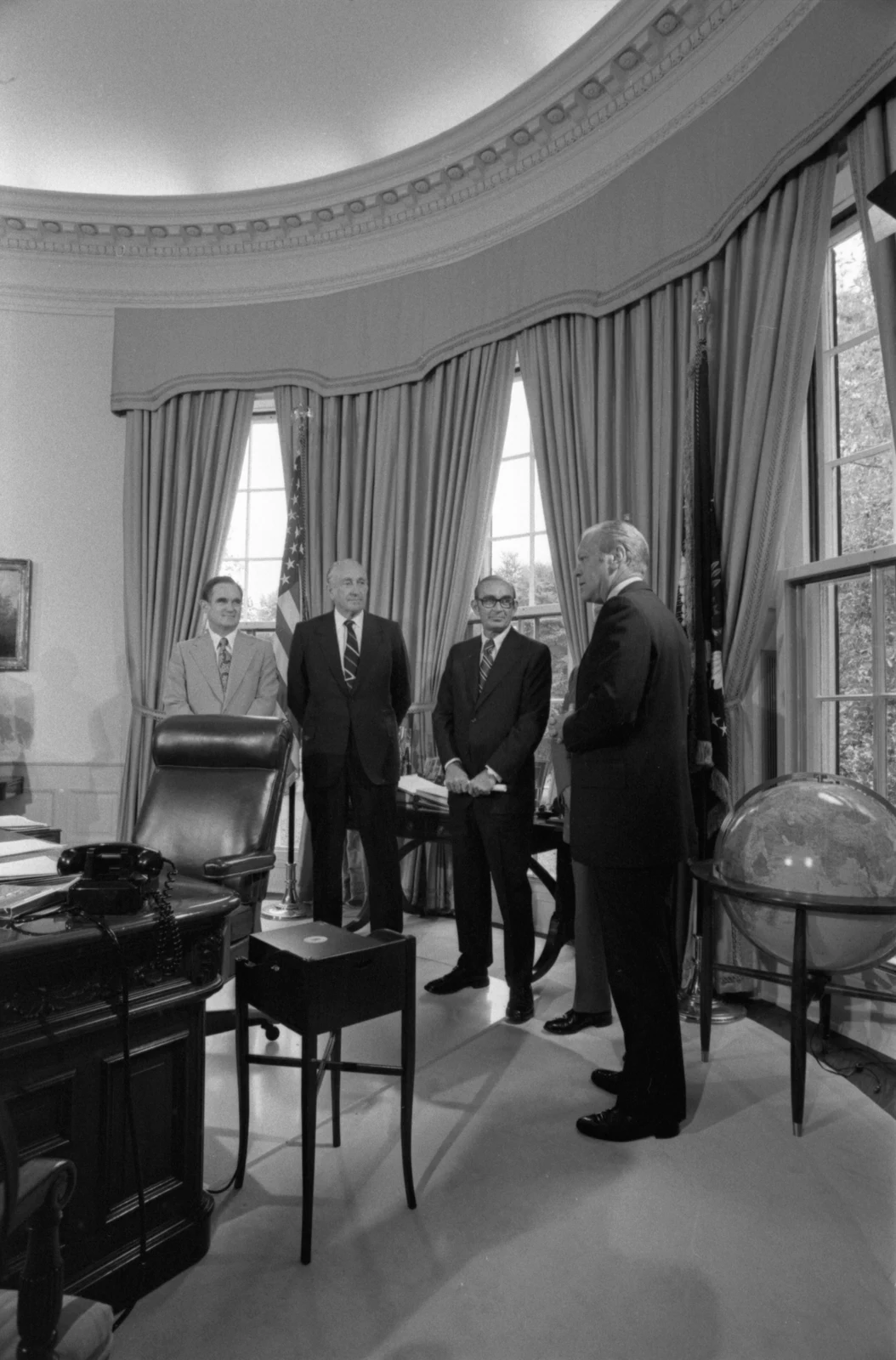
Photograph A5419-17A is credited to Norkin by the exact official frame index. It depicts White House activity in 1975, not HP’s garage or the founding partnership.