In this biography
Quick facts
- Born
- Not independently verified
- Birthplace
- Belfast, Northern Ireland, United Kingdom
- Country
- Australia
- Nationality
- Not independently established
- Known for
- Co-founding and helping run Lonely Planet, and supporting cultural and social-development institutions
- Birthplace
- Belfast, Northern Ireland
- Earned qualification
- Bachelor of Social Work, La Trobe University, 1980
- Publishing contribution
- Co-founder with production and organisational responsibilities
- Cultural institution
- Founding patron of the Wheeler Centre, not its chief executive
Why this life matters
Her experience makes operational work, staff relationships and the transition from entrepreneurial partnership to larger institutions visible within a celebrated publishing business.
Timeline
Key moments
Belfast and London
Leaves Northern Ireland and meets Tony in London.
Making the first guide
Participates in producing and selling the initial Lonely Planet publication.
Social-work qualification
Completes her degree at La Trobe.
Running a growing company
Staff, partners and formal management become increasingly important.
Transfer of ownership
The BBC transactions conclude the founders’ shareholding.
A cultural institution
Helps support the named centre before its public opening.
Social innovation support
The Brotherhood of St Laurence records her support for its Innovation Fund.
Belfast, travel and a different professional education
Born in Belfast, Maureen moved to London before meeting Tony Wheeler and travelling with him to Australia. Her later education took a different path from his engineering and management training. She completed a Bachelor of Social Work at La Trobe University in 1980, after the publishing enterprise had already begun.
She did not make social work her principal occupation. In the university’s account, she explained that its attention to human behaviour helped her manage staff. This is an important connection between education and business practice: the relevant knowledge was not simply how to identify a market, but how to work constructively with the people required to serve it.
The first product required making and selling, not just authorship
The 1973 guide emerged from the couple’s journey and the questions other travellers asked. Maureen’s recollection of its production emphasises physical work: assembling pages and approaching booksellers were part of establishing the enterprise. A useful manuscript was not yet stock that could be sold.
This work gives her an independent place in the founding account. The public face of a travel publisher may be the person writing about distant places, but each copy also has a production history and a route to its reader. Maureen helped create that connection. The partnership worked through different contributions, without making either founder’s labour a decorative addition to the other’s.
Growth demanded partners, budgets and changes in management
In a 2007 interview, Maureen described bringing in Jim Hart as a business manager when travelling and running the company became difficult to combine. His shareholding also made the developing business more than a two-person proprietorship. Later expansion required a further change from informal habits to a more structured organisation.
She identified the late 1990s as a transition, undertaken with chief executive Steve Hibbard; the disruption after September 2001 added pressure. Her account places her close to the difficult work of sustaining operations while Tony often travelled. It is a founder’s recollection, not an independent audit, but it directly challenges the assumption that visibility as a writer identifies the person doing all the business management.
Sources for this section: [5]
An ownership exit did not settle the industry’s difficulties
BBC Worldwide’s purchases in 2007 and 2011 ended the founders’ ownership. The subsequent BBC review recorded serious weaknesses in its acquisition and management before the 2013 disposal. This history complicates a simple success narrative without establishing personal criminal wrongdoing by Maureen or Tony.
Workers faced consequences beyond the transaction itself. ABC reporting in July 2013 recorded the new management’s proposed job reductions and its simultaneous assurance that printed guidebooks would continue. For Maureen’s biography, the episode marks the boundary between having helped build an organisation and continuing to control its later choices. A founder’s name could remain publicly associated with a company after authority had passed elsewhere.
Cultural patronage created a different relationship to institutions
Maureen and Tony supported the centre for books, writing and ideas named in their honour in November 2009. It opened publicly the following year. The Centre identifies them as founding patrons within an initiative also supported by the Victorian Government; it is not simply a renamed publishing subsidiary.
Their later support for London Business School’s Wheeler Institute likewise connected private resources to a wider institution. Patronage differs from operating a company: professional staff, governance and public purposes remain part of the explanation. Maureen’s contribution should be recognised without assigning her an unsupported executive title or making institutional activity synonymous with the donor’s personal achievements.
Later philanthropy retained an interest in people and practical work
Planet Wheeler continued and developed the family’s earlier giving. Tony’s account distinguishes foundation projects from other activities supported by one or both of them, rather than presenting everything bearing their names as one organisation. The Brotherhood of St Laurence’s June 2026 interview also records Maureen’s backing for its Innovation Fund.
These activities extend the career beyond the sale of guidebooks. They do not by themselves establish the effectiveness of every funded project; that requires evidence from the work concerned. What they show is a continuing role in choosing and supporting initiatives, grounded in interests that connect her education, organisational experience and relationships rather than reducing her later life to retirement from a famous brand.
Quick answers
Frequently asked questions about Maureen Wheeler
- Was Maureen merely Tony’s travelling companion?
- No. She co-founded the publisher and described substantive production, staffing and management responsibilities.
- Was her social-work qualification honorary?
- The Bachelor of Social Work completed at La Trobe in 1980 was an earned degree, distinct from later honours or fellowships.
- Is she described as the Wheeler Centre’s CEO?
- No. Its own institutional account identifies Maureen and Tony as founding patrons.
- Where was Maureen Wheeler born?
- Belfast, Northern Ireland, in the United Kingdom. The reviewed institutional accounts establish the place, not a sufficiently corroborated exact birth date.
Keep exploring
Lives connected to this story
- Tony Wheeler
Compare the co-founder’s travel-writing and product-development career without collapsing their different responsibilities into one life.
- Carol Schwartz
Compare private philanthropy with the staff, governance and public purposes of independently run institutions.
Sources and further reading
Explore the evidence
These references support the biography and offer further reading. Official records, first-person accounts and independent reporting provide different perspectives; image records document attribution and licensing.
- 1. Brotherhood of St Laurence4 June 2026: selected interview introduction on Belfast, publishing and Innovation Fund support
Selected actual indexed introduction establishes Belfast and 2026 support. Its compressed reference to the Troubles is not made a birth-date claim; exact date/year remain unverified.
- 2. La Trobe University15 February 2017: Maureen’s social-work degree and her own account of staff management
Earned degree and Maureen’s first-person management explanation used. The page’s inconsistent first-book year is not adopted;1973 is independently established elsewhere.
- 3. Florence Wilkinson and Rajesh Chandy / London Business School8 July 2025: selected published conversation on production, selling and partnership
- 4. Paige McClanahan / Literary Hub, excerpt via Scribner21 June 2024: selected account of the first guide’s creation and the founders’ publishing decision
- 5. Dynamic Business2007 interview: staff, equity and the transition to a larger publishing organisation
Selected dated interview on management and partnership, identified as recollection rather than audited performance. Its growth percentages are not made measured facts here.
- 6. BBC TrustNovember 2013: selected published findings, acquisition chronology and lessons summary, printed pages 2–3
- 7. Nina Tietzel / ABC News22 July 2013: announced staff reductions and the new owner’s guidebook commitment
- 8. The Wheeler Centre26 November 2009: actual naming announcement and first-programme proposal
The actual 2009 naming event is used, not its imprecise reference to the earlier BBC transaction. Naming, public opening and donor/executive roles are separated.
- 9. The Wheeler CentreCurrent institutional account: public opening, not-for-profit purpose, programmes and founding patrons
- 10. London Business School4 April 2018: management degree and Wheeler Institute gift
- 11. Tony WheelerPlanet Wheeler Foundation: first-person account of continuity and changing project scale
- 12. Rico Shen / Wikimedia CommonsComplete 2008 Taipei book-exhibition photograph: own-work source, initial grant and sole file version
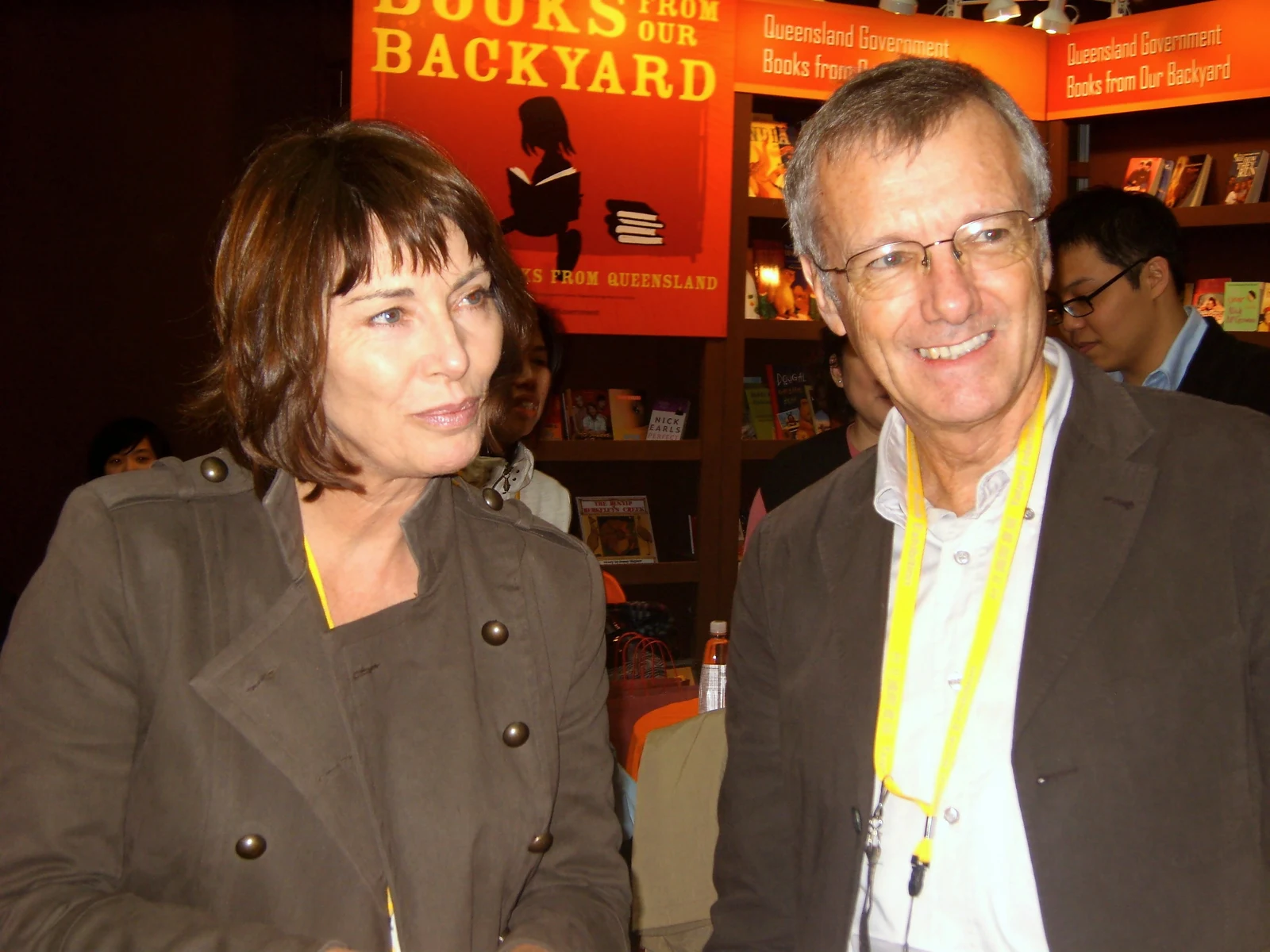
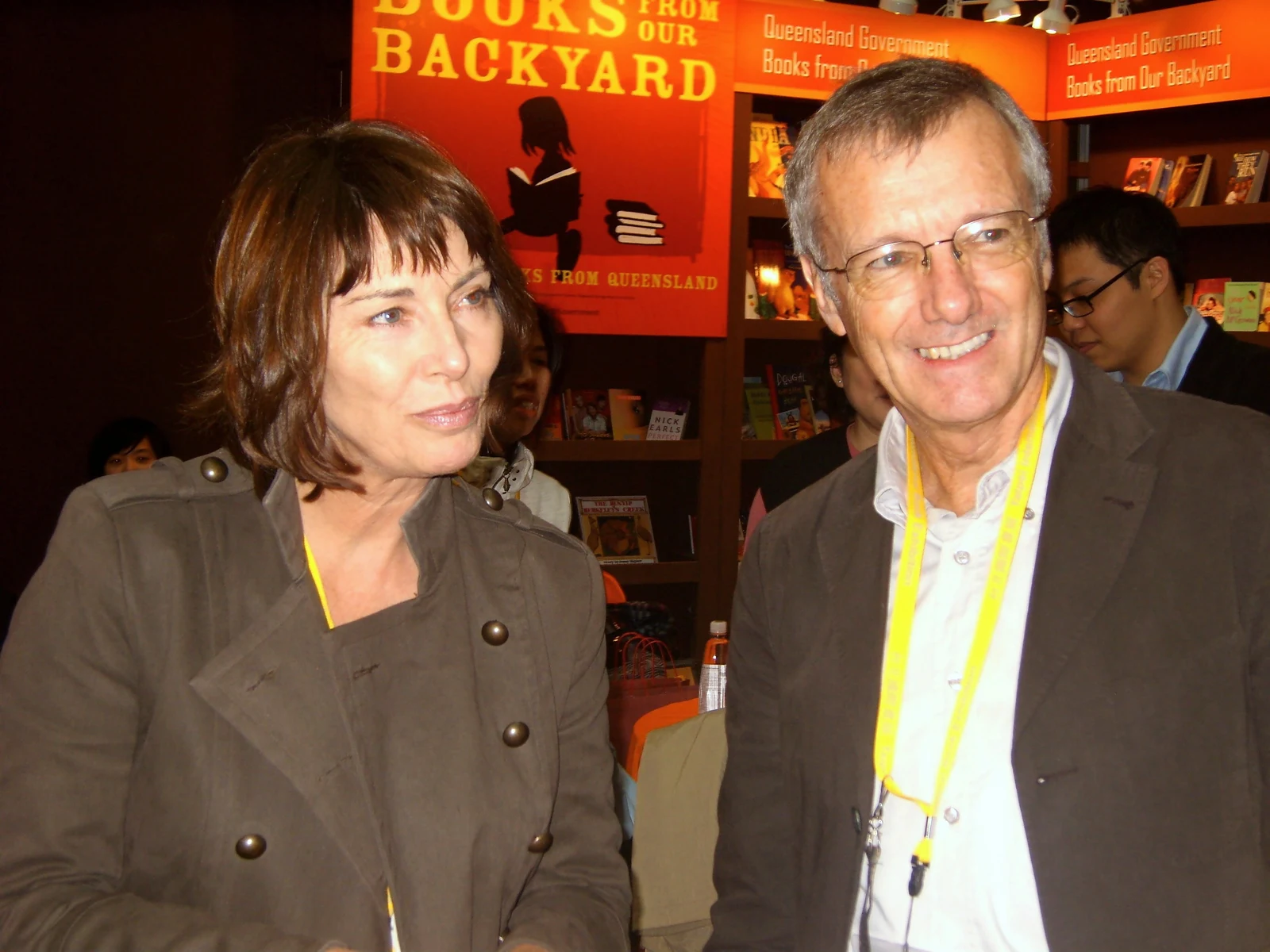
Maureen is at left in the complete source photograph. The later individual CropTool derivative was not used; sharing the true group frame is not a fabricated solo portrait.
- 13. Creative CommonsAttribution-ShareAlike 2.5 Generic