
The short answer
Hewlett-Packard’s origins involved a small workshop, but also university mentorship, paid industrial experience, household income and customers with specific technical needs. Separating those contributions explains more than treating the garage as a self-sufficient source of invention.
Chronology
A timeline of the turning points
Stanford graduates
Bill Hewlett and David Packard completed their undergraduate studies, with engineering mentorship and a lasting friendship already in place.
A rented home and workshop
The Packards’ Palo Alto rental included the garage where the partners began part-time instrument work, supported by household earnings and existing equipment.
The HP partnership
Hewlett and Packard formalized their business partnership; this was not yet the later corporation.
Oscillators meet customer needs
The 200A design led to modified 200B instruments bought by Disney for sound-system testing associated with Fantasia, released in 1940.
Beyond the garage
HP moved to rented premises at 481 Page Mill Road, beginning a different phase of workplace development.
Incorporation
Hewlett-Packard incorporated with Packard as president and Hewlett as vice president, after years of expanded instrument production.
A university network came before the workshop
Bill Hewlett and David Packard graduated from Stanford in 1934. Their friendship developed within an electrical-engineering community shaped by professor Frederick Terman. After graduation, Hewlett continued advanced study, while Packard gained manufacturing experience at General Electric in Schenectady. The skills they eventually combined had therefore been developed in universities and an established industrial company, not exclusively through independent tinkering.
HP’s retrospective credits Terman with encouraging the prospective partners and arranging fellowship support that helped Packard return to Stanford in 1938. This institutional backing did not remove the risks of starting a firm. It did, however, connect the partners with technical knowledge, encouragement and time to develop their ideas before a formal business existed.
The garage belonged to a household economy
In 1938 David and Lucile Packard rented the first floor of a house at 367 Addison Avenue in Palo Alto. Hewlett occupied a small building behind it, and the garage became a part-time workshop. HP’s history puts the initial working capital at $538, including a used drill press. That modest total describes resources at one stage, not the full social or educational cost of developing the enterprise.
The same corporate account credits Lucile’s Stanford wages and Flora Hewlett’s editorial earnings with sustaining the households and the business. Packard’s production work even extended into the kitchen, where he used the oven to bake finishes on instrument panels. The arrangement combined domestic space, paid work and engineering labor; it was not simply two founders working without outside support.
Hewlett’s oscillator solved an instrumentation problem
The Model 200A was an audio oscillator: equipment that generated a controlled electrical signal for testing sound-related circuits and systems. It was not a computer or a device for making animated pictures. Hewlett’s design used resistance-capacitance circuitry and feedback, with an incandescent lamp’s changing resistance helping regulate the amplitude of the oscillation. Frequency selection and amplitude stabilization were different functions within the instrument.
The patent record identifies William R. Hewlett as the inventor of the variable-frequency oscillation generator. It was filed on 11 July 1939 and issued on 6 January 1942. The named inventor should not be confused with the partnership that manufactured and sold the product: Packard’s engineering and production contribution did not make him the patent’s co-inventor.
Disney bought a modified instrument, not a founding myth
HP’s accounts distinguish the original 200A from the modified 200B purchased by Disney. After reviewing the instrument, the customer requested changes; the resulting order was for eight 200Bs. The museum history links them to testing the sound system used in presenting Fantasia, which reached audiences in 1940. They supported audio engineering rather than generating the film’s animation or constituting its entire sound technology.
The episode shows a concrete commercial relationship: an instrument design met a customer’s requirements and changed through that interaction. Disney was an important early customer, not a third HP founder. Nor does an early order establish that later corporate growth was inevitable. The partnership still had to build equipment, fulfill orders and find further customers.
The business became a partnership in 1939
The formal Hewlett-Packard partnership began on 1 January 1939, after the preceding year’s workshop activity. HP’s history recounts a coin toss that determined the order of the founders’ surnames. That naming story is separate from the practical relationship: Hewlett’s circuit development and Packard’s industrial experience were joined in a business responsible for making and selling instruments.
The company’s virtual museum preserves a dated 26 January 1939 drawing of the 200A, connecting the partnership’s opening weeks with specific product documentation. The later oscillator patent was assigned to the partners. These records distinguish an invention, a product and its commercial organization. They also explain why describing every stage simply as the company’s founding conceals important differences.
Leaving the garage changed the scale of the enterprise
In 1940 HP moved to rented premises at 481 Page Mill Road. Its corporate chronology describes wartime government demand, new instruments and expanding facilities. Hewlett served in the Army beginning in 1941, while Packard ran the company. By 1942 HP had a purpose-built structure combining office, laboratory and factory functions, a working environment very different from the rented domestic workshop.
Hewlett-Packard incorporated on 18 August 1947, with Packard as president and Hewlett as vice president. The garage remained an important site in the company’s remembered origins, but its early history also involved mentors, wage earners, customers, employees and government procurement. Following those changing relationships makes the story one of organized technical enterprise rather than a claim that a building itself produced Silicon Valley.
Continue the chronology
Related history guides
Biography context
Explore United States through connected lives
The wider career
Follow Packard’s management work, defense service and family philanthropy beyond HP’s founding period.
Explore the biographiesSteve WozniakA different engineering partnership
Compare early HP’s test instruments with Wozniak’s later personal-computer designs, without conflating their products or eras.
Explore the biographiesConnected biographies
People connected with the wider history
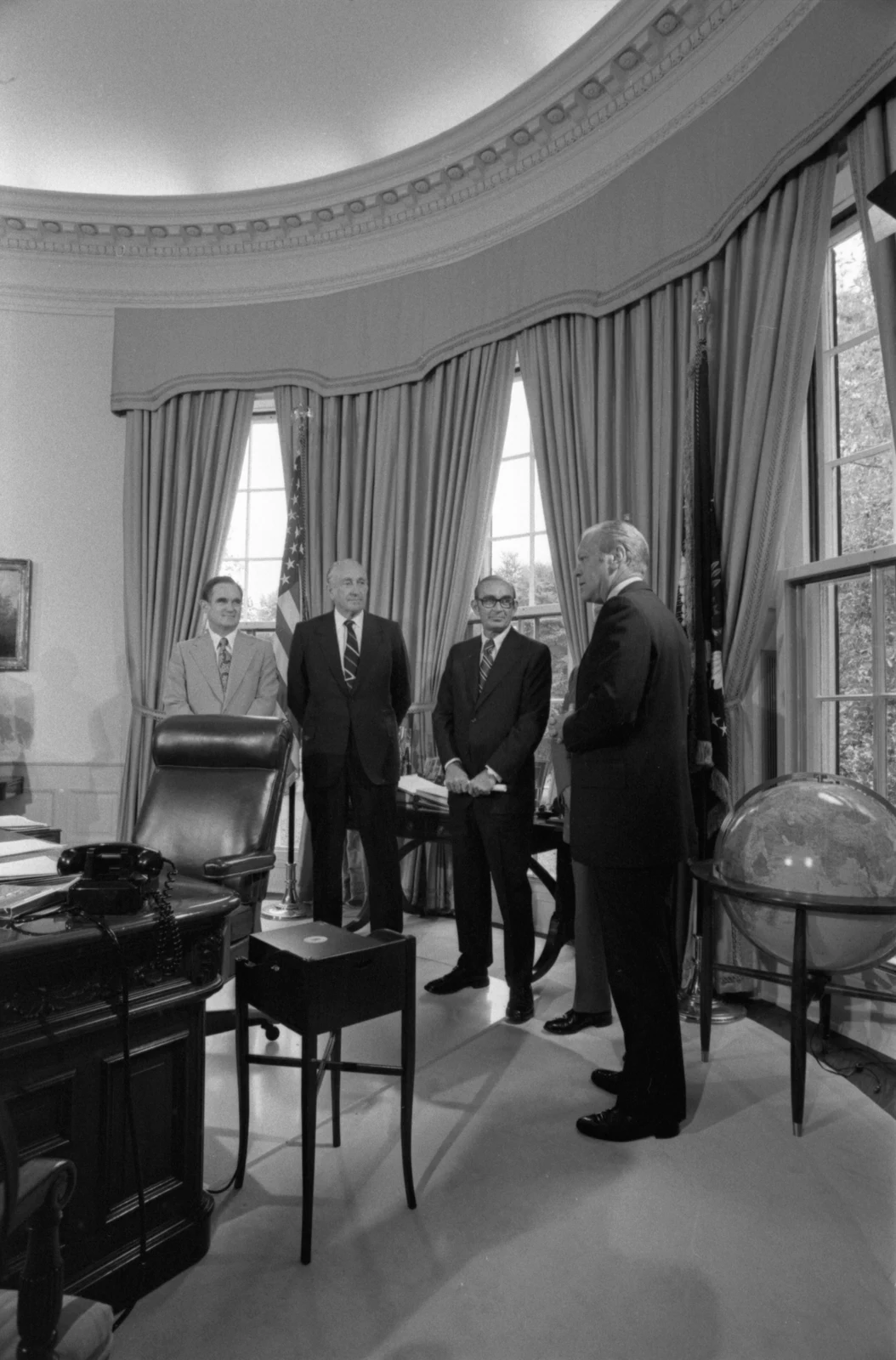
1912–1996
David Packard
Hewlett-Packard co-founder, engineer and philanthropistDavid Packard helped turn a small test-instrument partnership into Hewlett-Packard. His career combined engineering and management with service as deputy secretary of defense and philanthropy undertaken with Lucile Packard and their family.Read biography1913–2001
William Hewlett
Engineer, Hewlett-Packard co-founder and philanthropistWilliam Hewlett brought engineering knowledge and sustained attention to products to the company he founded with David Packard. His career extended from test instruments to scientific calculators, research management and philanthropy.Read biography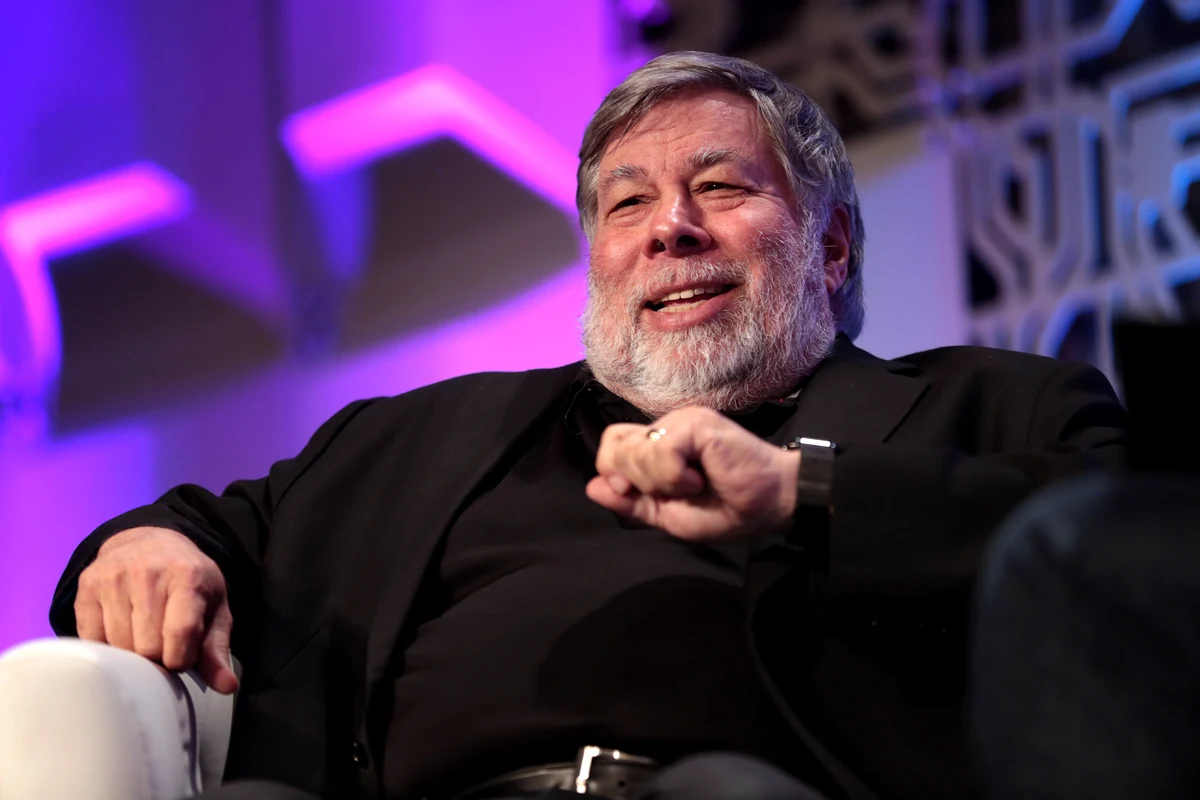
1950–present
Steve Wozniak
Computer engineer, Apple co-founder and educatorAn engineer whose economical hardware and software designs helped turn hobbyist microcomputing into a consumer business, followed by work in education and other ventures.Read biographyQuick answers
Common questions
- Was HP founded in 1938, 1939 or 1947?
- Workshop work began in 1938; Hewlett and Packard formalized their partnership on 1 January 1939; the company incorporated on 18 August 1947. These are distinct stages, not interchangeable dates.
- Did Packard and Hewlett jointly invent the patented oscillator?
- The oscillator patent names William R. Hewlett as inventor. Packard contributed engineering, production and business work to the partnership that made and sold the instruments; those roles are not identical to patent inventorship.
- Did Disney buy the original 200A for Fantasia?
- HP’s museum and timeline distinguish the 200A from Disney’s order for eight modified 200B instruments. They were used for audio-system testing, not to create the animation or supply the film’s whole sound process.
- Why does household support matter to the garage story?
- HP’s own history credits Lucile Packard’s and Flora Hewlett’s earnings, alongside the rented household spaces, tools, technical training and Terman’s support. The enterprise depended on more people and resources than its two named founders alone.
Primary and institutional sources
How this history was checked
Stanford’s institutional account, HP’s historical records and the oscillator patent distinguish individual invention, household support, product development and the changing legal organization. Corporate recollections are identified as such rather than treated as proof of a lone-founder legend. This article was reviewed on 21 October 2026.
- Stanford University School of EngineeringDavid Packard
- Hewlett-PackardHP Timeline: 1930s
- Hewlett-PackardA Trek through Time: HP’s Garage
- Hewlett-Packard Virtual MuseumModel 200A Audio Oscillator: History
- United States Patent Office, reproduced by Google PatentsUS2268872A: Variable frequency oscillation generator
- Hewlett-PackardHP Garage Timeline
- Hewlett-PackardHP Timeline: 1940s