In this biography
Quick facts
- Born
- 11 August 1950
- Birthplace
- San Jose, California, United States
- Country
- United States
- Nationality
- American
- Known for
- Designing the Apple I and Apple II computers and co-founding Apple with Steve Jobs and Ronald Wayne
- Birth
- 11 August 1950 in San Jose, California
- Apple partnership
- Established with Steve Jobs and Ronald Wayne on 1 April 1976
- Apple incorporation
- 3 January 1977, distinct from the earlier partnership
- Early computers
- Apple I in 1976; Apple II introduced in 1977
- Education
- UC Berkeley, B.S. in electrical engineering and computer science, 1986
- Recognition
- National Medal of Technology with Steve Jobs, 1985; Heinz Award, 2001
Why this life matters
His career connects technical ingenuity with the clubs, collaborators, suppliers and users that helped personal computing develop beyond a specialist hobby.
Timeline
Key moments
Born in California
Born in San Jose on 11 August; electronics became a lasting interest.
Study, engineering and a computer club
Attended Berkeley, worked at Hewlett-Packard and participated in the emerging Homebrew Computer Club community.
Apple I and the partnership
Wozniak’s computer design became the basis of the company established with Jobs and Wayne.
Apple II introduced
The incorporated company presented the Apple II with color graphics, a keyboard and expansion slots.
Crash and return to study
A plane crash interrupted his work; after recovering from amnesia, he returned to Berkeley.
A different working life
Stepped back from direct Apple work to develop a remote-control venture; Berkeley records his degree in 1986.
Electronics before a company
Steve Wozniak was born in San Jose, California, on 11 August 1950. His enthusiasm for mathematics and electronics developed before personal computers became an established consumer market. He attended the University of Colorado and later UC Berkeley, where he began studying in 1971. Periods of paid work interrupted his education rather than ending his interest in it.
At Hewlett-Packard he worked on calculators while developing projects of his own. Designing with limited resources encouraged him to seek compact, economical solutions. His route into business began with that engineering practice, not a plan to become a corporate executive. The Apple computers emerged from experience with existing components and a growing community of people who wanted access to computing.
Homebrew and the creation of Apple
The Homebrew Computer Club began meeting in 1975, bringing enthusiasts together to exchange ideas and examine new machines. Wozniak participated and showed his developing computer design. This setting matters: Apple did not introduce computing into an empty world. Hobbyists, semiconductor makers and other small computer businesses were already active.
On 1 April 1976, Wozniak, Steve Jobs and Ronald Wayne established Apple Computer Company as a partnership. Wayne withdrew shortly afterward. Jobs pursued customers and the business opportunity around Wozniak’s design, including an order for assembled boards from the Byte Shop. The Apple I became a commercial product through this combination of engineering and selling. Incorporation as Apple Computer, Inc. followed on 3 January 1977.
From a board to a consumer product
Wozniak designed the Apple II, introduced in 1977, with color graphics and BASIC programming available in permanent memory. Its case, keyboard and power supply made a more integrated package than the earlier Apple I board, whose buyers still needed additional equipment. Expansion slots offered ways to attach new capabilities instead of fixing the machine’s uses permanently at purchase.
His contributions included hardware and software, but the wider product also depended on other people’s work. Jobs concentrated on presentation and commercialization; employees, component suppliers and independent programmers added further capabilities. The later Disk II drive and applications extended the platform. This was an important development in personal computing, not the invention of every technology that the computers contained.
A crash, study and a change of direction
A plane crash in 1981 interrupted Wozniak’s Apple work. In a firsthand interview he recalled recovering from amnesia and deciding that this was his opportunity to return to college. Berkeley records his electrical engineering and computer science degree in 1986. Educational completion remained personally important even after his computer designs had become commercially successful.
The crash-related absence was different from his later step back from direct Apple work in 1985, when he pursued a programmable remote-control business. In a 2018 explanation, Wozniak said that leaving daily work had not meant leaving Apple’s official employee list. His account distinguishes changes in activity from formal affiliation; it is not a reason to assume an unchecked present-day employment role.
Teaching as another form of engineering
Wozniak’s later work included teaching computer skills and supporting schools in the Los Gatos area. The Heinz Awards’ 2001 account describes donations of equipment, network development and hands-on lessons for students and teachers. The emphasis was on understanding and using technology, not simply placing devices in classrooms.
Recognition connected these activities with his earlier engineering. He and Jobs received the National Medal of Technology in 1985, and Wozniak entered the National Inventors Hall of Fame in 2000. The 2001 Heinz Award honored both technical work and his commitment to education. His career consequently extends beyond a founder’s commercial success to the slower work of helping others gain confidence with complex tools.
Quick answers
Frequently asked questions about Steve Wozniak
- Did Steve Wozniak found Apple alone?
- No. The original partnership was established by Wozniak, Steve Jobs and Ronald Wayne on 1 April 1976. Wozniak designed the early computers; Jobs helped turn those designs into a business, and many others contributed to the products and company.
- How were the Apple I and Apple II different?
- The Apple I was sold in 1976 as an assembled board needing additional equipment. The Apple II, introduced in 1977, integrated a keyboard, case and power supply and offered color graphics, built-in BASIC and expansion slots.
- Did the 1981 crash end his Apple career?
- No. It led to time away and a return to study, followed by further engineering work. His later move away from direct Apple work in 1985 was a separate transition, not the crash itself.
- When did Wozniak finish his Berkeley degree?
- Berkeley identifies him as a 1986 electrical engineering and computer science graduate. His education had been interrupted by work and Apple’s development before he returned to complete it.
Keep exploring
Lives connected to this story
- Gordon Moore
Connect the semiconductor industry’s development with the components and engineering choices behind early personal computers.
- Jeff Bezos
Compare the distinct contributions of engineering teams, founders and commercial organization in two technology businesses.
Sources and further reading
Explore the evidence
These references support the biography and offer further reading. Official records, first-person accounts and independent reporting provide different perspectives; image records document attribution and licensing.
- 1. National Inventors Hall of FameSteve Wozniak — birth date, historical career and 2000 induction
- 2. UC Berkeley EngineeringSteve Wozniak: Inventor and Apple co-founder — 1986 graduate record
- 3. Computer History MuseumApple@50 timeline — club, partnership, incorporation and Apple II debut
- 4. Jessica Livingston / Founders at WorkSteve Wozniak — firsthand interview
- 5. Computer History MuseumThe Apple II — products, collaborators and later additions
- 6. Steve WozniakI Never Left Apple, 3 January 2018
This dated 2018 firsthand account distinguishes direct work from employee-list affiliation. It is not presented as verification of a current 2026 employment position.
- 7. Steve WozniakOfficial biography and historical timeline
Used selectively for the 1985 CL9 chronology and historical activities. Its 1976 incorporation shorthand, implication of a floppy drive at the 1977 launch, and inconsistent degree/award years are not repeated. Museum chronology and Berkeley’s own degree record govern those details.
- 8. Heinz AwardsSteve Wozniak — 7th Heinz Award, 2001, and school support
Used for the institution’s own 2001 award and documented school support, not its expansive first-personal-computer or first-floppy-drive claims.
- 9. Computer History MuseumSteve Wozniak — Fellow profile
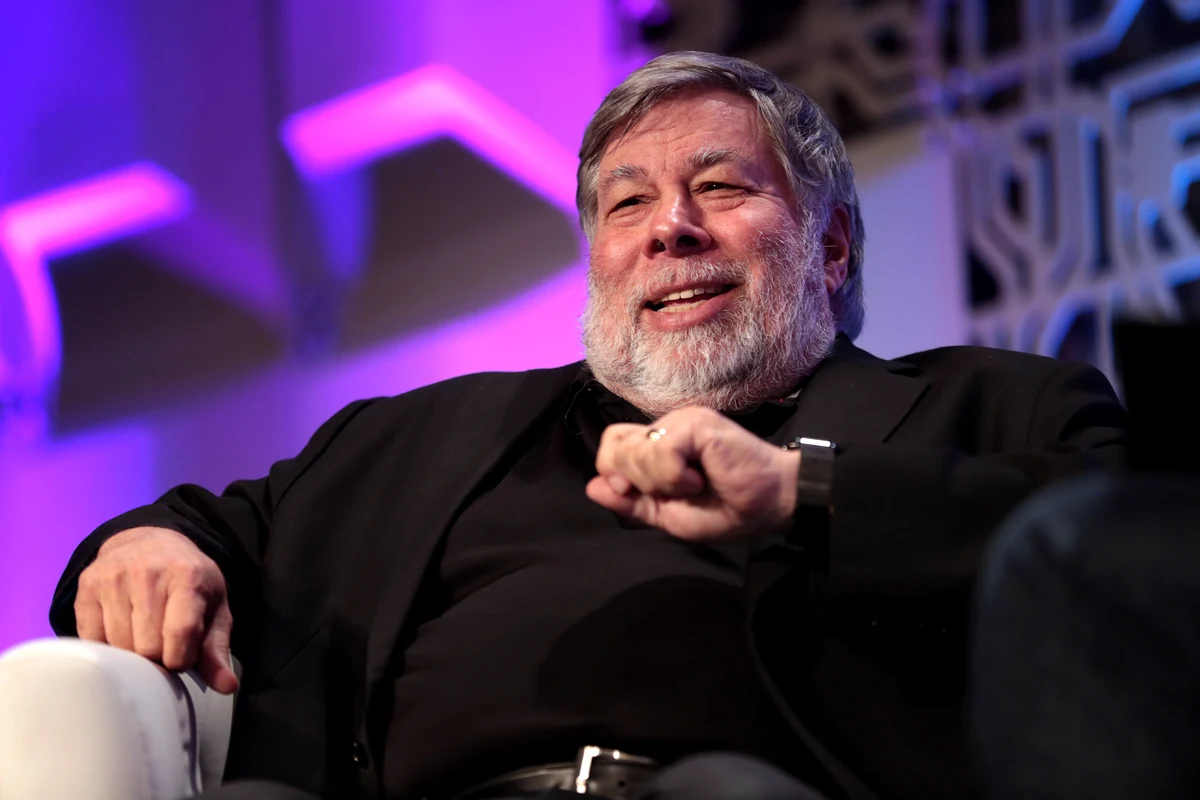
- 10. Gage Skidmore / Wikimedia CommonsSteve Wozniak by Gage Skidmore 3 — own-work full original, CC BY-SA 3.0
Complete 5760×3840 own-work original; separately extracted cropped portrait excluded. The later 2017 event photograph does not depict the 1970s engineering work.