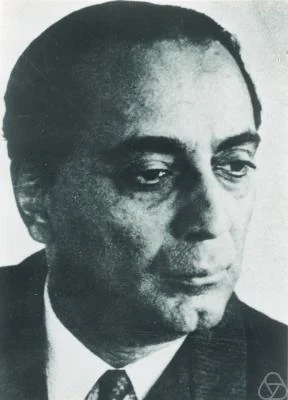
In this biography
Quick facts
- Born
- 6 July 1906
- Died
- 4 February 1993
- Birthplace
- Udaipur, British India
- Country
- India
- Nationality
- Not independently established
- Known for
- Pressure ionisation, defence science and education
- Research field
- Pressure ionisation, defence science and education
Why this life matters
His overlapping appointments connect laboratory science with the organisation of higher education; a commission’s proposals should be distinguished from later policy and spending.
Timeline
Key moments
Cambridge doctorate
Completes his PhD.
Joins Delhi University
Develops physics teaching and research.
Takes defence advisory office
Later continues under an honorary arrangement.
Chairs the Education Commission
Leads a collective review of education.
From Allahabad to the Delhi laboratory
Born in Udaipur in 1906, Daulat Singh Kothari studied at Allahabad, where Meghnad Saha encouraged his research. He continued at Cambridge’s Cavendish Laboratory before returning to India. His early investigations ranged from electronic measurement to the behaviour of matter under extreme conditions.
At Delhi University from 1934, he helped develop postgraduate physics teaching and a research department. Building laboratories, securing equipment and recruiting colleagues were part of that work. The Academy memoir presents institution building alongside his theoretical investigations, rather than as an activity that began only after physics.
Sources for this section: [1]
Research and defence responsibilities overlapped
Kothari investigated pressure ionisation: how strong compression can ionise matter, including in stellar interiors. He studied degenerate statistical systems and energy transport in dense matter. At Delhi, collaborators and students extended the programme across statistical mechanics and other physical questions.
He became the defence minister’s scientific adviser in 1948. After returning to university duties in 1952, he continued under an honorary arrangement until 1961. These were overlapping duties, with separately dated appointments.
Different education bodies, different responsibilities
He chaired the University Grants Commission in 1961–1973 and the Education Commission in 1964–1966. The latter examined education across stages, beyond university finance. Its report was a collective undertaking.
The Commission for Scientific and Technical Terminology separately lists him as chairman for 1961–1965. That shorter tenure should not replace his UGC dates. His work on scientific language belongs to the practical problem of teaching and communicating technical subjects across languages.
A report’s influence and its limits
The education policy modified in 1992 recalled an earlier investment target and acknowledged that actual investment had remained below it. A recommendation, a funding commitment and measured expenditure are different records; later policy wording alone cannot demonstrate that a commission’s ambitions were achieved.
Kothari served as Jawaharlal Nehru University’s chancellor in 1981–1991. He died in Jaipur in 1993.
Quick answers
Frequently asked questions about D. S. Kothari
- Was the Education Commission the UGC?
- They were different bodies, with different responsibilities and separately dated chairmanships.
Keep exploring
Lives connected to this story
- Meghnad Saha
Explore the scientist who encouraged Kothari’s early research.
- Subrahmanyan Chandrasekhar
Compare another career connecting stellar physics with research institutions.
Sources and further reading
Explore the evidence
These references support the biography and offer further reading. Official records, first-person accounts and independent reporting provide different perspectives; image records document attribution and licensing.
- 1. Indian National Science AcademyDaulat Singh Kothari: selected biographical memoir pages
- 2. A.Nagaratnam and N.S.Venkatesan; Defence Science Journal 44,189–192,1994Professor Daulat Singh Kothari: A Profile
- 3. Commission for Scientific and Technical TerminologyFormer chairmen: Daulat Singh Kothari,1961–1965
- 4. Government of India, Ministry of EducationNational Policy on Education 1986, as modified 1992: paragraph 11.4
The 1992 policy passage was read from indexed primary text; the origin PDF was unavailable. The complete 1966 commission report was not consulted.