
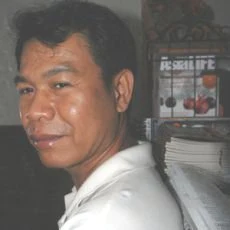
In this biography
Quick facts
- Born
- 1969
- Birthplace
- Kandal province, Cambodia
- Country
- Cambodia
- Nationality
- Cambodian
- Known for
- Painting across traditional and abstract forms, social observation and environmental themes
- Birth precision
- 1969, Kandal province; exact birthday not verified
- Art education
- Royal University of Fine Arts, Phnom Penh, 1985–1995
- Graduation
- Painting, 1995; a gallery’s conflicting 1996 is not adopted
- Ministry work
- Joined in 1998; department director in a 2020 account, advisor in June 2026 reporting
- Media
- Watercolour, Chinese ink, acrylic, oil and layered reused materials
- Recent exhibitions
- Shades and Reflection (2025), followed by documented 2026 projects
Why this life matters
His changing materials and subjects show how contemporary Cambodian painting can engage inherited traditions while examining the social environments in which people now live.
Timeline
Key moments
Kandal birth
Born in Kandal province; an exact birthday is not established.
Artistic training
Studied painting at the Royal University of Fine Arts in Phnom Penh.
Teaching
Taught painting for nongovernmental organisations following graduation.
Ministry employment
Joined the Ministry of Culture and Fine Arts.
Consuming Passion
Connected consumption with environmental concerns in an exhibition.
Historical directorship
A Jinan University biography identified his ministry department-director role at that time.
Shades and Reflection
Presented twenty-eight paintings informed by everyday observation.
Continuing exhibitions
June reporting and the October Heritage exhibition document new work and materials.
Childhood, drawing and sustained artistic training
Chhim Sothy was born in Cambodia’s Kandal province in 1969. His childhood coincided with war and Khmer Rouge rule. In a VOA interview, he recalled drawing in riverbank sand and on other available surfaces; the report also records the loss of his father and two siblings under the regime.
He studied at Phnom Penh’s Royal University of Fine Arts from 1985 to 1995, graduating in painting. VOA, Jinan University and later Cambodian reporting support 1995, rather than a gallery biography’s conflicting 1996. His childhood experiences belong in the account of his life, but they should not be assigned as the explanation of every later painting without evidence from the artist.
Teaching, ministry work and different visual languages
After graduation, Sothy taught painting for nongovernmental organisations and began work at the Ministry of Culture and Fine Arts in 1998. A 2020 Jinan University biography identified him as a department director; June 2026 reporting described him as a ministry advisor. The later account does not justify repeating the older directorship as a current title.
His materials include watercolour, Chinese ink, acrylic and oil. Traditional work draws on Buddhist subjects and Hindu epics, while other paintings move toward abstraction. These approaches have continued alongside one another. A story of permanently abandoning tradition for modern art would therefore miss the variety of visual languages and subjects within his practice.
Recent exhibitions and changing materials
A June 2026 exhibition at Sofitel Phnom Penh Phokeethra included Monastery and Belief, City Village and Social Environmental. Reporting on those works described an artist continuing to change his focus while attending to urban and rural environments. That continuity does not mean that every new exhibition repeats an earlier collection.
Rosewood Phnom Penh’s October 2026 Heritage exhibition presented painting with layered materials, including repurposed rice sacks from Côte d’Ivoire. The host describes themes of memory, inheritance, repair and transformation. Read alongside the earlier projects, the documented materials show an evolving practice that keeps Khmer traditions and contemporary social surroundings in conversation.
Quick answers
Frequently asked questions about Chhim Sothy
- When and where was Chhim Sothy born?
- He was born in 1969 in Cambodia’s Kandal province. An exact birthday is not established in the checked sources.
- Where did Chhim Sothy train?
- He studied painting at the Royal University of Fine Arts in Phnom Penh from 1985 to 1995.
- What materials does he use?
- His practice includes watercolour, Chinese ink, acrylic and oil, with layered reused materials in recent work.
- What themes recur in Chhim Sothy’s work?
- Documented themes include Khmer cultural inheritance, inequality, environmental change and everyday Cambodian life.
Keep exploring
Lives connected to this story
- Sopheap Pich
Compare another Cambodian artist’s distinct materials, forms and cultural references.
- Dương Thu Hương
Explore a Vietnamese novelist’s separate treatment of memory, social pressure and individual experience.
Sources and further reading
Explore the evidence
These references support the biography and offer further reading. Official records, first-person accounts and independent reporting provide different perspectives; image records document attribution and licensing.
- 1. VOA Khmer · February 2010Painting graduation, teaching and ministry entry
The checked institutional and reported sources support 1995 graduation. Award years differ across listings, so uncertain award chronology is omitted.
- 2. VOA Khmer · September 2015Childhood account, traditional subjects and Consuming Passion
- 3. Jinan University · 2020Institutional biography and historical director role
- 4. The GalleristPrimary gallery record of named works
Use the gallery for its own works and exhibition material, not its conflicting 1996 graduation year.
- 5. Cambodianess · February 2025Training dates, media and Shades and Reflection
- 6. Cambodianess · June 2026Recent works and ministry advisor description
Advisor is the June 2026 description; do not preserve a 2020 director title as current. Avoid the article’s imprecise ministry-service duration.
- 7. Rosewood Phnom PenhHeritage exhibition and layered materials
The host page gives an impossible November 31 end date. Mention the documented October exhibition without that end date; its thematic interpretation is attributed to the host.
- 8. Wikimedia Commons · VOA/L. HuntIdentified photograph, retouch and public-domain declarations
Credit is specifically VOA — L. Hunt, not a third-party wire agency. Commons records the original’s public-domain basis and oaktree_b’s public-domain retouch. Keep the low-resolution supplied frame without enlargement or additional edits.


Social observation and environmental concerns
Sothy has connected artistic expression with observation of Cambodian society. Consuming Passion in 2015 addressed consumption and environmental protection. For Shades and Reflection in 2025, walks through the city and countryside informed twenty-eight paintings involving markets, modest homes, transport workers and poverty.
The black-and-white Thinker Lady addressed difficulties women face in finding work. Such examples give concrete content to a description of socially engaged painting: they concern recognisable circumstances, not simply a general claim that art reflects society. At the same time, shifts in colour, representation and abstraction remain artistic choices rather than illustrations of one fixed public message.
Sources for this section: [2] · [5]