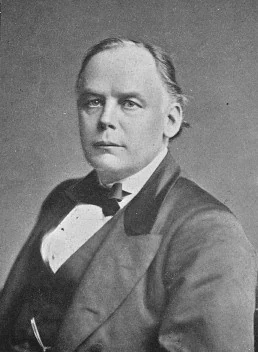
In this biography
Quick facts
- Born
- 1840
- Died
- 1916
- Birthplace
- Liverpool
- Country
- United Kingdom
- Nationality
- Not independently established
- Known for
- The Life and Labour survey of London and the mapping of poverty
Why this life matters
Booth organised a large investigation of London that joined household information, occupations and mapped street classifications.
Timeline
Key moments
Inquiry organised
Booth begins organising the investigation.
Printed map
The poverty map appears in twelve sheets.
Final survey
The extended inquiry reaches its final publication period.
Business and social investigation
Charles Booth was born in Liverpool and entered a family commercial world involving leather and shipping. His business responsibilities continued alongside a growing concern with poverty and the adequacy of existing information about it. He organised and financed a major investigation of London life, beginning in the 1880s. The project required a team, systems for recording information and publication arrangements that extended far beyond the observations of a single individual.
Sources for this section: [1]
Building the inquiry’s evidence
Investigators consulted School Board Visitors’ records and interviewed people with detailed local knowledge. Their notebooks recorded occupations, households and streets, including classifications of poverty. These materials show the intermediate work behind the published survey. They also make the investigators’ categories and sources open to scrutiny. A coloured street on a later map was the product of decisions about observation and classification, rather than a direct measurement automatically generated by the urban landscape.
Publication and political relevance
The inquiry continued until 1903, and its final published edition comprised seventeen volumes. The printed poverty map of 1898–99 was divided into twelve sheets, allowing readers to examine geographical patterns across London. Booth also supported state old-age pensions, connecting investigation with a practical policy concern. He died in 1916. His significance rests on the scale and organisation of the work as well as its images: the notebooks, classifications and publications permit readers to ask how evidence was assembled and what it could actually demonstrate.
Quick answers
Frequently asked questions about Charles Booth
- What is Charles Booth known for?
- The Life and Labour survey of London and the mapping of poverty.
Keep exploring
Lives connected to this story
- Florence Kelley
Compare another reformer whose arguments depended on collecting evidence about working conditions.
Sources and further reading
Explore the evidence
These references support the biography and offer further reading. Official records, first-person accounts and independent reporting provide different perspectives; image records document attribution and licensing.