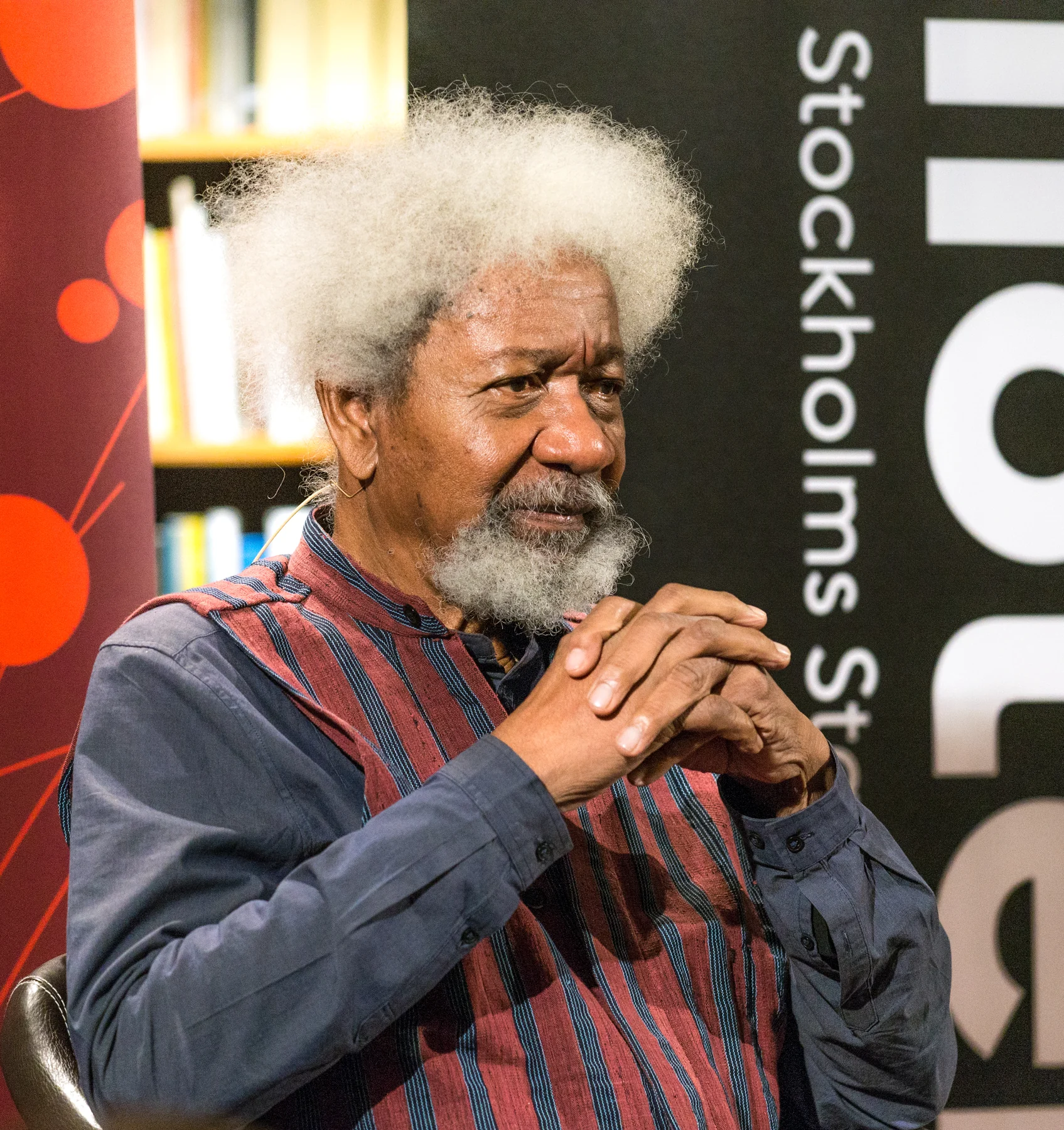
In this biography
Quick facts
- Born
- 15 March 1959
- Birthplace
- Nigeria
- Country
- Nigeria
- Nationality
- Not independently established
- Known for
- The Famished Road and the 1991 Booker Prize
- Born
- 15 March 1959, Nigeria
- First novel
- Flowers and Shadows, 1980
- Booker Prize
- The Famished Road, 1991
- Honour
- Knighthood for literature, 2023
Why this life matters
His career shows the importance of looking beyond a single award-winning novel. Early story collections, later poetry and collaborations across forms place the Booker milestone within a continuing investigation of storytelling, art and reality.
Timeline
Key moments
Birth
Born in Nigeria on 15 March.
First novel
Published Flowers and Shadows.
Short stories
Published Incidents at the Shrine.
Second story collection
Published Stars of the New Curfew.
Booker Prize
The Famished Road won the prize.
Word and image
The Magic Lamp brought stories into a collaboration with Rosemary Clunie’s paintings.
Literary honour
Received a knighthood for services to literature.
A childhood and education across two countries
Ben Okri was born in Nigeria on 15 March 1959. His own account describes childhood schooling in London followed by a return to Nigeria around the beginning of the civil-war period. Reading became decisive when an early ambition to study science gave way to the discovery of literature in his father’s library. He began with poems and articles about poverty in Lagos before developing fiction. He returned to London in 1978 and studied comparative literature at the University of Essex. This movement between countries belongs to his education; it should not turn Nigeria into a merely remote setting for his later career.
Novels and stories before the breakthrough
Flowers and Shadows appeared in 1980, followed by The Landscapes Within in 1982. The story collections Incidents at the Shrine (1986) and Stars of the New Curfew (1988) preceded his best-known award. These dates matter because they show a writer already working across prose forms before international recognition arrived. An account beginning in 1991 would obscure that apprenticeship in publishing. The author’s site gives the short story a central place in his practice and describes it as particularly demanding. That is his account of the craft, rather than a ranking of genres imposed by this biography.
Sources for this section: [2]
What the 1991 Booker record establishes
The Booker archive identifies The Famished Road as its 1991 winner, published by Jonathan Cape. It was one of six shortlisted books, and Okri was 32 at the time. The award is a specific institutional judgment about a named work in a named year. It supplies an important point in his public career without explaining every aspect of the novel’s artistic achievement. The same archive records disagreement among judges and Nicholas Mosley’s resignation. Such details make the history more informative than a trophy list, but do not disclose a final voting tally or justify attributing a vote to every person in the roster.
A larger body of work across forms
The Famished Road became the opening book of a trilogy including Songs of Enchantment and Infinite Riches. Okri also developed poetry and essays: An African Elegy, Mental Fight and A Way of Being Free belong to different parts of that work. His author biography emphasizes the difficulty of classifying his fiction and records his resistance to a simple magical-realist label. A useful account therefore presents that label as a critical debate, not a self-evident description of everything he writes. Readers can approach the poems, stories and novels as distinct formal projects without requiring one category to explain them all.
Collaboration and later recognition
The Magic Lamp (2017) paired his very short fiction with a sustained collaboration involving Rosemary Clunie’s paintings. He also wrote for film and adapted Camus’s The Outsider for the stage. These credits show that his writing has circulated through other artistic settings; they do not imply that every adaptation has been examined here. The 2023 collection Tiger Work brought prose and poetry into a project identified by the Berlin literature festival with climate concerns. In June 2023, he received a knighthood for services to literature. Those later records extend the chronology beyond the Booker without requiring an unstable count of all books or honours.
Quick answers
Frequently asked questions about Ben Okri
- Which book won Ben Okri the Booker Prize?
- The Famished Road won the 1991 prize; the archive credits Jonathan Cape as publisher.
- Was the Booker Prize his first published work?
- No. Flowers and Shadows appeared in 1980, and two story collections preceded the 1991 award.
Keep exploring
Lives connected to this story
- Helon Habila
Compare a short-story award with a later novel career.
- Amos Tutuola
Place another Nigerian writer’s international publication history alongside Okri’s, without assuming identical narrative traditions.
Sources and further reading
Explore the evidence
These references support the biography and offer further reading. Official records, first-person accounts and independent reporting provide different perspectives; image records document attribution and licensing.
- 1. Booker Prize FoundationBen Okri: author record
Read biographical record lines 76–92, birth date, 1991 award, selected forms and June 2023 honour; videos and article links not played or opened. Book-count and latest-book language is stale and unused.
- 2. Ben Okri official siteAbout Ben Okri
Read career paragraphs lines 15–50: childhood movement, Essex, early novels and story collections, trilogy, form, poetry, essays and scripts. Treat aesthetic descriptions as author-site statements, not independent close reading. Stale future/current language excluded.
- 3. Booker Prize FoundationThe Booker Prize 1991: winner, shortlist and judges
Read winner, six-title shortlist and authors, Jonathan Cape credit, five-name judge roster, Jeremy Treglown chair caption, and narrative recording Nicholas Mosley’s resignation, lines 70–170. Ceremony videos not watched.
- 4. International Literature Festival BerlinBen Okri: July 2024 guest record
Read biography/bibliography and portrait credit, lines 52–98. Used for 2023 Tiger Work and form/publication context. Its claim of knighthood two years after 2001 conflicts with author and Booker records and is rejected.