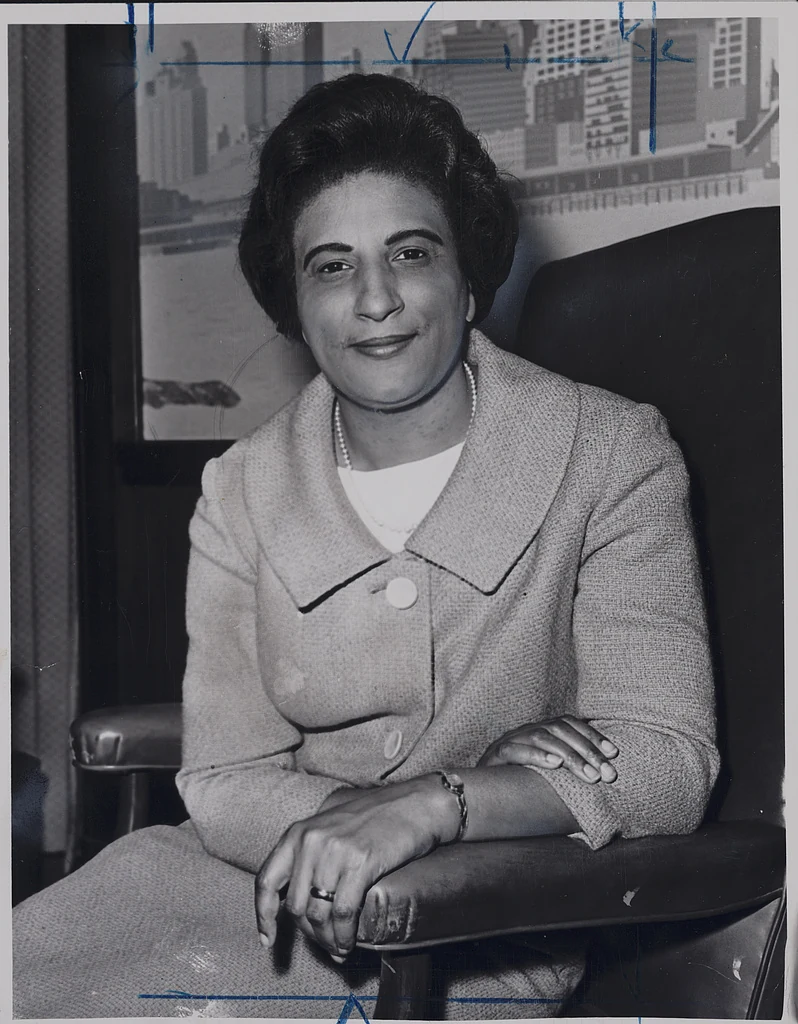
In this biography
Quick facts
- Born
- 17 March 1912
- Died
- 24 August 1987
- Birthplace
- West Chester, Pennsylvania, United States
- Country
- United States
- Nationality
- Not independently established
- Known for
- Nonviolent civil rights organising
Why this life matters
His career makes the work of coordination visible alongside the discrimination that restricted public recognition. The manual study turns that practical record into a test of what a plan can establish.
Timeline
Key moments
Direct action
Journey of Reconciliation.
Planning
Deputy director of the march.
Recognition
Posthumous Medal of Freedom.
Faith, education and a working life
Raised in a Quaker family in West Chester, Rustin studied at Wilberforce, Cheyney and City College of New York. In New York he also earned money singing spirituals. His early political interests included communism, followed by a lasting commitment to pacifism and civil rights.
Music and political work belong in the same life. Reducing him to the logistics of one rally would lose the experiences and commitments that preceded it.
Sources for this section: [1]
Nonviolence, imprisonment and exclusion
He worked with the Fellowship of Reconciliation and helped establish CORE. During World War II he spent more than two years in prison as a conscientious objector. The 1947 Journey of Reconciliation tested interstate travel segregation; later he studied Gandhian ideas in India.
FOR asked him to resign after a 1953 conviction related to homosexual activity. He subsequently led the War Resisters League. Prejudice against his sexuality and his earlier political affiliations repeatedly affected his position within civil rights organisations.
Sources for this section: [2]
Advising and organising with others
He advised King during the Montgomery boycott and helped formulate the Southern Christian Leadership Conference.
Randolph appointed him deputy director of the 1963 March on Washington.
The final manual also credits Cleveland Robinson as administrative committee chairman.
The document records divided responsibilities. Organising involved local groups, captains and a national office; an account that credits a single planner with every task would conceal that structure.
Economic justice and later advocacy
From 1965 he led the A. Philip Randolph Institute, promoting alliances among Black communities, labour, liberals and religious organisations. The role placed economic questions within his account of civil rights.
He later worked with Freedom House and advocated gay rights. He died in 1987.
In 2013 he received a posthumous Presidential Medal of Freedom.
Recognition came through more than one route and at different times. His working records remain useful because they reveal decisions and dependencies that an award citation or a famous photograph cannot explain alone.
Quick answers
Frequently asked questions about Bayard Rustin
- Who was Bayard Rustin?
- Bayard Rustin was an organiser. His career makes the work of coordination visible alongside the discrimination that restricted public recognition. The manual study turns that practical record into a test of what a plan can establish.
- What is Bayard Rustin best known for?
- Bayard Rustin is best known for nonviolent civil rights organising.
- When and where was Bayard Rustin born?
- Bayard Rustin was born on 17 March 1912 in West Chester, Pennsylvania, United States.
- When did Bayard Rustin die?
- Bayard Rustin died on 24 August 1987.
Keep exploring
Lives connected to this story
- A. Philip Randolph
Read the labour leader who worked with Rustin on national campaigns.
- Martin Luther King Jr.
Follow the colleague whose public work intersected with Rustin’s organising.
Sources and further reading
Explore the evidence
These references support the biography and offer further reading. Official records, first-person accounts and independent reporting provide different perspectives; image records document attribution and licensing.
- 1. National Park ServiceBayard Rustin
- 2. The Martin Luther King, Jr. Research and Education Institute, Stanford UniversityRustin, Bayard
- 3. National Museum of African American History and CultureBayard Rustin: selected short institutional profile
- 4. Katie McCarthy / National Park ServiceLearning from Bayard Rustin: selected background paragraph
- 5. March on Washington organising committee; SNCC Digital Gateway / Duke-hosted scanOrganizing Manual No. 2: Final Plans for the March on Washington, selected pages 1,9,11–12