In this biography
Quick facts
- Born
- 15 January 1929
- Died
- 4 April 1968
- Birthplace
- Atlanta, Georgia, United States
- Country
- United States
- Nationality
- American
- Known for
- Leadership in the Montgomery boycott and SCLC, civil rights campaigns, and opposition to poverty and war
- Birth
- 15 January 1929, Atlanta, Georgia
- Montgomery organization
- Elected president of the Montgomery Improvement Association in December 1955
- Regional organization
- Helped found the Southern Christian Leadership Conference in 1957
- Washington march
- A leader and speaker in the coalition’s 28 August 1963 demonstration
- International recognition
- Nobel Peace Prize, 1964
- Death
- Assassinated in Memphis, Tennessee, on 4 April 1968
Why this life matters
King helped make local struggles matters of national responsibility, while working within a broad movement whose organizers, communities and institutions sustained change beyond any one leader.
Timeline
Key moments
Developed a ministry
Born in Atlanta; studied at Morehouse, Crozer and Boston University; married Coretta Scott and became Dexter Avenue Baptist Church’s pastor.
Elected to lead the MIA
Montgomery community leaders chose him as president of the association sustaining the bus boycott after Rosa Parks’s arrest.
Helped establish SCLC
Joined ministers and organizers in building a regional organization connecting local nonviolent campaigns and citizenship education.
Birmingham and Washington
Joined Birmingham’s local movement, was jailed in April and addressed the coalition March on Washington on 28 August.
Recognition and voting-rights pressure
Received the Nobel Peace Prize in 1964 and participated in the Selma campaign in 1965, as movements pressed for stronger federal protection.
Challenged war and economic injustice
Condemned the Vietnam War, planned the Poor People’s Campaign and supported Memphis sanitation workers before his assassination on 4 April 1968.
Family, study and ministry shaped his public language
Martin Luther King Jr. was born in Atlanta on 15 January 1929 and named Michael at birth. His family’s Baptist ministry connected church life with resistance to racial discrimination. At Morehouse College, Benjamin Mays helped him see religion as a resource for social change. Further study at Crozer Theological Seminary and Boston University developed his engagement with theology and moral responsibility.
He married Coretta Scott in 1953 and became pastor of Dexter Avenue Baptist Church in Montgomery in 1954, completing his doctorate the following year. Christian commitments and encounters with Gandhian ideas informed his developing nonviolence. It was not simply a preference for calm: he came to understand organized, disciplined confrontation as a way to expose injustice and demand negotiation.
Montgomery leadership grew from existing community organization
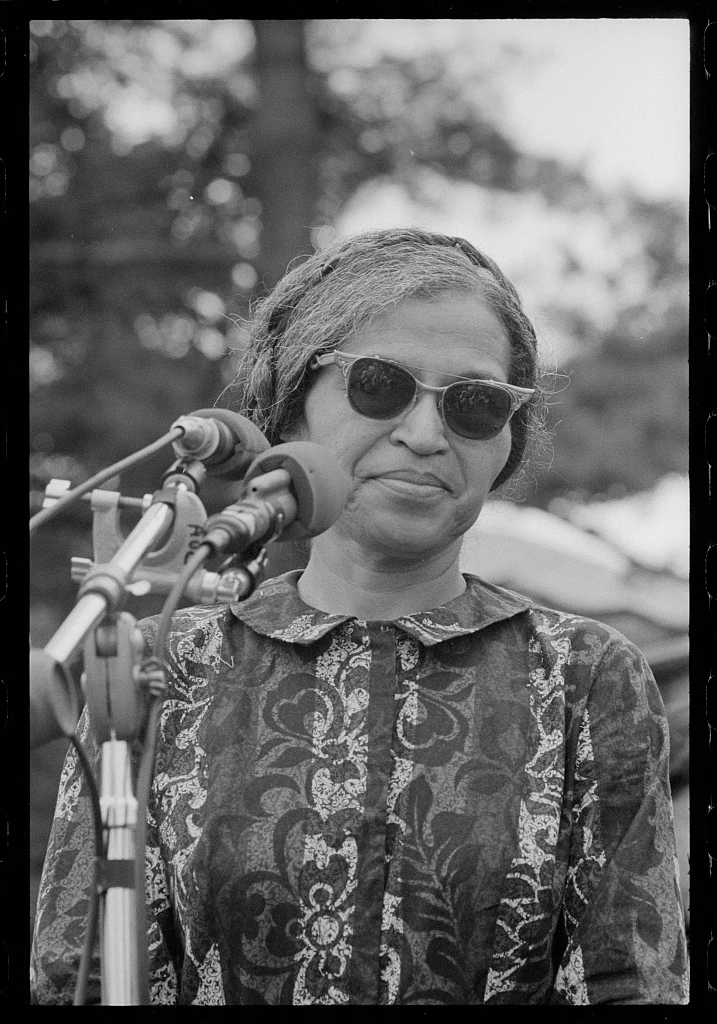
After Rosa Parks’s arrest, Jo Ann Robinson, E. D. Nixon and others mobilized a bus boycott for 5 December 1955. That afternoon, local leaders established the Montgomery Improvement Association and elected King president. He became a persuasive spokesman, but the campaign depended on residents walking to work, volunteer drivers, fundraising, churches and sustained practical coordination. He neither initiated all that organizing nor achieved desegregation alone.
King faced prosecution under Alabama’s anti-boycott law, while the movement also confronted intimidation. The federal case Browder v. Gayle challenged bus segregation separately from Parks’s criminal appeal. After the Supreme Court upheld the federal ruling and the desegregation order arrived, King announced the boycott’s end in December 1956. The experience made him a national figure and supplied an organizational model.
Sources for this section: [3]
SCLC connected national visibility with local campaigns
In 1957 King helped establish the Southern Christian Leadership Conference and became its president. SCLC linked local organizations rather than replacing them with individual national memberships. Staff members developed citizenship education, leadership training and voter-registration work. King’s speeches and fundraising gave campaigns visibility, while organizers and local participants supplied knowledge, relationships and persistence. Cooperation with other movement groups also involved disagreements over tactics and leadership.
In Birmingham in 1963, SCLC joined Fred Shuttlesworth’s existing Alabama Christian Movement for Human Rights. Boycotts, demonstrations and arrests targeted segregation and business practices. King was jailed on 12 April after defying an injunction. Police attacks on young demonstrators intensified public pressure. Negotiations produced commitments on desegregation and employment, but did not eliminate violence or settle every conflict within the campaign.
The Washington march and federal laws were distinct achievements
King was one of the leaders of the 28 August 1963 March on Washington for Jobs and Freedom. A. Philip Randolph, Bayard Rustin, civil rights organizations, labor groups and religious allies built the coalition. King’s address became its most remembered moment, but employment, wages, voting and federal civil rights legislation were collective demands. The demonstration added pressure for a bill already proposed by President Kennedy.
The Civil Rights Act of July 1964 addressed public accommodations, employment discrimination and other areas. The Voting Rights Act of August 1965 added stronger voting-specific enforcement after years of organizing and the Selma campaign. King’s advocacy mattered alongside local activists, other national leaders, congressional coalitions and presidential action. His 1964 Nobel Peace Prize recognized nonviolent struggle without making him the movement’s sole representative.
His later work linked racial justice, poverty and war
King’s later campaigns challenged the idea that removing formal segregation would secure equality. In April 1967, at New York’s Riverside Church, he condemned the Vietnam War’s destruction and its diversion of resources from urgent domestic needs. Newspaper editorials and some civil rights allies criticized his intervention. He nevertheless continued to connect nonviolence with opposition to militarism and economic deprivation, rather than restricting it to southern segregation.
He helped plan the Poor People’s Campaign and supported Black sanitation workers seeking union recognition, safer conditions and better wages in Memphis. Their strike was already organized before his arrival. On 4 April 1968, he was assassinated at the Lorraine Motel, aged 39. His unfinished work leaves a legacy of collective mobilization and moral argument, including difficult questions about how political rights can become material security.
Quick answers
Frequently asked questions about Martin Luther King Jr.
- What organizations did Martin Luther King Jr. lead?
- He became president of the Montgomery Improvement Association in December 1955 and helped establish the Southern Christian Leadership Conference in 1957, serving as its president. These were different organizations with different geographic and organizational roles.
- Did King organize the March on Washington alone?
- No. The August 1963 march was a coalition effort associated with A. Philip Randolph, Bayard Rustin, civil rights organizations, labor groups and religious allies. King was a leading participant and speaker.
- Were the 1964 and 1965 civil rights laws the same?
- No. The 1964 Civil Rights Act covered areas including public accommodations and employment. The 1965 Voting Rights Act strengthened voting protections and federal enforcement. King participated in a wider movement pressing for both.
- What was King working on when he died?
- He was planning the Poor People’s Campaign and supporting the already established Memphis sanitation workers’ strike. He was assassinated in Memphis on 4 April 1968, aged 39.
Keep exploring
Lives connected to this story
- Rosa Parks
Follow the organizer whose arrest became a rallying point for the Montgomery boycott, and whose activism continued beyond it.
- John Lewis
Explore another nonviolent organizer’s work in the Washington march and the struggle for voting rights.
- Lyndon B. Johnson
Read about the president who signed the 1964 and 1965 laws amid sustained movement pressure and congressional negotiations.
- Bayard Rustin
Read the organiser’s working life and paired records exercise.
Sources and further reading
Explore the evidence
These references support the biography and offer further reading. Official records, first-person accounts and independent reporting provide different perspectives; image records document attribution and licensing.
- 1. Stanford University, Martin Luther King Jr. Research and Education InstituteIntroduction: King’s life and development
- 2. National ArchivesMartin Luther King, Jr. (15 January 1929–4 April 1968)
The overview’s death-age and holiday-enactment sentences contain errors. Dates establish that King was 39 in April 1968; no claim about the holiday’s legislative date is taken from this page.
- 3. Stanford University, King InstituteMontgomery Improvement Association
- 4. Stanford University, King InstituteSouthern Christian Leadership Conference
- 5. Stanford University, King InstituteBirmingham Campaign
- 6. Stanford University, King InstituteMarch on Washington for Jobs and Freedom
Used for the march’s coalition and demands, not its compressed opening causal wording. Kennedy proposed his civil rights bill before the August march; the march increased pressure for action.
- 7. National ArchivesCivil Rights Act (1964): original transcript
- 8. National ArchivesVoting Rights Act (1965): original transcript
- 9. Stanford University, King InstituteBeyond Vietnam: historical context
- 10. Stanford University, King InstituteMemphis Sanitation Workers’ Strike
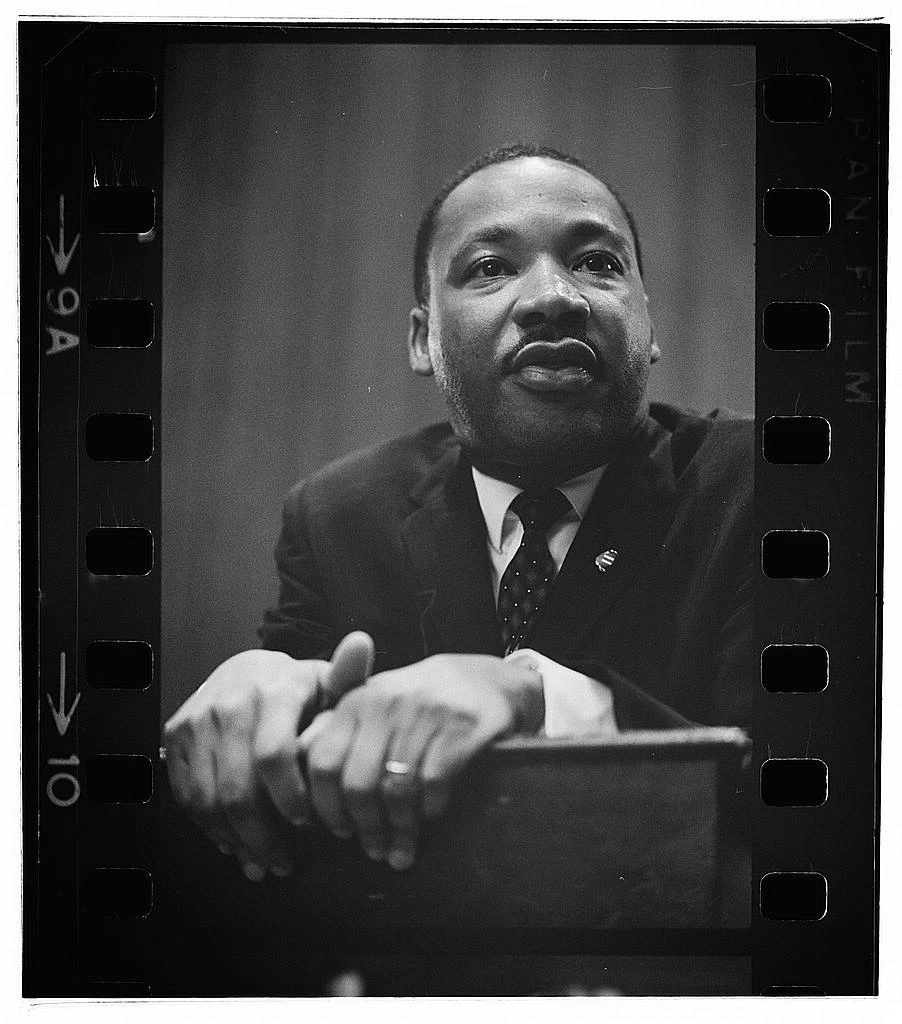
- 11. Library of CongressMartin Luther King press conference, 26 March 1964; official Flickr mirror
- 12. Library of CongressMartin Luther King press conference; LC-U9-11696-9A
The direct item and LOC image endpoint were blocked; identity and exact date were read through the official Library of Congress Flickr mirror. Its native full original preserves negative edges and is dated 1964, not 1963. The collection-specific donor dedication covers identified staff photographer Trikosko.
- 13. Library of CongressU.S. News & World Report Magazine Collection: rights and restrictions