In this biography
Quick facts
- Born
- 9 October 1934
- Died
- 15 June 2026
- Birthplace
- Cape Town, South Africa
- Country
- South Africa
- Nationality
- Not independently established
- Known for
- Mannenberg, the Jazz Epistles, Ekaya and a career connecting Cape Town music with international jazz
- Birth name
- Adolph Johannes Brand
- Earlier stage name
- Dollar Brand
- Name change
- Abdullah Ibrahim, after conversion to Islam in 1968
- Signature recording
- Mannenberg, 1974
- NEA Jazz Master
- 2019
- Died
- 15 June 2026
Why this life matters
His work shows how a recording can acquire political meaning through performers and listeners, while a musician’s changing settings sustain rather than erase connections to home.
Timeline
Key moments
Cape Town musical education
Church music and piano lessons precede a professional career.
Jazz Epistles
An ensemble connects him with Hugh Masekela and other musicians.
Europe and America
Exile and a Duke Ellington encounter expand his recording opportunities.
A new name and Mannenberg
Conversion to Islam precedes the landmark Cape Town recording.
Ekaya and homecoming
New ensembles and return visits culminate in a presidential-inauguration performance.
Honour and farewell
The NEA recognition precedes his death and a Cape Town memorial concert.
Cape Town supplied more than a birthplace
Ibrahim was born Adolph Johannes Brand in Cape Town on 9 October 1934. The NEA records a home shaped by his mother’s and grandmother’s church music and piano lessons from childhood. These experiences belonged to a wider city soundscape rather than an isolated classical apprenticeship.
His official biography describes encounters with American jazz, local dance music, hymns and Cape musical traditions. Performing as Dollar Brand, he developed through working groups before wider recognition. The variety matters: his later music did not require choosing between being rooted in South Africa and engaging with musicians elsewhere.
The Jazz Epistles and exile created relationships as well as recordings
The Jazz Epistles brought him together with Hugh Masekela and other important players in 1959. Apartheid restricted the spaces in which such musicians could work. He left South Africa in 1962, travelling with singer Sathima Bea Benjamin and establishing a European base.
In Zurich, Benjamin persuaded Duke Ellington to hear the musicians. A Paris recording followed in 1963. Later American work widened those connections. Benjamin was an active participant in this history, not simply the unnamed spouse of a bandleader. Institutional and official accounts differ on some individual performance dates, so this chronology does not force every appearance into an exact year.
Spiritual change and local musical invention developed together
His conversion to Islam in 1968 brought the name Abdullah Ibrahim. In his 2019 NEA interview, he connects spirituality, community and musical expression. The name Dollar Brand still identifies earlier releases; it does not refer to a separate pianist.
Mannenberg was recorded in 1974. Its later political resonance should not obscure the ensemble, including tenor saxophonist Basil Coetzee, or reduce Ibrahim’s output to one tune. Percy Mabandu’s historical account foregrounds the musicians who gave the recording its distinctive collective sound. A familiar composition can be an entry point without becoming a complete career summary.
Another departure was followed by new groups and a return
After the 1976 Soweto uprising he left again for New York. Work with Benjamin included the Ekapa label; Ekaya became a separate performing ensemble. The similar names refer to different activities, not interchangeable spellings of one institution.
His later projects ranged across small groups, orchestras and film music. South African History Online records albums revisiting earlier material as well as new work. Return visits after apartheid included performing at Nelson Mandela’s 1994 inauguration. Exile and return were repeated experiences, not a single departure followed by decades without South African connections.
A lifetime honour and a documented farewell
The NEA named him a 2019 Jazz Master. Its career record recognises a pianist and composer whose practice included solo and collective work; it is not a Grammy award for Mannenberg. Older biographies written while he was alive retain historical value but cannot establish his living status in October 2026.
His family announced his death on 15 June 2026 after a brief illness in Germany, reported by AP. The official-site memorial notice gives the same date, and the NEA issued its own tribute the next day. Cape Town musicians organised a June memorial concert. These later records supersede stale present-tense endings without erasing the long career they commemorate.
Quick answers
Frequently asked questions about Abdullah Ibrahim
- Were Abdullah Ibrahim and Dollar Brand the same musician?
- Yes. Born Adolph Johannes Brand, he used Dollar Brand before adopting Abdullah Ibrahim after his 1968 conversion to Islam.
- What is Mannenberg?
- A 1974 recording that became closely associated with anti-apartheid cultural life; it is not his entire repertoire.
- Are Ekapa and Ekaya the same?
- No. Ekapa was a record label associated with Ibrahim and Sathima Bea Benjamin; Ekaya is an ensemble.
- When did Abdullah Ibrahim die?
- 15 June 2026, confirmed by the family announcement, an official-site memorial notice and subsequent institutional tribute.
Keep exploring
Lives connected to this story
- Hugh Masekela
Follow a fellow Jazz Epistles musician’s different recording, exile and homecoming history.
- Miriam Makeba
Compare another South African career whose international work crossed artistic and political settings.
- William Kentridge
Explore a different medium connecting performance, collaboration and historical memory.
Sources and further reading
Explore the evidence
These references support the biography and offer further reading. Official records, first-person accounts and independent reporting provide different perspectives; image records document attribution and licensing.
- 1. Abdullah Ibrahim official siteBiography — historical career account, not a current living-status record
Historical career account; its current-residence and living-status language is superseded by June 2026 records.
- 2. National Endowment for the Arts2019 Jazz Master — birth record, ensembles and selected discography
Birth and honour record used; variable edition years in its selected discography are not universal release dates.
- 3. South African History OnlineAbdullah Ibrahim — selected early and later career chronology
- 4. NEA / Josephine Reed and Abdullah Ibrahim18 April 2019 — selected interview transcript, not full audio
Selected written transcript only; full podcast audio and complete albums were not consumed.
- 5. Associated Press15 June 2026 — family announcement of Ibrahim’s death
- 6. Friends of Abdullah Ibrahim / official site26 June 2026 — death date and memorial programme
- 7. National Endowment for the Arts16 June 2026 — institutional death statement
- 8. Percy Mabandu / New Frame, preserved by SAHO16 January 2020 — selected Mannenberg recording discussion
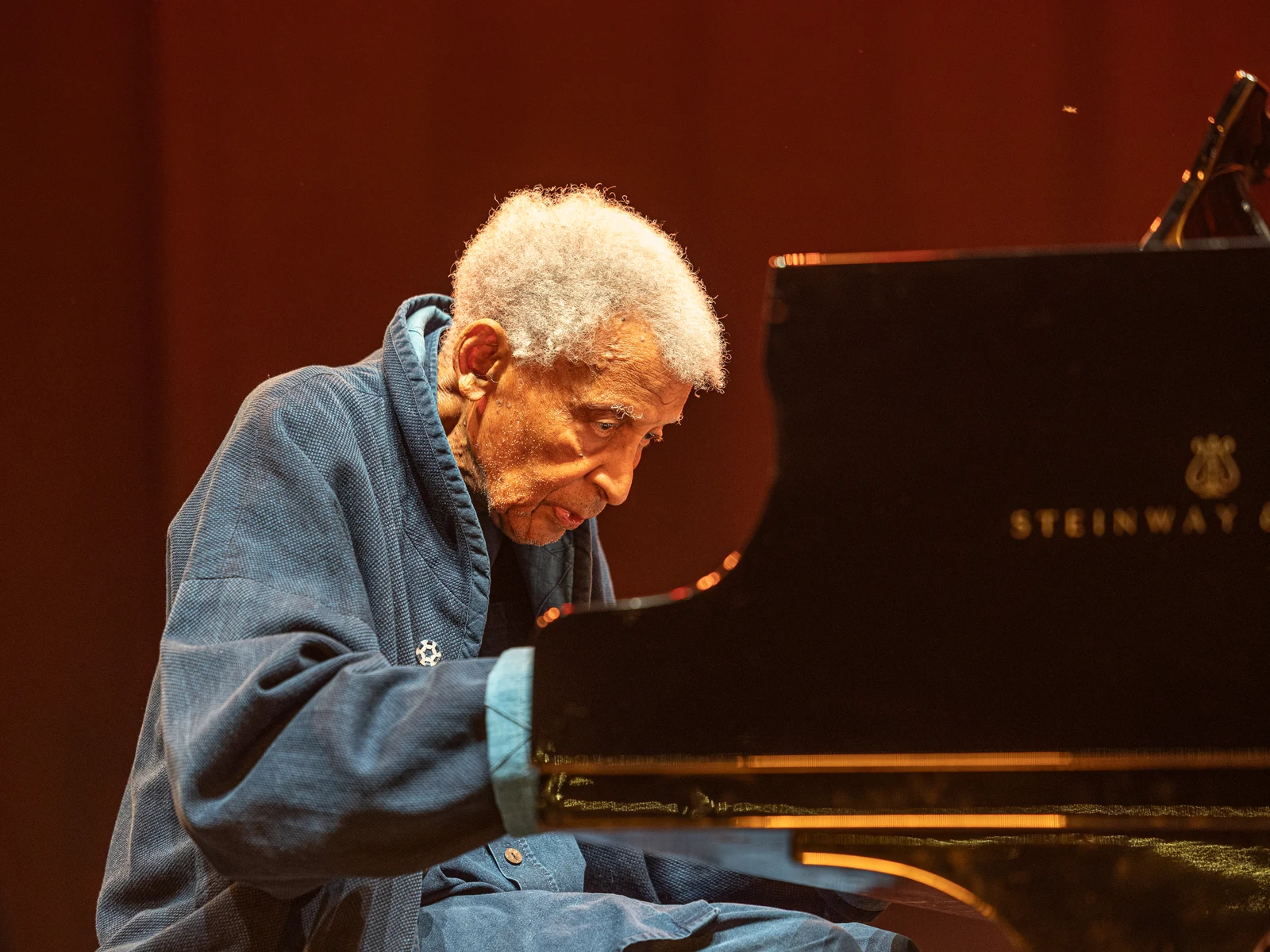
- 9. Harald Krichel / Wikimedia CommonsExact July 2025 performance photograph — own-work CC BY-SA 4.0
Author-uploaded own work and exact CC BY-SA 4.0 grant, first/current revisions and original metadata inspected; inaccessible accreditation ticket is not claimed as read.