
The short answer
Mannenberg’s political importance was not contained in a set of protest lyrics. The 1974 recording drew on familiar musical resources, while other musicians and audiences helped carry it into public struggle. This guide separates the recorded work, its collaborators and its later social life.
Chronology
A timeline of the turning points
Return and change
Ibrahim’s return and conversion precede the recording’s local musical development.
Mannenberg recorded
The title piece appears with The Pilgrim on the two-track record.
A wider public setting
Performers and listeners connect the music with anti-apartheid activity.
Retrospective accounts
Ibrahim’s NEA interview and Mabandu’s historical discussion revisit its meanings.
An ensemble made the sound listeners recognised
Mabandu names Basil Coetzee, Robbie Jansen, Morris Goldberg, Paul Michaels and Monty Weber among the recording’s players. Coetzee’s tenor saxophone is particularly important to his account. Ibrahim’s identity as composer and pianist does not erase these other musical contributions.
For a new listener, the useful distinction is between an artist’s name on a release and the people heard on the record. It also explains why a saxophone line can become central to the memory of a work associated with a pianist.
Sources for this section: [4]
A public anthem was made through use as well as intention
Khan emphasises Coetzee and Jansen’s role in taking the tune to rallies and concerts. The record’s associations therefore involved repeated performance and audiences, not just the private intention of its best-known musician.
In the selected NEA interview, Ibrahim connects musical expression with community and liberation. Read together, these accounts suggest how a recording could hold political meaning without delivering a manifesto in words. Calling it an unofficial anthem describes that social reception; it does not identify a legal adoption as a state anthem.
International circulation did not reproduce one uniform meaning
Khan notes the American title Cape Town Fringe and contrasts reception abroad with the music’s South African resonance. The NEA transcript also identifies that alternate title in its music credits. A changed title is not evidence of a different composer or a second pianist named Dollar Brand.
The same recording can enter different catalogues and listening histories. Its political life is consequently not reducible to sales or overseas fame. This source-led introduction does not reproduce the audio, album cover or musical notation, and it does not claim a complete listening analysis.
Biography context
Explore South Africa through connected lives
Abdullah Ibrahim
Read the wider career from Cape Town to exile, Ekaya and homecoming.
Explore the biographiesA fellow Jazz EpistleHugh Masekela
Compare another musician’s ensemble relationships and international career.
Explore the biographiesA different recording historyGrazing in the Grass
Distinguish American chart success from political reception and award recognition.
Explore the biographiesConnected biographies
The pianist beyond one landmark recording
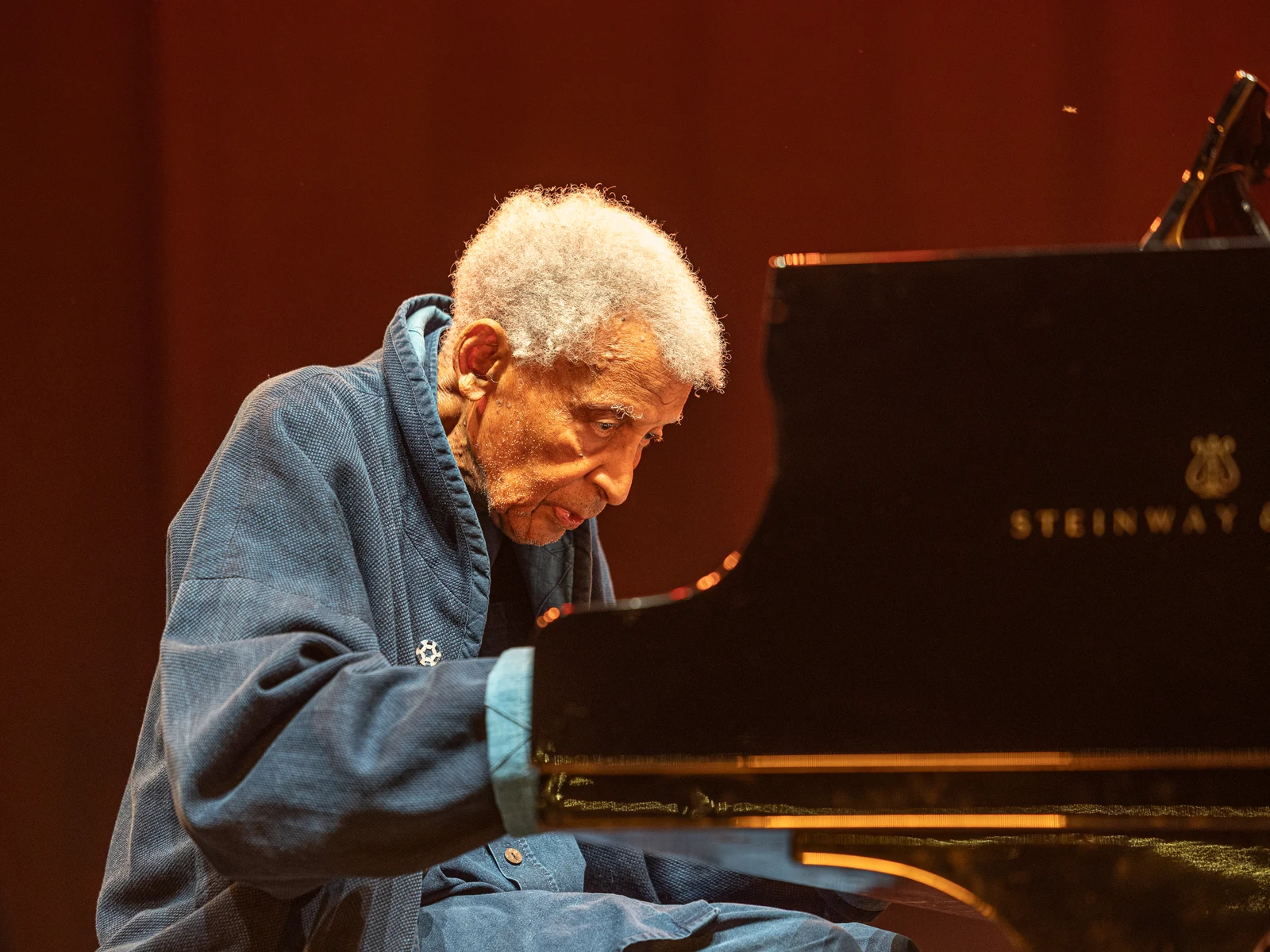
1934–2026
Abdullah Ibrahim
Pianist, composer and bandleaderAbdullah Ibrahim, initially known as Dollar Brand, built a musical language from Cape Town experience and international encounters. Exile, spiritual discipline and ensemble relationships shaped a career that extended far beyond Mannenberg, the recording later embraced as an anti-apartheid anthem.Read biographyQuick answers
Common questions
- When was Mannenberg recorded?
- 1974, as recorded by Ibrahim’s official biography and the NEA.
- Was it a solo piano recording?
- No. The documented ensemble included saxophones, bass and drums as well as Ibrahim’s piano.
- Why is it called an unofficial anthem?
- The phrase describes its anti-apartheid public associations, including later performances, rather than legal adoption as a national anthem.
- What is Cape Town Fringe?
- A title under which Mannenberg circulated in the United States, identified in the cited essay and NEA transcript.
Primary and institutional sources
How this history was checked
Selected passages from Mabandu’s 2020 article and Khan’s 2013 essay, plus official chronology, NEA record and selected interview transcript. PDF and HTML mirrors share one underlying-work budget each. Critical comparisons are attributed, not legal findings. No complete audio or original sleeve inspected; 2025 performance photograph is contextual. This article was reviewed on 24 October 2026.
- Abdullah Ibrahim official siteBiography — historical career account, not a current living-status record
- National Endowment for the Arts2019 Jazz Master — birth record, ensembles and selected discography
- NEA / Josephine Reed and Abdullah Ibrahim18 April 2019 — selected interview transcript, not full audio
- Percy Mabandu / New Frame, preserved by SAHO16 January 2020 — selected Mannenberg recording discussion
- Harald Krichel / Wikimedia CommonsExact July 2025 performance photograph — own-work CC BY-SA 4.0
- Nusra Khan / South African History Online2013 essay — selected musical and political reception discussion