
The short answer
The Head & the Load uses performance to confront the marginal place of African soldiers and carriers in accounts of the First World War. Understanding its 2018 London premiere means separating the history being evoked, the fragments used on stage and the many people who made the production.
Chronology
A timeline of the turning points
The historical subject
African labour and military service enter the work through uneven records and competing colonial claims.
Development
Workshops and studio experiments assemble material across disciplines.
London premiere run
Tate Modern’s Turbine Hall presents the work as part of 14–18 NOW.
A later account
Cal Performances discusses its making ahead of an announced November presentation.
The premiere was a performance, not a historical exhibition of one nation
The production record places the premiere at Tate Modern in London on 11 July 2018. Theatre Royal Stratford East’s contemporary notice corroborates the11–15 July run within the14–18 NOW centenary programme.
Its subject reaches across Africa and several empires rather than supplying a comprehensive South African campaign history. London is the location of this premiere guide; its connection to Kentridge explains its place in the South African reading path without changing the event’s geography.
Recovering neglected service does not require inventing a complete archive
The studio’s making account describes research into photographs, letters, military instructions and scarce oral histories. It also acknowledges that the project developed through uncertainty. An artistic response to gaps is not a newly complete list of everyone who served or died.
Cal Performances’ 2026 account connects the project with a letter by John Chilembwe questioning African participation in a European war. The production sets refusal beside claims to equality through service. These tensions are more informative than presenting all African participants as having one motive.
Music and movement have their own authors
Philip Miller and Thuthuka Sibisi are credited for music; Gregory Maqoma for choreography. Catherine Meyburgh’s projections and other design and technical contributions belong to the production’s structure, not to an anonymous supporting background.
Hettie Judah’s contemporary Frieze review explicitly questions the habit of attributing such a collective enterprise to Kentridge alone. Distinguishing direction from composition and performance is therefore part of understanding the work, not just adding a longer credit list.
Fragmented staging changes what a spectator can know
Judah describes action spread along the Turbine Hall, combining performers, mobile structures, animations and shadows. She interprets the difficulty of seeing everything as deliberate: the spectator cannot occupy a position of total command.
Her reading is criticism, not a universal report of every audience member’s response. It suggests a way into the performance’s broken languages and shifting points of attention: incomplete understanding can be a subject of the work rather than simply a failure to explain its historical background.
Sources for this section: [5]
A stage work, installation and later presentation need separate labels
The studio page also lists a related three-channel installation of approximately twenty minutes. That format is not interchangeable with the full live production. Similar titles can identify connected works whose scale, running time and viewing conditions differ.
Later presentations have their own venues and dates. Cal Performances announced November 2026 performances; they were still future events on 24 October. This guide does not turn a season announcement into an attendance report, nor claim to have watched the complete 2018 production or its later versions.
Biography context
Explore United Kingdom through connected lives
William Kentridge
Place this production in a career spanning several media.
Explore the biographiesCompare historical memoryFelix in Exile
Explore a different relation between absence, an image and remembrance.
Explore the biographiesEnsemble perspectiveAbdullah Ibrahim
Consider another South African career in which collaboration matters to authorship.
Explore the biographiesConnected biographies
A director within a collaborative production
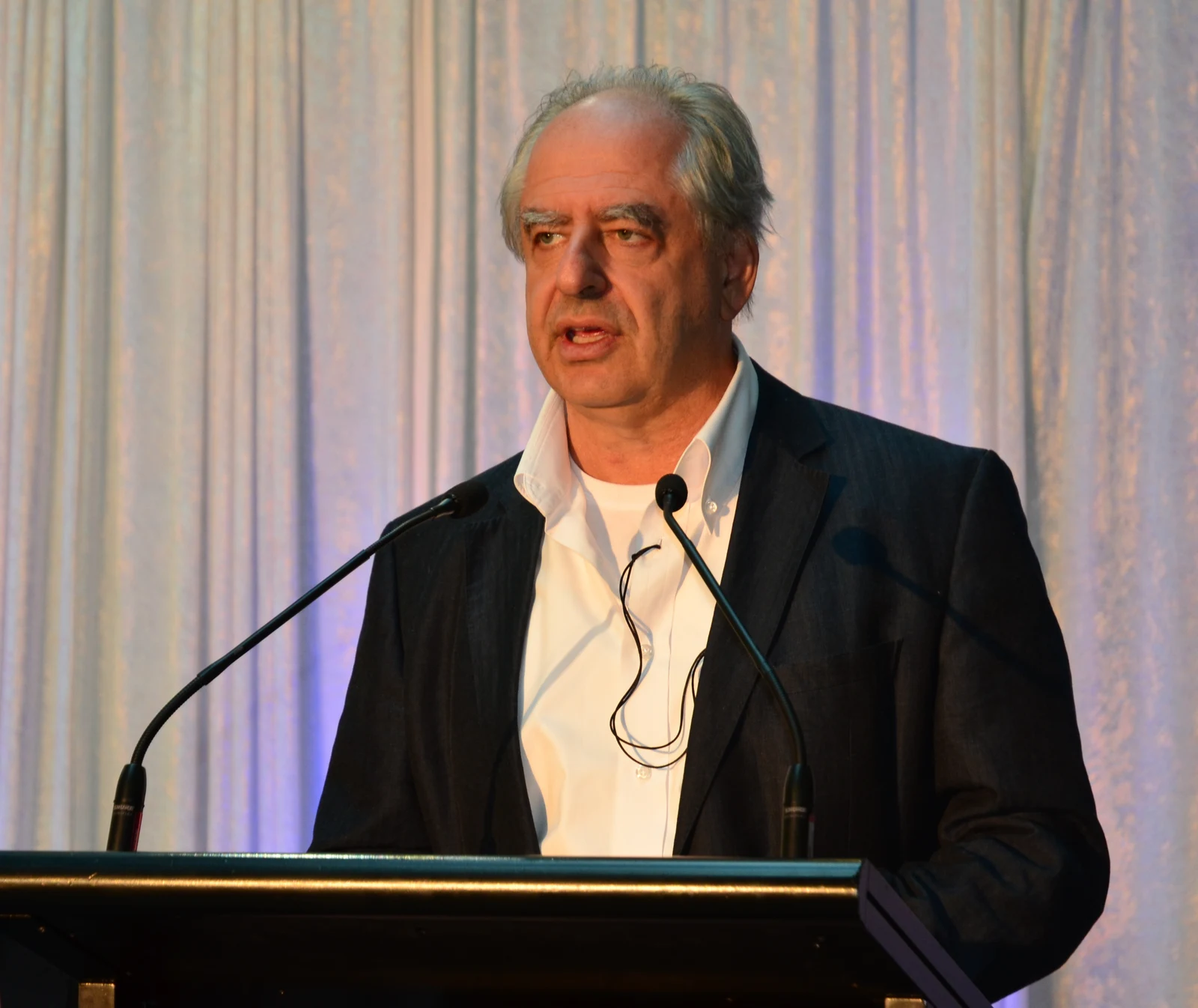
1955–
William Kentridge
Visual artist, filmmaker and theatre and opera directorWilliam Kentridge moves between drawings, projected images and live performance. His Johannesburg background informs work about apartheid, colonialism and memory, but an erased charcoal mark or an unresolved theatrical scene often complicates the story rather than delivering a single political message.Read biographyQuick answers
Common questions
- Where did The Head & the Load premiere?
- Tate Modern’s Turbine Hall, London, on 11 July 2018, with the first run continuing through 15 July.
- Did Kentridge compose all its music?
- No. Philip Miller and Thuthuka Sibisi have distinct music credits, alongside other credited collaborators.
- Is the twenty-minute installation the full live production?
- No. The studio lists a related three-channel installation separately from the stage work.
- Does it document every African wartime death?
- No. It responds to historical records and their gaps; it is not a complete casualty register.
Primary and institutional sources
How this history was checked
Selected production credits/making account, contemporary premiere notice and Hettie Judah’s attributed review; Thomas May’s 2026 presenter-commissioned account is distinguished from independent criticism. No complete performance, libretto or private archive consumed. Portrait is contextual, not a production still. This article was reviewed on 24 October 2026.
- Kentridge StudioThe Head & the Load — selected credits, making account and performance history
- Cal Performances / Thomas May28 September 2026 — collaboration and announced November presentation
- Peter Campbell / Wikimedia CommonsExact 2012 photograph — creator-uploaded original and CC BY-SA 3.0 grant
- Theatre Royal Stratford East1 August 2018 — contemporary premiere and recording notice
- Frieze / Hettie Judah18 July 2018 — attributed critical account of the London production