
The short answer
Finding a particular microbe, identifying its harmful activity and neutralizing that activity require different comparisons. The historical records can be sorted by those questions.
Evidence at a glance
How are cultivation and neutralization different claims?
Read each observation alongside the particular inference it supports.
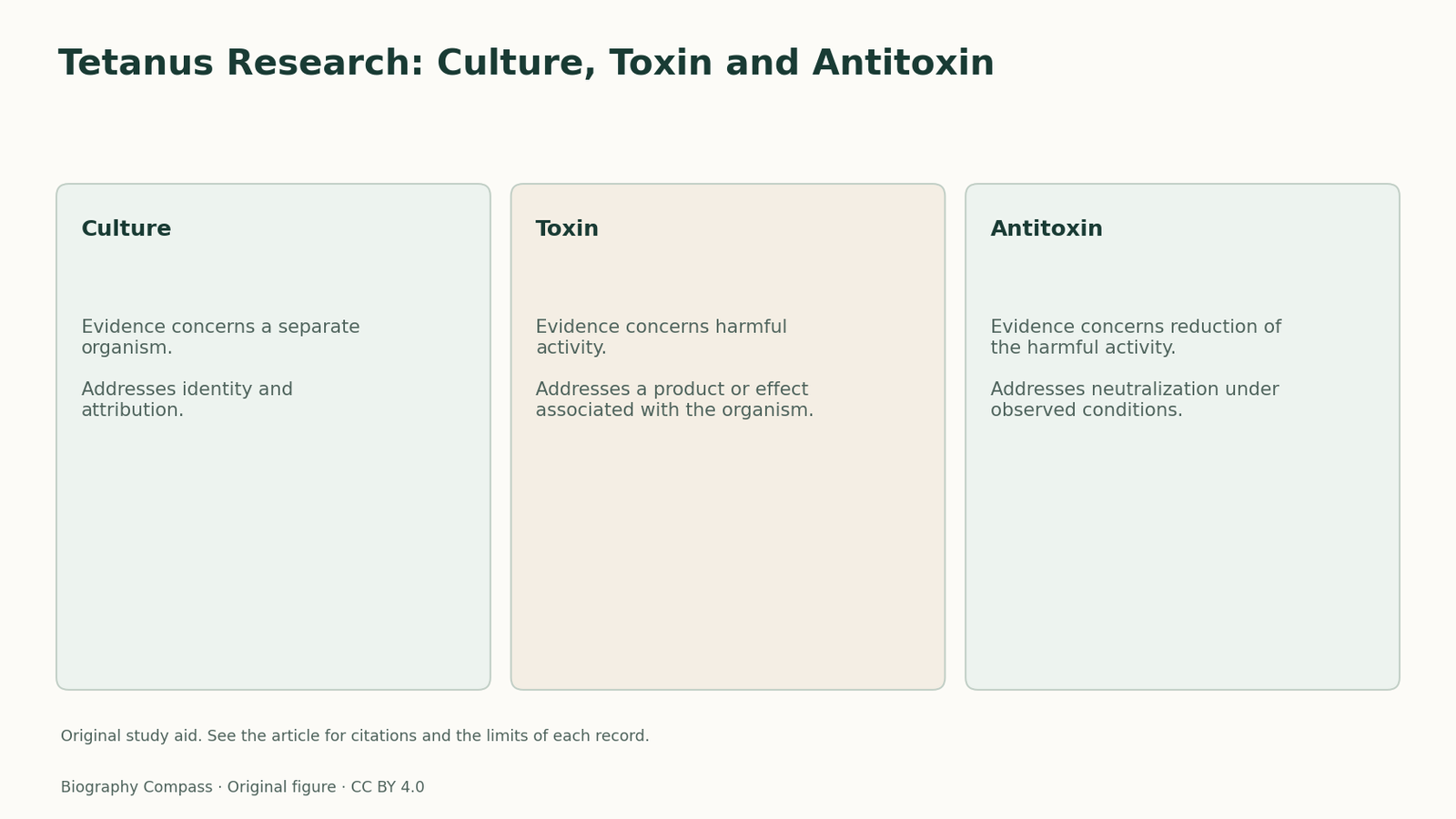
| Record or example | Observation | Interpretation |
|---|---|---|
| Culture | Evidence concerns a separate organism. | Addresses identity and attribution. |
| Toxin | Evidence concerns harmful activity. | Addresses a product or effect associated with the organism. |
| Antitoxin | Evidence concerns reduction of the harmful activity. | Addresses neutralization under observed conditions. |
Use a separate column for each object
The historical report describes Kitasato’s pure-culture work and related investigations of tetanus poison. The observation of a microbe concerns the organism. Evidence of toxicity concerns a harmful effect produced in connection with it. Evidence of neutralization concerns whether another substance can block that effect. A report can address one column while leaving others untested.
An original records exercise
Imagine a historical archive has three labelled cards. A reports that investigators could examine one type of bacterium separately. B reports harmful activity in a preparation associated with that bacterium. C reports reduction of that activity in a comparison involving a substance from an immune animal. Assign A to culture, B to toxin, and C to neutralization. The exercise classifies reported claims without specifying an experimental procedure.
Ask what would be too broad
Suppose the caption below C claims that the substance must have removed every living bacterium. Does the card justify that? Its endpoint concerns the activity in the comparison, while clearing a living organism would require an observation of the organism itself. Likewise, A does not state that any protective effect was tested. Separating the endpoints makes it easier to spot a confident caption that overstates its evidence.
Read the collaborations by question
The Kitasato institutional account and the government report distinguish the 1889 cultivation milestone from the subsequent study of protective activity involving Behring and Kitasato. These records show how experimental bacteriology and immunology were linked. A history of the transition can preserve that link while attributing each claim to the evidence and contributors associated with it.
Continue the chronology
Related history guides
Biography context
Explore Japan through connected lives
Connected biographies
The researcher behind the records
1853–1931
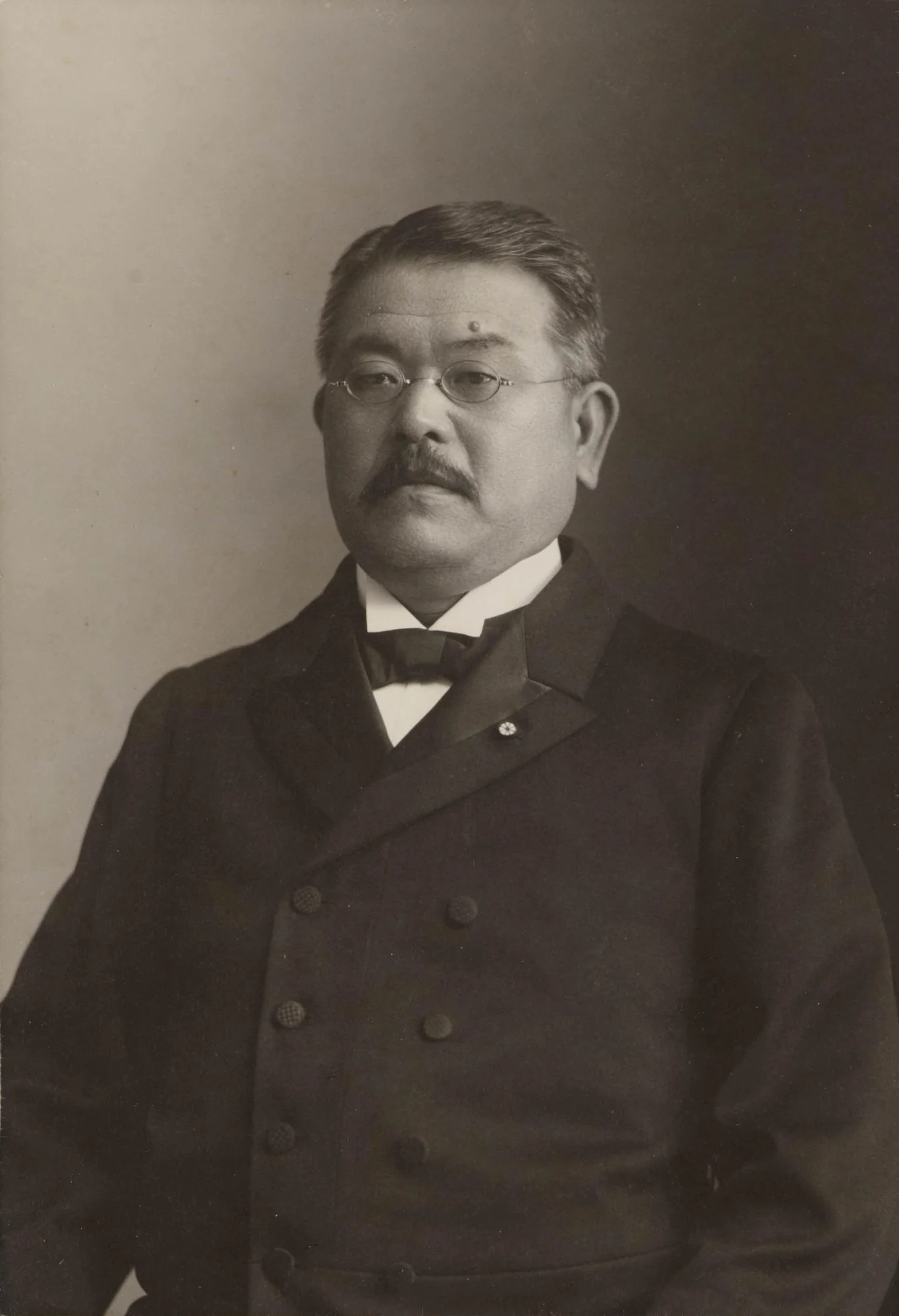
Shibasaburo Kitasato
Bacteriologist and institution builderKitasato investigated the tetanus bacillus and experimental immunity.Read biographyQuick answers
Common questions
- Does neutralizing toxin mean all bacteria were removed?
- Neutralization is an observation about the toxin’s effects. Evidence about bacteria would require a separate endpoint.
Primary and institutional sources
How this history was checked
The notes distinguish period evidence, later interpretation, and original exercises. This article was reviewed on 5 November 2026.