
The short answer
A microscope report that finds an organism in some specimens leaves a question about the others. The denominator records the set examined, not every patient with the condition.
Evidence at a glance
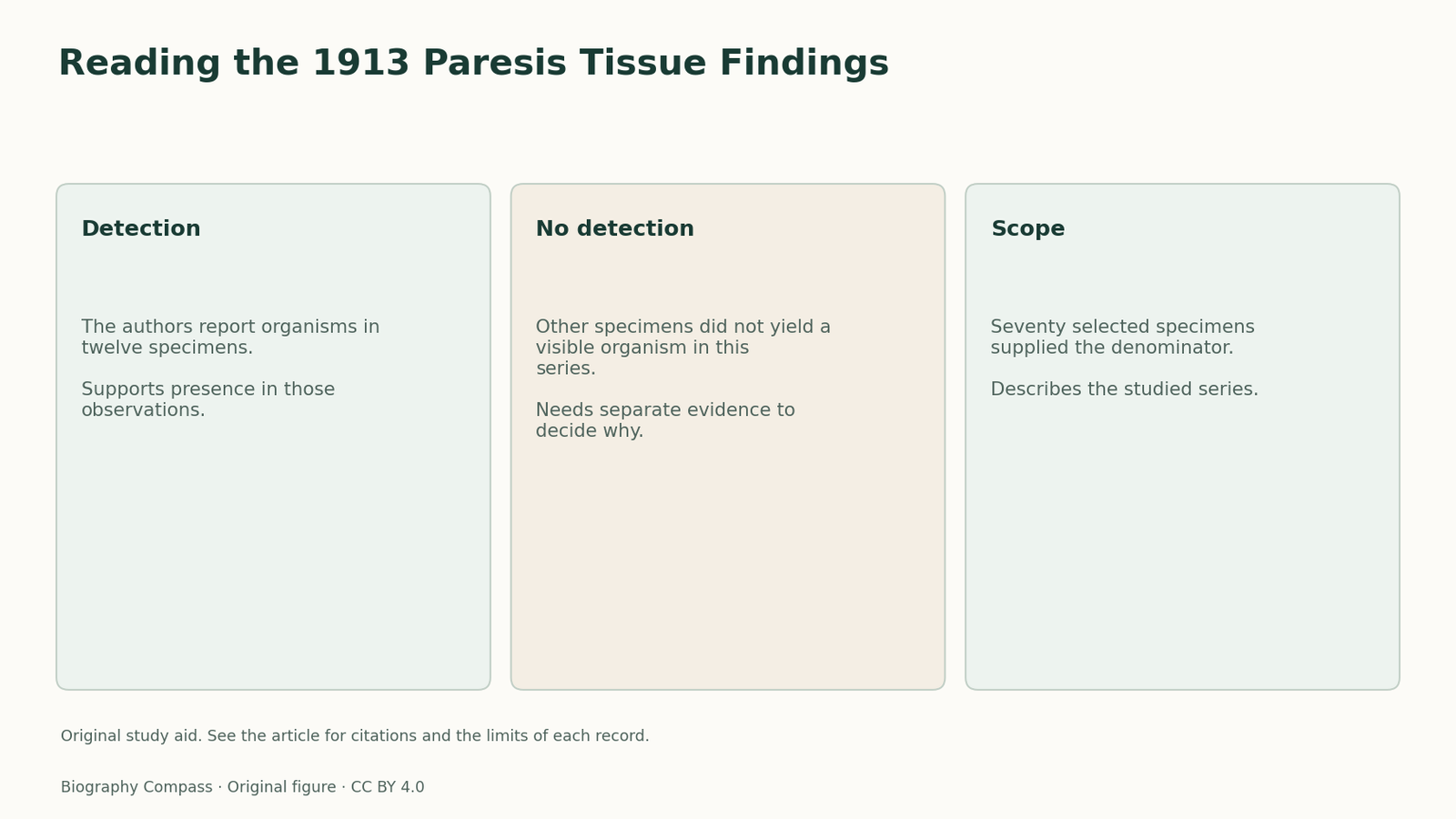
What does twelve detections in seventy specimens support?
Read each observation alongside the particular inference it supports.
| Record or example | Observation | Interpretation |
|---|---|---|
| Detection | The authors report organisms in twelve specimens. | Supports presence in those observations. |
| No detection | Other specimens did not yield a visible organism in this series. | Needs separate evidence to decide why. |
| Scope | Seventy selected specimens supplied the denominator. | Describes the studied series. |
Begin with the authors’ denominator
The report by Noguchi and Moore describes seventy brain specimens from people with general paresis and twelve instances of visible Treponema pallidum. The specimens came from a hospital’s pathology service. The result added tissue evidence to a prior debate informed by clinical histories and other records. A reader can accept the importance of the positive observations while keeping their scope tied to the study series.
Sources for this section: [2]
Separate non-detection from absence
The paper itself considers how technique, the site examined and the observer’s ability to distinguish an organism from surrounding material can affect what is seen. A specimen without detection can remain compatible with more than one explanation. To interpret that result, a reader needs independent evidence about what the observation method is capable of finding and which tissue it sampled.
Sources for this section: [2]
A worksheet with an invented denominator
Imagine ten marked locations on a printed page and a search that examines only four. The observer sees two marks. Which fraction is a direct description of the searched locations? Two out of four. Would the result mean that the six unchecked locations are blank? The worksheet uses visible marks to separate the denominator from the scope of a search; it supplies no model of disease frequency.
What would change the interpretation?
A separate validation study could compare known positive and negative material. A sampling study could examine how different areas affect the chance of observing an organism. Neither kind of evidence should be silently substituted for the 1913 series. This is why an original report can be a landmark without every number in it functioning as a current clinical statistic.
Sources for this section: [2]
Continue the chronology
Related history guides
Biography context
Explore Japan through connected lives
Connected biographies
The researcher behind the records
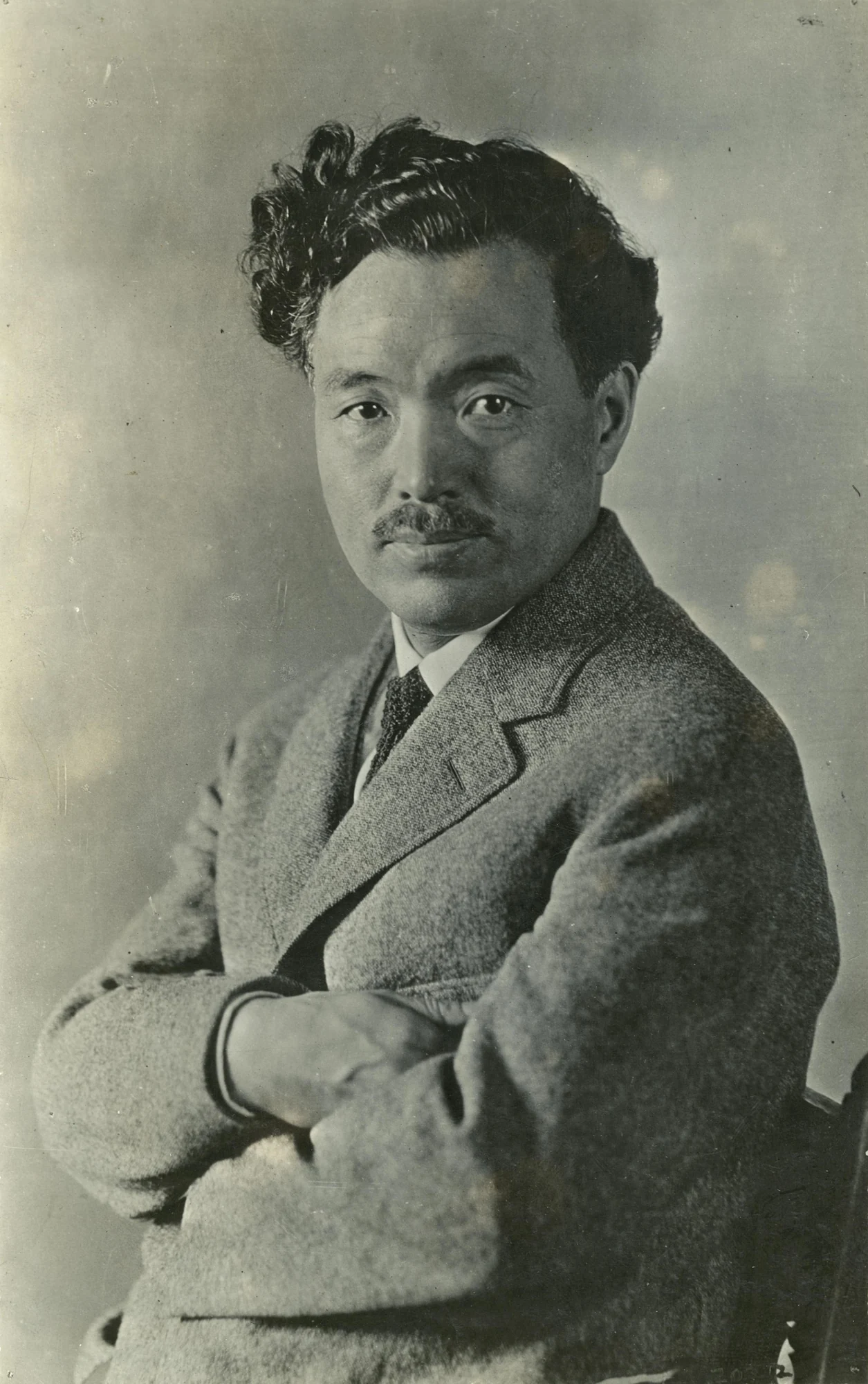
1876–1928
Hideyo Noguchi
BacteriologistNoguchi used bacteriological methods to study disease in several settings.Read biographyQuick answers
Common questions
- Can the twelve-of-seventy figure be applied to every patient?
- The figure describes the authors’ selected tissue series and observation method.
Primary and institutional sources
How this history was checked
The notes distinguish period evidence, later interpretation, and original exercises. This article was reviewed on 5 November 2026.