
The short answer
When MV Nihon called at Tanjong Pagar on 23 June 1972, Singapore had a terminal built to handle container shipping. The government had decided to build it six years earlier. The new operation changed what happened between the ship’s arrival and the departure of goods from the port.
From traditional cargo handling to containers
What changed at the quay and in the yard
The new unit affected equipment and space as well as ships.
| Operation | What a container terminal needed | Why it mattered |
|---|---|---|
| Ship loading and unloading | Cranes and berths designed around the box | Transfers could use standard lifting points. |
| Holding cargo between journeys | Yard space and planning for box movements | The arrival of a box and its departure need not occur together. |
| Connections | Coordinated sea or land onward journeys | A terminal can transfer cargo between services as well as deliver it locally. |
Chronology
A timeline of the turning points
Singapore decides to build a container port
The investment requires preparation before shipping services begin.
MV Nihon calls
The event marks the start of container shipping operations at the new terminal.
Other areas take on container capacity
The port expands beyond the initial Tanjong Pagar facilities.
What the 1966 decision committed Singapore to
The government’s retrospective attributes the decision to Lee Kuan Yew and his Cabinet. It committed resources before the first container service arrived. Infrastructure, equipment and training had to be in place for a ship call to become a repeatable operation.
The 1972 event is the point at which the new handling system became visible in use. A policy decision and a vessel arrival record different steps.
Why the new terminal needed more than cranes
Lifting boxes is only the transfer at the ship’s side. A terminal also tracks where boxes go and makes room for them while they wait for another ship or an inland carrier. Yard arrangements and connections are therefore part of the significance of the early investment.
How to place the photograph in the timeline
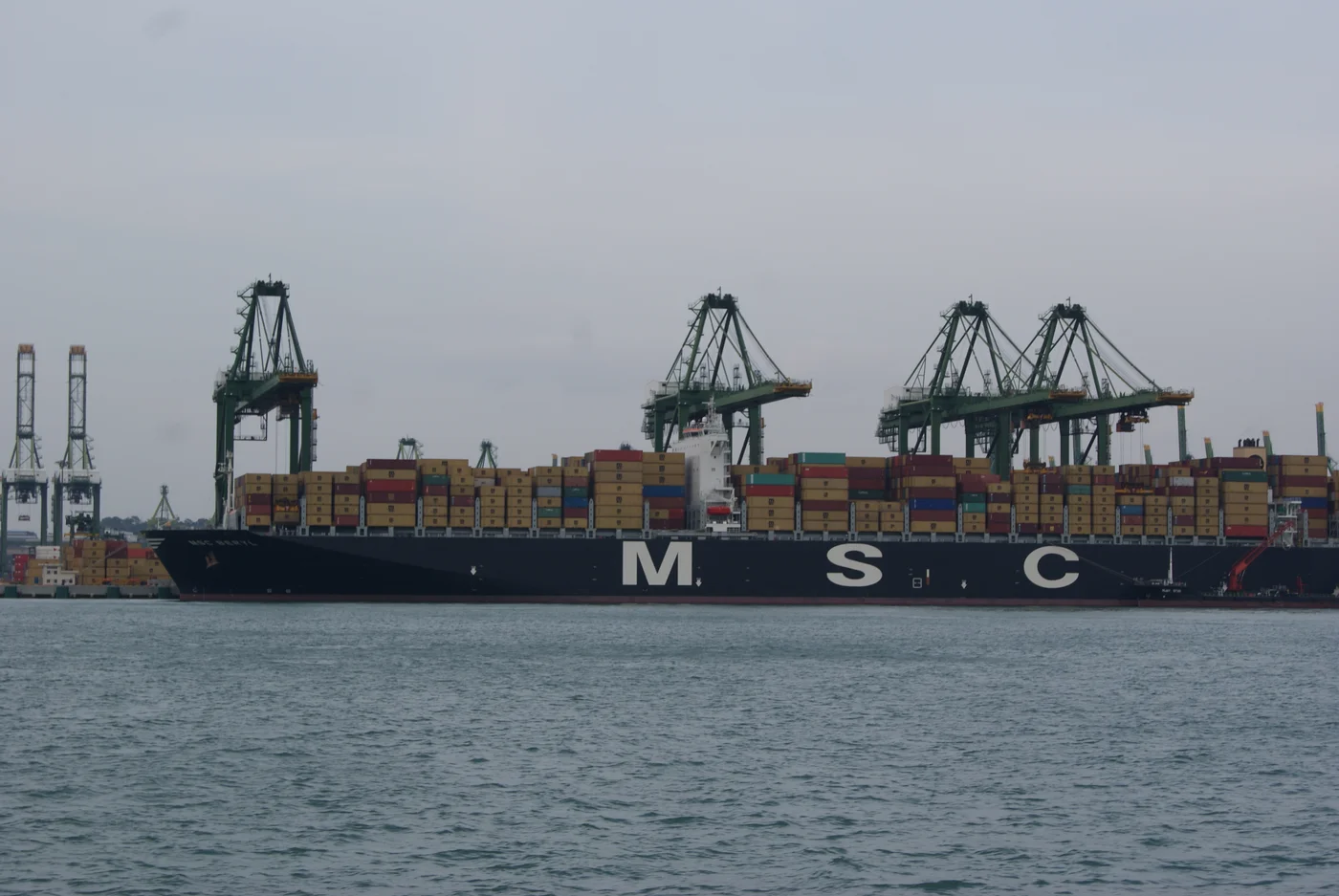
The photo shows MSC Livorno in 2011, giving a later view of a working container berth. The 1972 vessel was MV Nihon, identified by the Maritime and Port Authority. The two records together show a dated opening milestone and an example of the kind of work that continued at the terminal.
Continue the chronology
Related history guides
How Pasir Panjang Expanded Singapore’s Container Port
See how Singapore expanded its container port and introduced remote yard cranes.
Read the timeline1973What Tokyo Bay’s 1973 Call Changed at Port Klang
Compare the first container operations at a Malaysian port.
Read the timeline1991Why Thailand Built Laem Chabang as a Deep-Sea Port
Compare a later investment intended to shift some traffic away from an older port.
Read the timelineConnected biographies
People connected to this history
Quick answers
Common questions
- Which ship made Singapore’s first container call?
- MV Nihon called at Tanjong Pagar on 23 June 1972.
- When did Singapore decide to build the terminal?
- The Ministry of Transport dates the Cabinet decision to 1966.
Primary and institutional sources
How this history was checked
Dates, legal milestones and historical claims are checked against the official and institutional records below. This article was reviewed on 19 November 2026.