
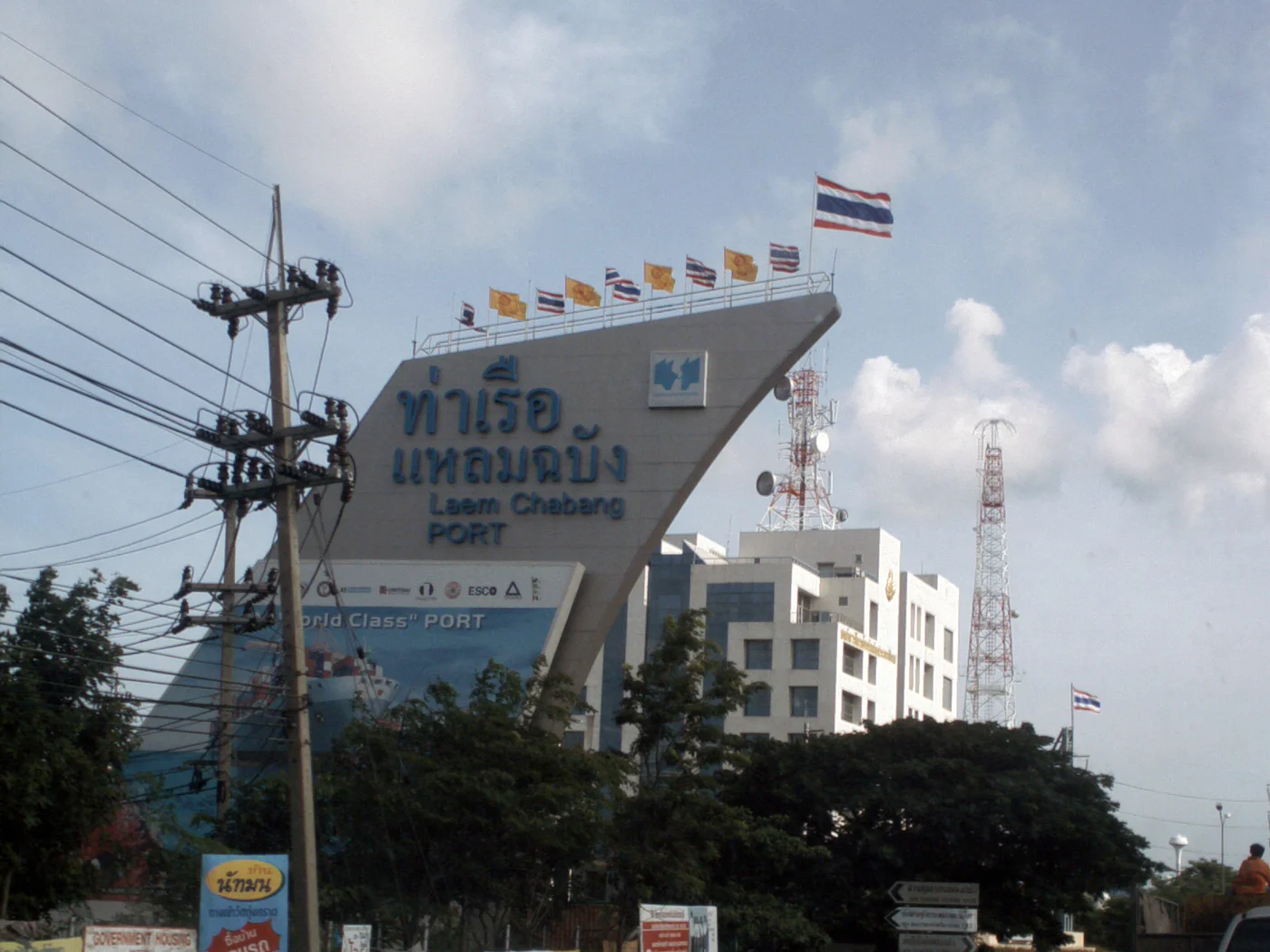
The short answer
Laem Chabang began commercial operations in January 1991. Thailand built the deep-sea port to handle larger vessels and to connect new industrial areas on the Eastern Seaboard to overseas markets. Bangkok Port continued to operate on the Chao Phraya River alongside the new facility.
Two ports in one region
Laem Chabang and Map Ta Phut
The Eastern Seaboard plan included ports that served different industrial requirements.
| Port | Priority in the plan | Connection to industry |
|---|---|---|
| Laem Chabang | Deep-sea access for general cargo and container shipping | Connections to inland factories and distribution networks |
| Map Ta Phut | Industrial port serving bulk and industrial traffic | Connected to a separate industrial complex associated with petrochemicals and heavy industry |
Chronology
A timeline of the turning points
Eastern Seaboard plan approved
Thailand gives a port and industrial development programme a common framework.
Construction starts
The project advances from studies and design to work on the port.
Port opens as works continue
The engineering archive records commercial operation in January and completion of the initial construction project in October.
Why Bangkok Port needed a counterpart
A port on the Chao Phraya serves the capital directly, but a river approach limits which vessels can use it. Thailand’s new port programme addressed those constraints while linking the coastal provinces to international shipping.
The main works provided protected water and berths. Roads, railway connections and the industrial areas that sent goods to those berths were just as important to the port’s usefulness. The engineering archive covers their development as part of the same regional programme.
Who planned and built it
The Thai government set the Eastern Seaboard strategy and the Port Authority of Thailand took responsibility for Laem Chabang. Japanese cooperation supported planning and engineering and helped finance construction. The engineering project history identifies decisions and tasks on both sides.
Map Ta Phut belonged to the wider strategy, with a stronger focus on industrial cargo. Treating it as a separate facility explains why the programme provided two port locations even while Thailand was building Laem Chabang’s capacity.
Opening before the last work was finished
The project chronology lists a multipurpose berth by late 1990, the start of commercial operation in January 1991 and initial project completion in October. The sequence shows why port activity can appear in the record before contractors finish all the works in a construction package.
The Asian Development Bank’s case study follows later phases as demand grew. The first operating date belongs to the original project. Later phases gave the port additional capacity and sit on a different chronology.
Continue the chronology
Related history guides
How Bangkok Built Its River Port at Khlong Toei
Trace the river port whose access and cargo limits shaped later port planning.
Read the timeline1982–1992Why Thailand Built Map Ta Phut Industrial Port
Compare the dedicated petrochemical port in Rayong.
Read the timeline1995–1996 · later surveysHow Lat Krabang Moved Port Work Inland
See how the inland Lat Krabang depot helped channel freight to Laem Chabang.
Read the timeline2016What New Priok’s First Container Terminal Added
Compare a later phased container-terminal expansion in North Jakarta.
Read the timeline1966–1972How Tanjong Pagar Became Singapore’s First Container Terminal
Compare Thailand’s new deep-sea site with Singapore’s earlier investment in a dedicated container terminal.
Read the timelineConnected biographies
People connected to this history
Quick answers
Common questions
- When did Laem Chabang Port start operating?
- Commercial operations began in January 1991. The initial construction project was completed later that year.
- Why did Thailand build Laem Chabang?
- The port accommodated deep-sea vessels and gave industries on the Eastern Seaboard another route to overseas markets.
Primary and institutional sources
How this history was checked
Dates, legal milestones and historical claims are checked against the official and institutional records below. This article was reviewed on 19 November 2026.