
The short answer
Steve Jobs’s return was neither a single announcement nor an automatic restoration of his old authority. It followed a difficult hardware venture, a software platform with a longer future, a parallel film business and a sequence of corporate decisions across 1996 and 1997.
Chronology
A timeline of the turning points
Departure and a new company
After losing operational authority at Apple, Jobs resigns and begins NeXT.
Pixar becomes independent
Jobs purchases Lucasfilm’s Computer Division. Pixar and NeXT remain different businesses.
The NeXT computer appears
Jobs introduces a workstation combining advanced hardware with a distinctive development environment.
NeXT concentrates on software
Its factory closes as the company moves away from manufacturing its own computers.
Apple announces an agreement
The proposed acquisition aims to bring NeXT’s software technology into Apple; it is not yet Jobs’s CEO appointment.
Acquisition, then interim CEO
Apple’s filings date the NeXT purchase to 4 February. Jobs initially advises Apple and is named interim CEO on 16 September.
1985: losing authority and leaving Apple
Jobs’s first Apple career ended in stages. A struggle involving chief executive John Sculley and the board left him without operational control during 1985. He resigned in September and formed NeXT. At Stanford twenty years later, he described that painful reversal as being fired. The company chronology records a resignation; the personal account emphasizes the earlier loss of authority. Those perspectives describe different parts of the same rupture.
NeXT was a new enterprise, not an Apple division or a renamed Macintosh project. Jobs could set its direction, but he also had to finance development, recruit a team and find customers. The freedom to begin again did not remove the practical constraints of building a computer business.
1988: an ambitious workstation, not a mass-market breakthrough
On 12 October 1988, Jobs introduced the NeXT computer. The black cube combined a Motorola-based system, magneto-optical storage and a digital signal processor with the NeXTSTEP programming environment. It was directed toward demanding educational and professional work rather than simply replacing an inexpensive home computer. The Computer History Museum records a base price of $6,500.
That price helps explain the difference between technical interest and a workable market. The museum describes limited sales despite the machine’s innovations. NeXT’s most durable contribution would not be the cube-shaped enclosure. The software and the tools available to programmers could outlast a particular processor, storage device or manufacturing operation, although that outcome was not guaranteed at the launch.
The software platform survives the hardware retreat
By 1993, NeXT had closed its factory and shifted toward software. NeXTSTEP combined an operating environment with tools for creating applications. Its object libraries and Interface Builder let programmers reuse interface components and connect them visually. Jobs promoted the potential productivity benefits, but these were company arguments, not proof that every project would take a fixed fraction of its former development time.
The platform had a notable real-world application at CERN. Tim Berners-Lee developed the first WorldWideWeb browser/editor on a NeXT machine in 1990; CERN’s contemporary project history records the prototype that November. This does not make Jobs the inventor of the Web or the Internet. It shows how another developer used NeXT’s environment for a different purpose.
Pixar was a parallel business with its own creators
Jobs’s work outside Apple was not confined to NeXT. In 1986 he bought Lucasfilm’s Computer Division, which became the independent Pixar. It already contained researchers and artists with experience in computer graphics. Pixar’s account identifies Ed Catmull, Alvy Ray Smith and John Lasseter in the organization before Jobs’s purchase. Ownership and financing did not make him the author of their technical and artistic work.
The studio moved through hardware, short films and commercial production before Toy Story opened on 22 November 1995. Its public offering followed that month. These milestones mattered to Jobs’s business career, but Pixar did not supply the operating system Apple acquired. Keeping the two ventures separate makes the later return easier to understand.
December 1996 was an agreement, not the completed purchase
Apple announced its agreement to acquire NeXT on 20 December 1996. The merger agreement, preserved as an exhibit in Apple’s SEC filing, identifies Apple, its acquisition subsidiary and NeXT as separate parties. The transaction offered Apple a route toward a new operating-system foundation. It was more than hiring back a famous founder: the software, development tools and people were part of the business being acquired.
The purchase belongs to February 1997, not December 1996. Apple’s contemporaneous quarterly filing specifically dates acquisition of NeXT’s outstanding shares to 4 February. That financial record is more precise than later summaries which compress the agreement and purchase into a single event. Jobs initially returned as an adviser rather than immediately replacing Apple’s chief executive.
1997: a leadership transition, with the outcome still ahead
Apple’s fiscal 1997 annual filing records Gil Amelio’s July departure and the 16 September announcement naming Jobs interim CEO. Acquiring NeXT, receiving Jobs’s advice and appointing him to run Apple were therefore separate decisions. NeXT’s technology supplied a foundation for further work; Mac OS X did not appear as a finished consumer release at the moment the purchase closed.
The acquisition also did not make Apple’s difficulties disappear. Its annual report described competitive pressure, restructuring and risks around delivering new products. The later products associated with Jobs’s return required additional engineering and commercial decisions. This episode is best understood as a change in resources and leadership under uncertain conditions, not evidence that a celebrated executive or an acquisition inevitably produces a successful turnaround.
Biography context
Explore United States through connected lives
The wider career
Follow Jobs’s education, Apple partnership, separate ventures and later leadership.
Explore the biographiesSteve Wozniak biographyA different Apple contribution
Explore Wozniak’s engineering of Apple’s early computers and distinguish it from Jobs’s business role.
Explore the biographiesConnected biographies
People behind the business and engineering
1955–2011
Steve Jobs
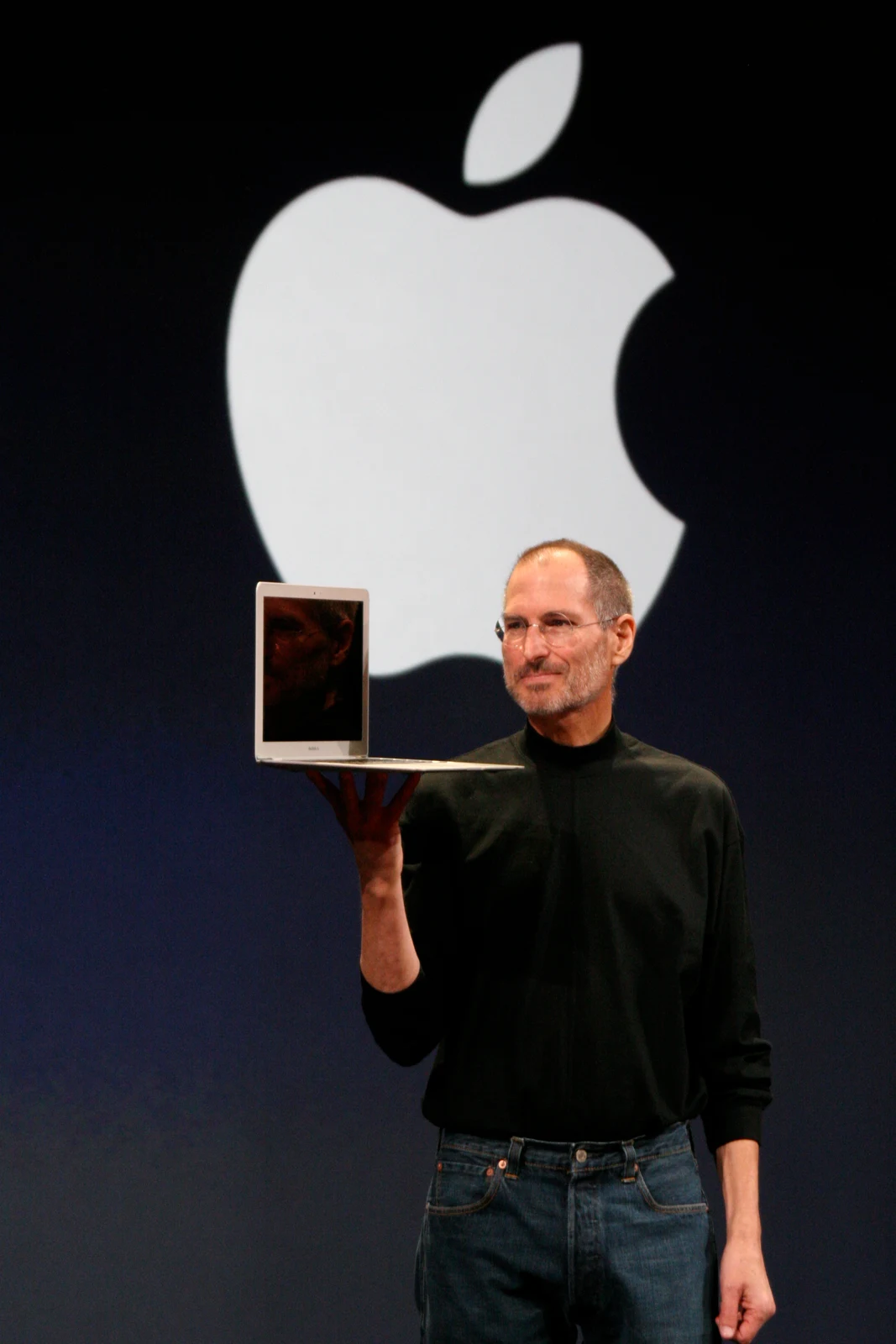
Apple co-founder, NeXT founder and Pixar executiveSteve Jobs co-founded Apple, established NeXT after leaving in 1985, and backed the independent Pixar. His return through Apple's NeXT acquisition preceded a second period leading Apple’s product development and business strategy.Read biography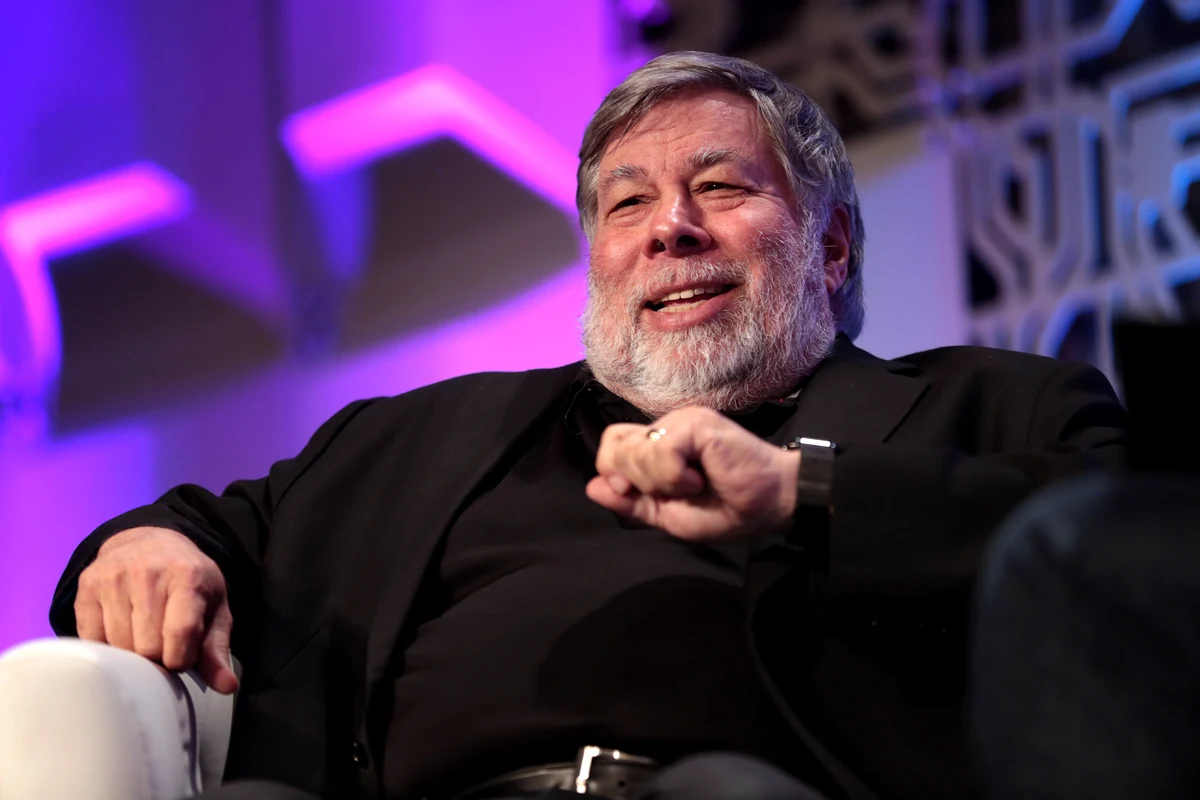
1950–present
Steve Wozniak
Computer engineer, Apple co-founder and educatorAn engineer whose economical hardware and software designs helped turn hobbyist microcomputing into a consumer business, followed by work in education and other ventures.Read biographyQuick answers
Common questions
- Did Jobs return to Apple in 1996 or 1997?
- The agreement was announced on 20 December 1996. Apple acquired NeXT in February 1997; its contemporaneous filing dates the share acquisition to 4 February. Jobs’s return as an adviser and his September 1997 appointment as interim CEO were distinct stages.
- Why did Apple want NeXT?
- Apple sought software technology for a more modern operating-system foundation. The purchase included NeXT’s software business, not simply a contract for Jobs’s services. NeXT-derived technology subsequently contributed to Mac OS X.
- Did NeXT invent object-oriented programming or the Web?
- No. NeXT used an existing programming approach and developed an integrated environment around it. Tim Berners-Lee created the first Web browser/editor using a NeXT computer at CERN in 1990; using that platform did not make Jobs the Web’s inventor.
- Was Pixar part of Apple’s NeXT purchase?
- No. Pixar was the independent company established after Jobs bought Lucasfilm’s Computer Division in 1986. Its film production, including Toy Story, was separate from NeXT’s computer and software business.
Primary and institutional sources
How this history was checked
Apple’s contemporary filings anchor the agreement, acquisition and executive dates. Museum research, CERN’s project record and studio histories explain the distinct technologies and organizations. This article was reviewed on 21 October 2026.
- Computer History MuseumApple Timeline
- Stanford UniversitySteve Jobs’s 2005 commencement address
- Computer History MuseumOctober 12, 1988: Steve Jobs Introduces NeXT Computer
- Computer History Museum1988 Timeline of Computer History
- Computer History MuseumThe Deep History of Your Apps: Steve Jobs, NeXTSTEP, and Early Object-Oriented Programming
- CERNWWW Project History
- CERNThe birth of the Web
- LucasfilmOur Story
- Pixar Animation StudiosOur Story
- Apple / US Securities and Exchange CommissionForm 10-Q, filed 10 February 1997, including NeXT merger agreement
- Centre for Computing HistoryApple buys NeXT, and Steve Jobs returns
- AppleFiscal 1997 Form 10-K, filed 5 December 1997
- Wikimedia Commons / Matthew YoheSteveJobsMacbookAir.JPG: original file and license