In this biography
Quick facts
- Born
- 24 February 1955
- Died
- 5 October 2011
- Birthplace
- San Francisco, California, United States
- Country
- United States
- Nationality
- American
- Known for
- Building technology businesses around product design, personal computing, digital media and mobile devices
- Born
- 24 February 1955
- Education
- Attended Reed College in 1972; did not graduate
- Apple partnership
- 1976, with Steve Wozniak and Ronald Wayne
- NeXT
- Founded in 1985; acquired by Apple in February 1997
- Pixar
- Purchased Lucasfilm’s Computer Division in 1986
- Final Apple transition
- Resigned as CEO and became chairman on 24 August 2011
Why this life matters
Jobs connected engineering, design and marketing across several industries. His career also shows the difference between a highly visible business leader and the many people who invent, build and operate a company’s products.
Timeline
Key moments
Born in California
Steven Paul Jobs was born on 24 February in San Francisco and adopted by Paul and Clara Jobs.
Reed College
He enrolled at Reed in Portland, left the degree program after one semester and continued auditing classes.
Apple’s early products
Jobs joined Wozniak and Wayne in the Apple partnership; Apple incorporated in 1977 and launched the Macintosh in 1984.
Two new ventures
After leaving Apple, Jobs formed NeXT, purchased the Lucasfilm division that became independent Pixar in 1986, and introduced the NeXT computer in 1988.
Pixar’s feature and Apple’s acquisition
Toy Story opened in 1995. Apple agreed to acquire NeXT in December 1996, acquired it in February 1997 and named Jobs interim CEO that September.
New devices and succession
Apple introduced the iPod, iPhone and iPad during Jobs’s later leadership. Tim Cook succeeded him as CEO in August 2011; Jobs died on 5 October.
A California childhood and an unfinished degree
Steven Paul Jobs was born in San Francisco on 24 February 1955 and adopted by Paul and Clara Jobs. He grew up amid California’s expanding electronics industry. His later account of his education emphasized curiosity rather than a completed academic credential: he entered Reed College in Portland in 1972, then withdrew from the degree program after one semester.
Reed records that he continued living around campus and auditing subjects including calligraphy, Shakespeare and modern dance. In his 2005 Stanford commencement address, Jobs described the calligraphy classes as an influence on his attention to typography. That is his retrospective explanation of a creative connection, not evidence that formal study alone produced Apple’s later interfaces.
Apple as a partnership and a product business
Jobs, Steve Wozniak and Ronald Wayne formed the Apple partnership in 1976. Wozniak designed the Apple I and Apple II computers; Jobs helped turn the engineering into products to sell. Wayne soon withdrew. Apple’s January 1977 incorporation was a separate step, with investor Mike Markkula contributing capital and business planning.
The Apple II reached customers beyond the original hobbyist audience. Jobs later led the Macintosh project, introduced in 1984, which made graphical interaction central to Apple’s identity. Neither personal computing nor the graphical interface began with Jobs. His distinctive contribution lay in organizing product development and presentation, while engineers, software developers, designers and managers supplied the work that a founder’s public image can obscure.
Leaving Apple and building NeXT
A struggle with chief executive John Sculley and Apple’s board removed Jobs from operational authority in 1985. He resigned that September. Jobs later described the experience as being fired; the loss of his management role and his subsequent resignation are related but distinct events. He founded NeXT to pursue a new computer platform.
The NeXT computer debuted in October 1988. Its advanced software-development environment did not overcome the hardware’s limited commercial reach. By 1993, NeXT had closed its factory and concentrated on software. This was not simply an uninterrupted success story: expensive machines struggled in their intended education market, while the operating system and programming tools proved more enduring than the original hardware business.
Pixar’s business backer, not its lone filmmaker
In 1986, Jobs purchased Lucasfilm’s Computer Division and established it as the independent company Pixar. The technical and creative organization already had a history: Ed Catmull had led the division, Alvy Ray Smith directed computer-graphics research, and John Lasseter joined before the purchase. Jobs supplied ownership, financial backing and executive leadership rather than personally creating its animation technology or directing its films.
Pixar’s corporate history traces the studio’s progression through graphics hardware, short films and commercials to its agreement with Disney. Toy Story reached theaters on 22 November 1995. The company’s public offering followed that month. These were achievements of a studio and its collaborators, not a second Apple product line.
Returning to Apple and defining a contested legacy
Apple’s December 1996 agreement to buy NeXT led to the acquisition in February 1997. Jobs initially returned as an adviser, becoming interim CEO in September. NeXT’s technology contributed to the operating-system foundation Apple subsequently developed. During his later leadership, Apple introduced products including the iMac, iPod, iPhone and iPad, combining industrial design, software and services.
That record should coexist with the management conflicts and commercial failures, rather than erase them. On 24 August 2011, Jobs resigned as CEO, Tim Cook succeeded him, and Jobs became chairman. He died on 5 October. His influence was substantial, but describing him as the sole inventor of the companies’ devices or films would misrepresent their collaborative creation.
Sources for this section: [11] · [12] · [13] · [2] · [14] · [15]
Quick answers
Frequently asked questions about Steve Jobs
- Did Steve Jobs invent Apple’s computers alone?
- No. Steve Wozniak designed the Apple I and Apple II, and later Apple products were created by teams. Jobs’s major roles included product direction, business leadership, recruitment, design judgment and marketing.
- Was Jobs fired from Apple or did he resign?
- He lost operational authority during a 1985 boardroom struggle and resigned in September. In his later Stanford speech he described the experience as being fired. Both descriptions refer to parts of that departure, not to an uninterrupted CEO tenure.
- When did Jobs return to Apple?
- Apple agreed to buy NeXT in December 1996 and acquired it in February 1997. Jobs returned initially as an adviser and was named interim chief executive in September 1997, rather than immediately becoming CEO when the agreement was announced.
- What was Jobs’s role at Pixar?
- He purchased Lucasfilm’s Computer Division in 1986, backed the independent Pixar and served as an executive. Its engineers and filmmakers, including Ed Catmull, Alvy Ray Smith and John Lasseter, had their own distinct contributions; Jobs was not Toy Story’s director.
Keep exploring
Lives connected to this story
- Steve Wozniak
Read about the engineering behind Apple’s early computers and the distinct roles of the two Steves.
- Gordon Moore
Explore the semiconductor industry that supplied the technological setting for personal computing.
Sources and further reading
Explore the evidence
These references support the biography and offer further reading. Official records, first-person accounts and independent reporting provide different perspectives; image records document attribution and licensing.
- 1. California Community CollegesSteve Jobs
- 2. National Inventors Hall of FameSteve Jobs
- 3. Reed CollegeSteve Jobs and Reed College
- 4. Stanford UniversitySteve Jobs’s 2005 commencement address
- 5. Computer History MuseumApple Timeline
Useful for the 1976 partnership, 1977 incorporation and September 1985 resignation. Its June 1997 CEO wording is not used; Apple’s contemporaneous 10-K records the September appointment.
- 6. Computer History MuseumSteve Jobs: From Garage to World’s Most Valuable Company
- 7. Computer History MuseumOctober 12, 1988: Steve Jobs Introduces NeXT Computer
- 8. Computer History MuseumThe Deep History of Your Apps: Steve Jobs, NeXTSTEP, and Early Object-Oriented Programming
- 9. Pixar Animation StudiosOur Story
Corporate retrospective used for named predecessors, the 1986 purchase and dated film milestones; promotional financial rankings are not adopted.
- 10. LucasfilmOur Story
- 11. Apple / US Securities and Exchange CommissionForm 10-Q, filed 10 February 1997, including NeXT merger agreement
Contemporaneous Apple filing includes the December 1996 merger agreement and dates the purchase to 4 February 1997. Month-level public wording avoids adopting the differing 7 February date used in some institutional event summaries.
- 12. AppleFiscal 1997 Form 10-K, filed 5 December 1997
- 13. Centre for Computing HistoryApple buys NeXT, and Steve Jobs returns
- 14. AppleSteve Jobs Resigns as CEO of Apple, 24 August 2011
- 15. AppleApple Media Advisory, 5 October 2011
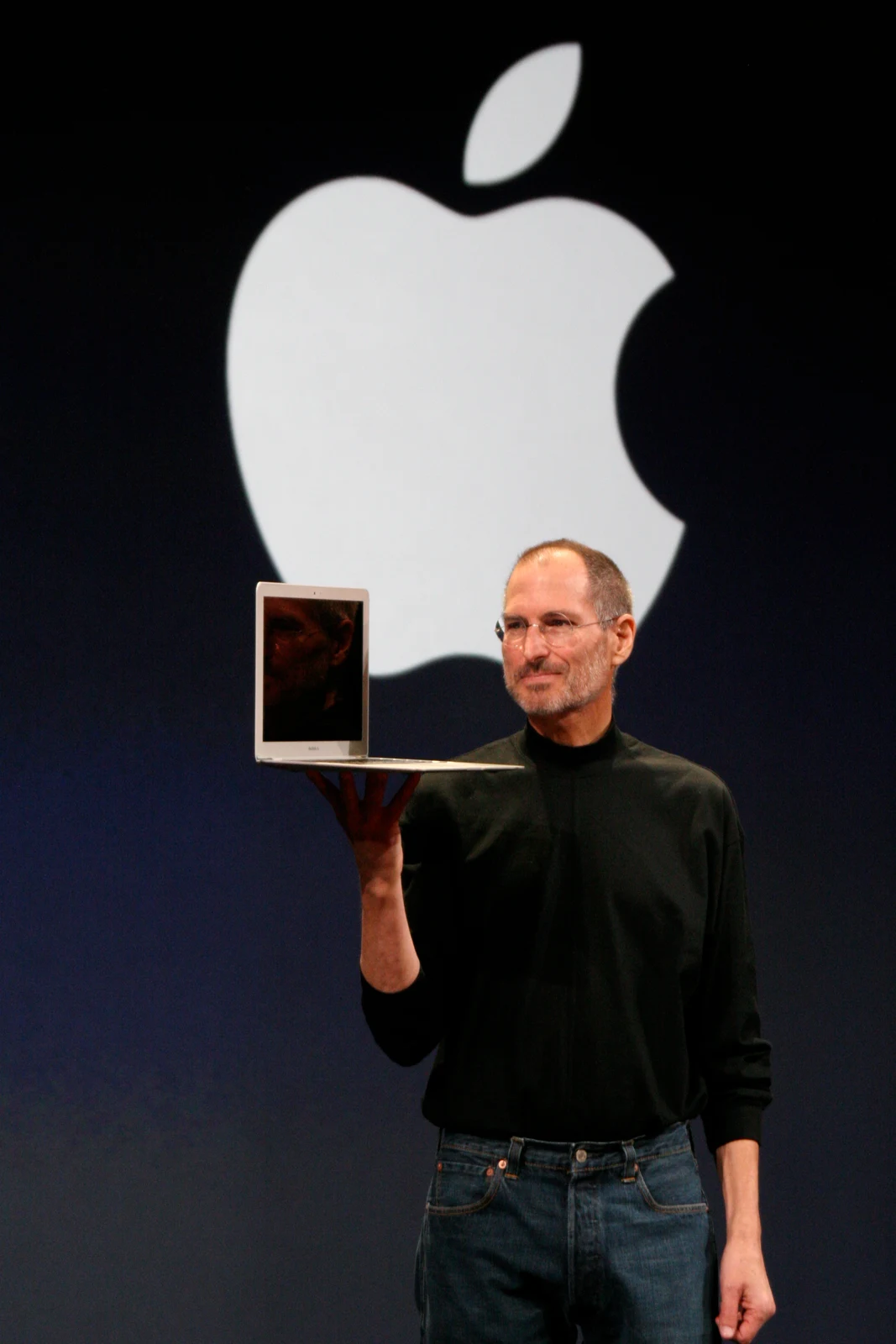
- 16. Wikimedia Commons / Matthew YoheSteveJobsMacbookAir.JPG: original file, attribution and license
Matthew Yohe’s full original is a January 2008 event photograph, not an image from the NeXT years. CC BY 3.0 covers the photograph, not independent trademark or publicity rights.