
The short answer
What did Rhode Island’s 1784 gradual-emancipation measure change, and who remained enslaved?
Read the records together
Evidence, functions and interpretation
Compare the particular records and mechanisms discussed in this study.
| Record or mechanism | What it establishes | The distinct question |
|---|---|---|
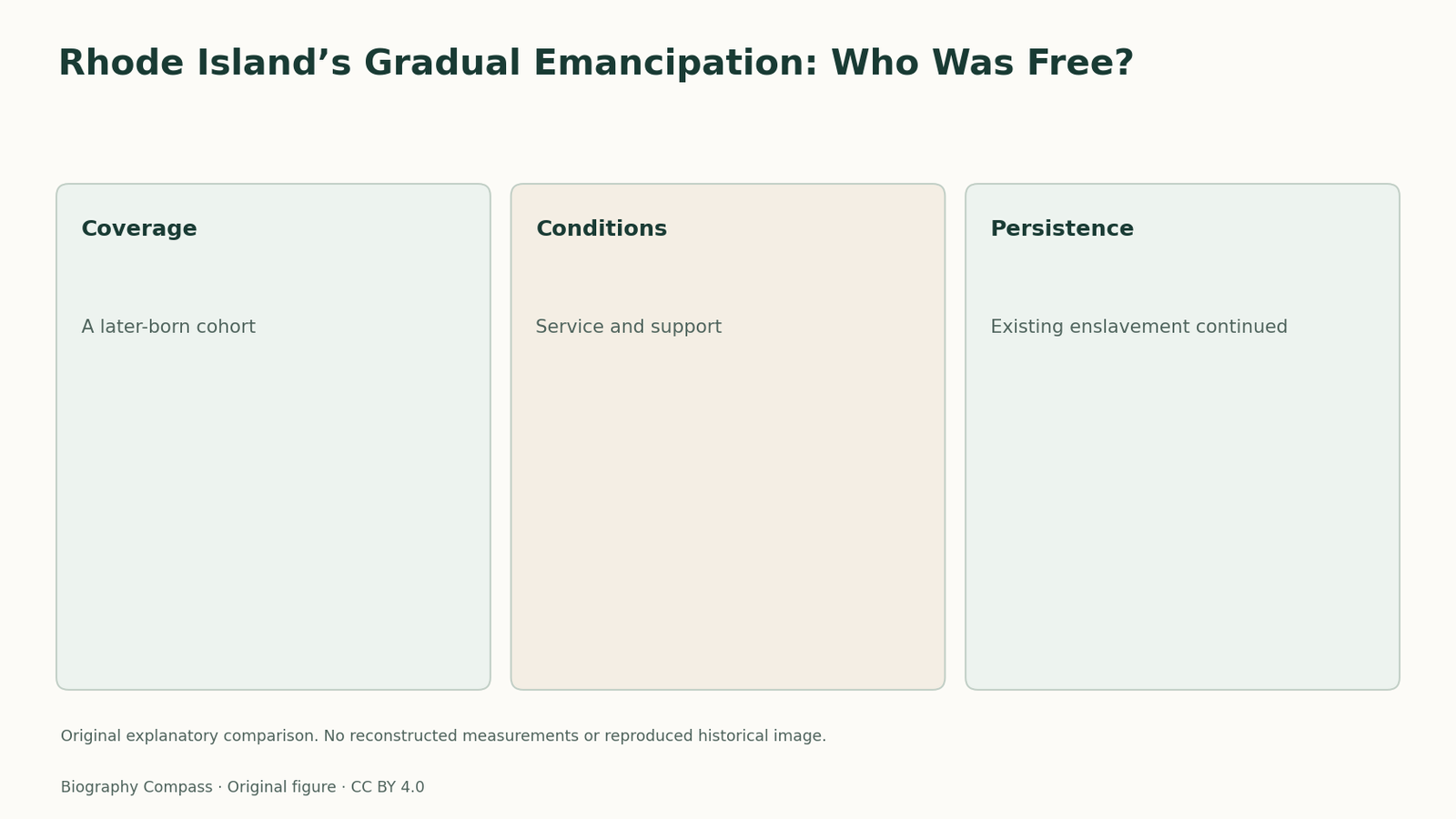
| Prospective birth rule | Defines a later-born cohort. | It is not immediate emancipation of everyone already enslaved. |
| Service and maintenance provisions | Explain conditions and financial administration. | Promised freedom and immediate independence differ. |
| 1790 census figure in the study | Shows continued enslavement after the reform. | The figure is cited through historical research, not a new census transcription. |
A prospective measure worked through birth cohorts
Rhode Island’s gradual-emancipation measure associated with 1784 addressed children born after a specified cutoff. That design differs fundamentally from freeing every enslaved person on the day of enactment. Joanne Pope Melish’s historical account explains the distinction between those later-born children and people already held in slavery. To understand the measure, the first question is therefore which people it covered. A general statement that Rhode Island abolished slavery in 1784 obscures the mechanism and can wrongly imply an immediate change in everyone’s legal condition.
Sources for this section: [3]
Freedom and compulsory service were not identical
The historical account also traces service and support arrangements affecting the children covered. The public language of gradual emancipation could coexist with years of compelled labour and restrictions imposed on young people. It is useful to distinguish the status promised by the prospective rule from the point at which a person could actually leave compulsory service. That distinction is the reason a simple before-and-after date is inadequate. The account here follows the historian’s explanation; it does not present an independently collated transcription of every original statutory amendment.
Sources for this section: [3]
Public cost shaped administration
Responsibility for maintenance was part of the legislative problem. Melish describes changes concerning whether towns or owners would bear support costs, and restrictions surrounding manumission. These arrangements mattered because legal freedom could be entangled with officials’ concern about poor relief. The question was not only whether an individual should be free, but who would be charged for supporting someone deemed unable to maintain themselves. This financial dimension helps explain why a formal commitment could be administered narrowly. It also shows why the experience of emancipation cannot be reconstructed solely from a celebratory anniversary.
Sources for this section: [3]
Evidence of persistence tests the immediate-abolition story
Melish’s account reports 948 enslaved people in Rhode Island’s 1790 census, after the prospective measure. The figure is cited through that historical study, not a new transcription of the census. Its significance is straightforward: continued enslavement is inconsistent with a claim that everyone became free immediately in 1784. Brown’s abolitionist book collection provides a different kind of evidence. The 1801 gift and later provision for printing show continued effort to circulate anti-slavery arguments. They illuminate an activist’s work rather than establish the legal status of every resident.
An original cohort-reading exercise
Imagine two people: one was already enslaved before the birth cutoff, while the other was born afterwards. Does a rule covering later births by itself free the first person? The checked answer is no. Does inclusion in the later-born cohort necessarily establish immediate independent adulthood? Again no: the service provisions must be examined separately. The example does not invent historical individuals or a family’s experience. It supplies a way to read a gradual measure: identify the covered cohort, establish the conditions attached, then compare the claim of reform with evidence of continuing enslavement.
Sources for this section: [3]
Continue the chronology
Related history guides
Pawtucket’s Spinning Mill: From Skills to Operation
Explore how Slater, investors and local craftspeople brought cotton spinning into operation at Pawtucket, distinguishing the 1790 venture from its 1793 building.
Read the timeline1912–1932Rosenwald Schools: How Matching Funds Built a Network
Examine how Rosenwald school grants worked alongside Black community contributions and public funding, distinguishing buildings from an entire education system.
Read the timelineBiography context
Explore United States through connected lives
Moses Brown
Moses Brown was a merchant, manufacturer and quaker abolitionist, known for supporting abolition, education and early cotton manufacture while remaining connected to an economy dependent on enslaved labour.
Explore the biographiesWider contextFrederick Douglass
Read Frederick Douglass’s abolitionist, author, newspaper editor and diplomat career as a separate contextual comparison.
Explore the biographiesConnected biographies
People and wider context
1738–1836
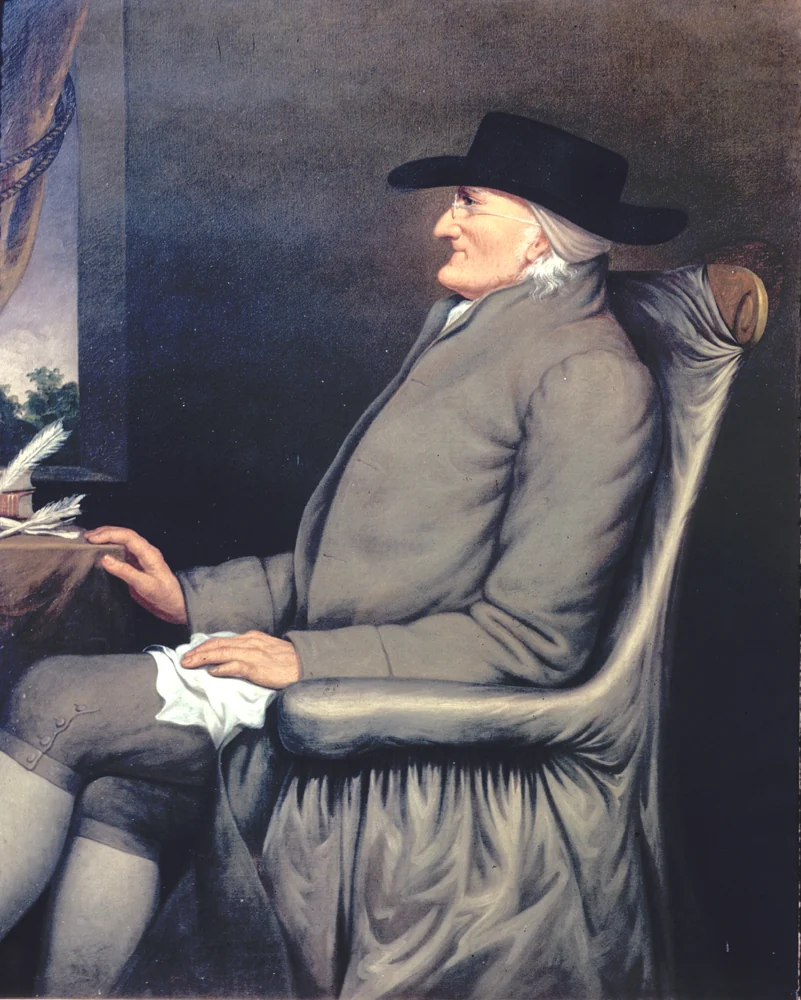
Moses Brown
Merchant, manufacturer and Quaker abolitionistMoses Brown was a merchant, manufacturer and quaker abolitionist, known for supporting abolition, education and early cotton manufacture while remaining connected to an economy dependent on enslaved labour.Read biography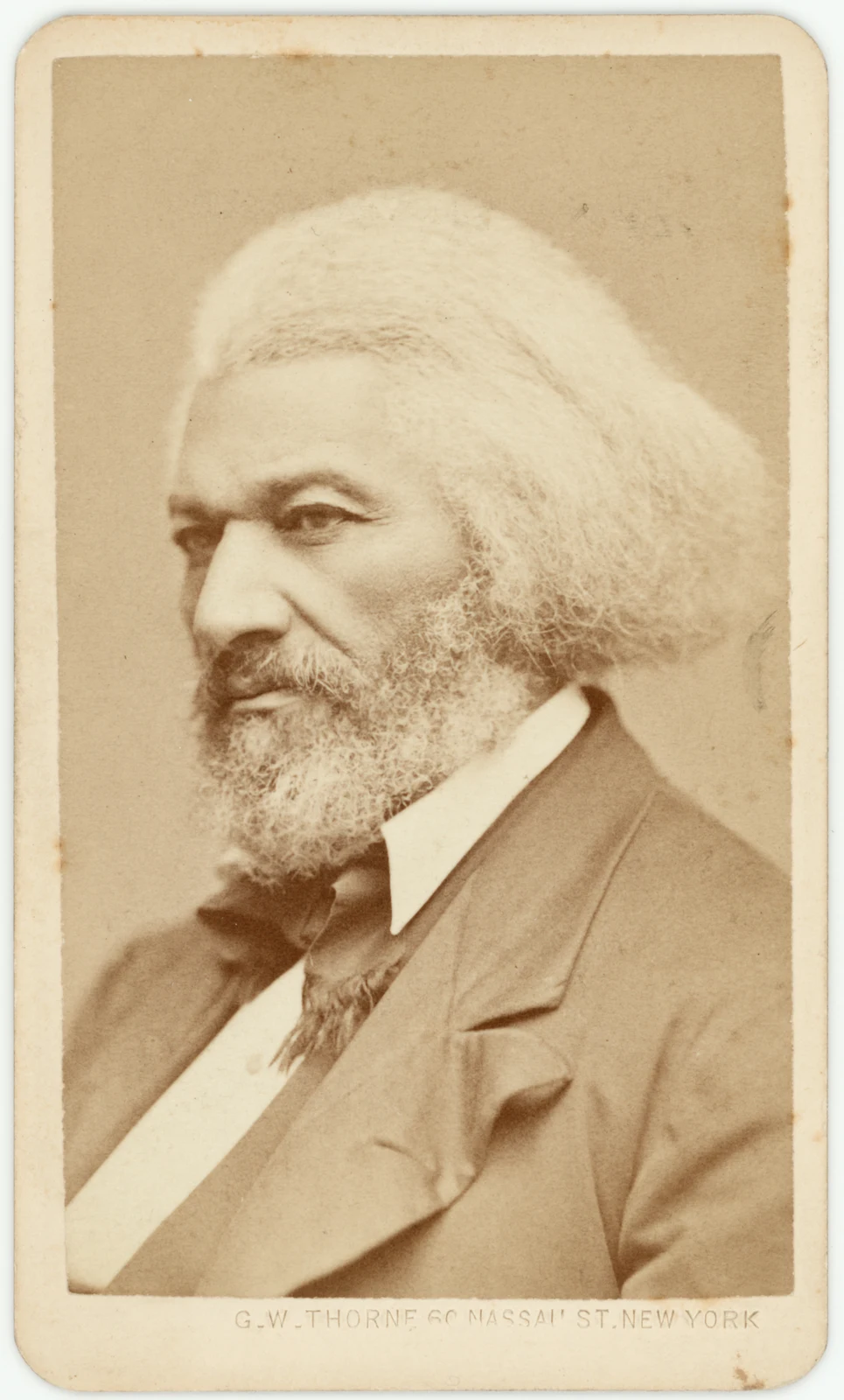
1818–1895
Frederick Douglass
Abolitionist, author, newspaper editor and diplomatAn American who escaped enslavement and made his experience, journalism and political arguments central to campaigns against slavery and for equal citizenship.Read biographyQuick answers
Common questions
- Did Rhode Island free every enslaved person in 1784?
- No. Gradual emancipation treated later births differently while existing enslavement continued.
- Why does Moses Brown belong in this history?
- He pursued abolition through personal action, associations and printed arguments, while his manufacturing interests also remained connected to slave-grown cotton.
Primary and institutional sources
How this history was checked
Primary records, institutional catalogues and historical interpretation answer different questions. The comparison and worked example are original editorial analysis. This article was reviewed on 8 November 2026.
- Brown University LibraryMoses Brown portrait biography
- Kate Wodehouse / Providence AthenæumMoses Brown’s Anti-Slavery Collection
- Joanne Pope Melish / Rhode Island Historical SocietyRhode Island Slavery and the Slave Trade
- National Park Service, 2023Going in Circles: A Revolution Along the Blackstone
- Sydney V. James and Gail Fowler Mohanty / American National BiographyBrown, Moses: accessible extract