

The short answer
Keeping time does not require every musical layer to have the same kind of duration. Steve Reich’s written account of Music for 18 Musicians describes a regular pulse alongside breath-shaped phrases and audible signals for change.
A working comparison
What changes between these records?
Use each record for the question it can answer. The distinctions below are our synthesis of the cited materials.
| Record or element | What it establishes | What remains separate |
|---|---|---|
| Pulse | A continuing instrumental reference. | It is not the length of a breath. |
| Breath | A phrase follows a performer’s breath. | The article supplies no prescribed seconds. |
| Cue | A pattern calls for a change. | A cue differs from an album track boundary. |
More than a repeating beat
Reich distinguishes the continuing pulse in pianos and mallet instruments from the breath rhythm of voices and winds. A full breath sets the comfortable duration of a pulsing phrase. The larger plan begins and ends with a cycle of eleven chords; sections expand the harmonic material in between.
A pulse supplies a recurring reference. A phrase can rise and end against it without becoming an equal-length block. This is why a diagram with identical boxes for every breath would give a false impression of the method. The relevant relation is coexistence, not a second mechanical clock.
Sources for this section: [1]
A signal can be part of the music
The composer’s notes identify vibraphone patterns that call for changes within and between sections. They contrast these audible cues with a separate non-performing conductor. The notes also specify acoustic instruments and voices, with microphones used for amplification.
A cue has a different function from an ongoing pulse: it asks performers to do something at a particular point. Hearing a repeated beat and hearing a transition signal are therefore distinct kinds of attention. This account describes the written method; it is not a transcription of a recording.
Sources for this section: [1]
Eleven chords do not mean eleven album tracks
ECM’s first release lists an opening Pulse, Sections I and II, two entries for Section III, further sections through XI, and a Pulse reprise. It dates the recording to April–December 1976 and the album release to April 1978.
The track list gives a way into a particular recorded edition. It should not be used to overrule the composer’s harmonic description merely because the number of track entries is different. A track boundary and a chord in a structural cycle answer different questions.
Sources for this section: [2]
A listening note that does not invent timings
For later listening, make three headings: regular reference, breath-shaped phrase and signal for change. Add observations under each only after hearing a licensed recording. Leave durations blank until actually measured, and identify the recording. The present article has read notes and catalogue fields; it has not timed a performance or reproduced the score.
Continue the chronology
Related history guides
Biography context
Explore United States through connected lives
Connected biographies
Explore the creators
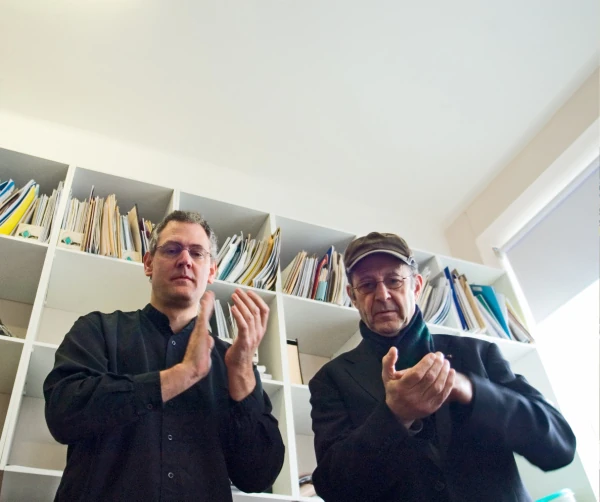
b. 1936
Steve Reich
ComposerA composer of ensemble music, recorded-speech works and music theatre.Read biographyQuick answers
Common questions
- Does the number of tracks determine the number of structural chords?
- No. ECM’s track list and Reich’s eleven-chord description identify different units.
Primary and institutional sources
How this history was checked
Selected written records, with the scope of the comparison stated in the article. No complete performance or work is claimed to have been consumed. This article was reviewed on 4 November 2026.