

The short answer
An opera can organise an evening without telling a chronological life story. Einstein on the Beach makes that possibility concrete through a plan of acts, scenes and connecting knee plays, developed by Philip Glass and Robert Wilson.
A working comparison
What changes between these records?
Use each record for the question it can answer. The distinctions below are our synthesis of the cited materials.
| Record or element | What it establishes | What remains separate |
|---|---|---|
| Stage plan | Acts, scenes and knee plays organise a production. | These are not merely album track numbers. |
| Connecting interlude | A musical return can accompany a scenic change. | A practical function need not tell a life event. |
| Recording edition | An identified album has its own credits and divisions. | Audio alone does not preserve all stage information. |
A jointly planned form
Glass’s original recording notes describe composition in 1975 from a series of Wilson’s drawings. Before the music was written, they agreed on four acts, nine scenes and five connecting knee plays. The notes also give the violinist a musical and theatrical role, positioned between ensemble and stage.
The work catalogue records the Avignon premiere on 25 July 1976 and calls the opera non-narrative. Einstein supplies a thematic figure rather than the obligation to dramatise a complete, chronological biography.
Why a joint matters
The later album essay explains the knee plays as interludes between the larger acts, also allowing time for scenery changes. It names contributions by Christopher Knowles, Lucinda Childs and Samuel M. Johnson, while the 1993 album credits Michael Riesman as conductor.
The connection is therefore both compositional and practical. A theatre needs to move between visual states; a listener also needs some relation among extended scenes. A recurring kind of interlude can do that work without explaining a character’s motives in conventional dialogue.
Sources for this section: [3]
Do not turn tracks into scenes
A recording needs divisions that help listeners navigate an audio edition. A stage plan organises bodies, images, text and time in a theatre. Neither should be silently substituted for the other. Several track entries can belong to a larger dramatic unit, while an audio release can omit the visual information that makes a scenic transition necessary.
For a study chart, keep separate columns for the 1976 plan and the identified album edition. Put acts, scenes and knee plays in the first column; put the printed track labels in the second. A mismatch of counts is a prompt to ask about units and editions, not proof that one record is false.
What this changes about a biographical reading
The opera can use Einstein’s cultural image without staging a sequence of verified life events. It belongs beside a biography as a different kind of artistic response. The present comparison uses written notes and credits, not a full score, libretto, recording or filmed production; it does not supply lyrics or a definitive interpretation of every image.
Continue the chronology
Related history guides
Biography context
Explore United States through connected lives
Connected biographies
Explore the creators
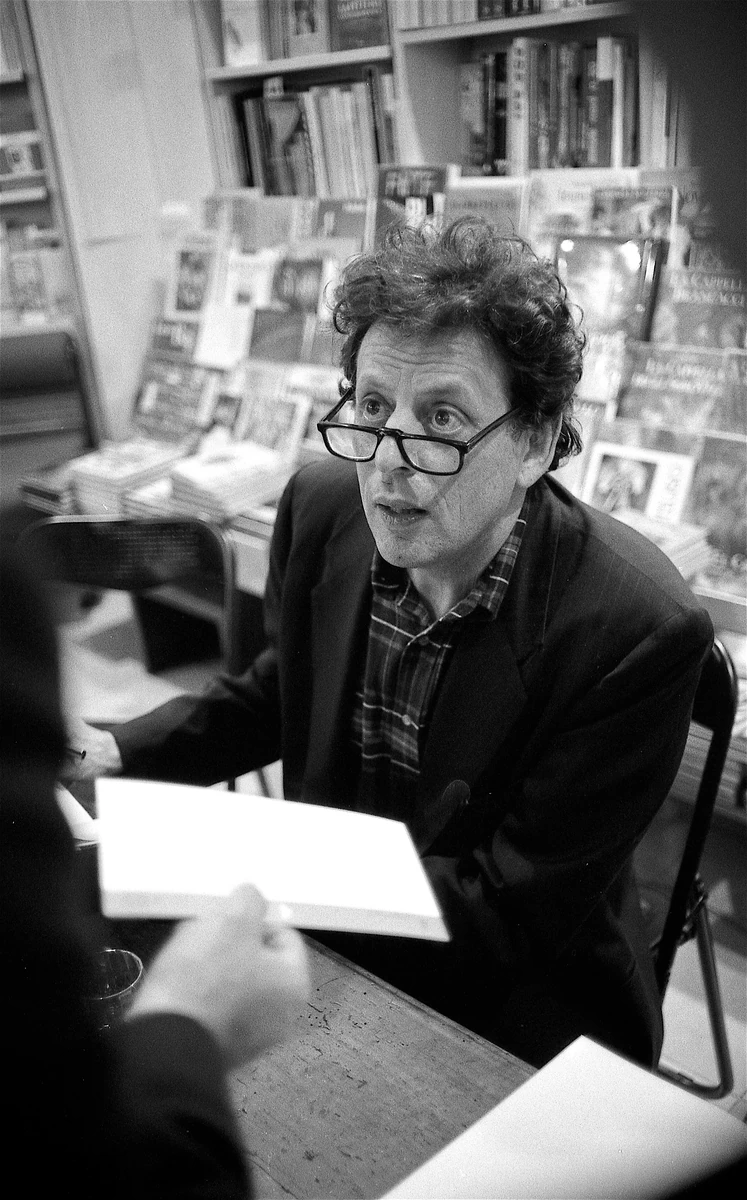
b. 1937
Philip Glass
ComposerA composer working across ensemble music, opera, concert forms and film.Read biographyQuick answers
Common questions
- Are the knee plays chapters of Einstein’s life?
- The consulted notes describe connecting elements in a non-narrative work, not chronological biographical chapters.
Primary and institutional sources
How this history was checked
Selected written records, with the scope of the comparison stated in the article. No complete performance or work is claimed to have been consumed. This article was reviewed on 4 November 2026.