
The short answer
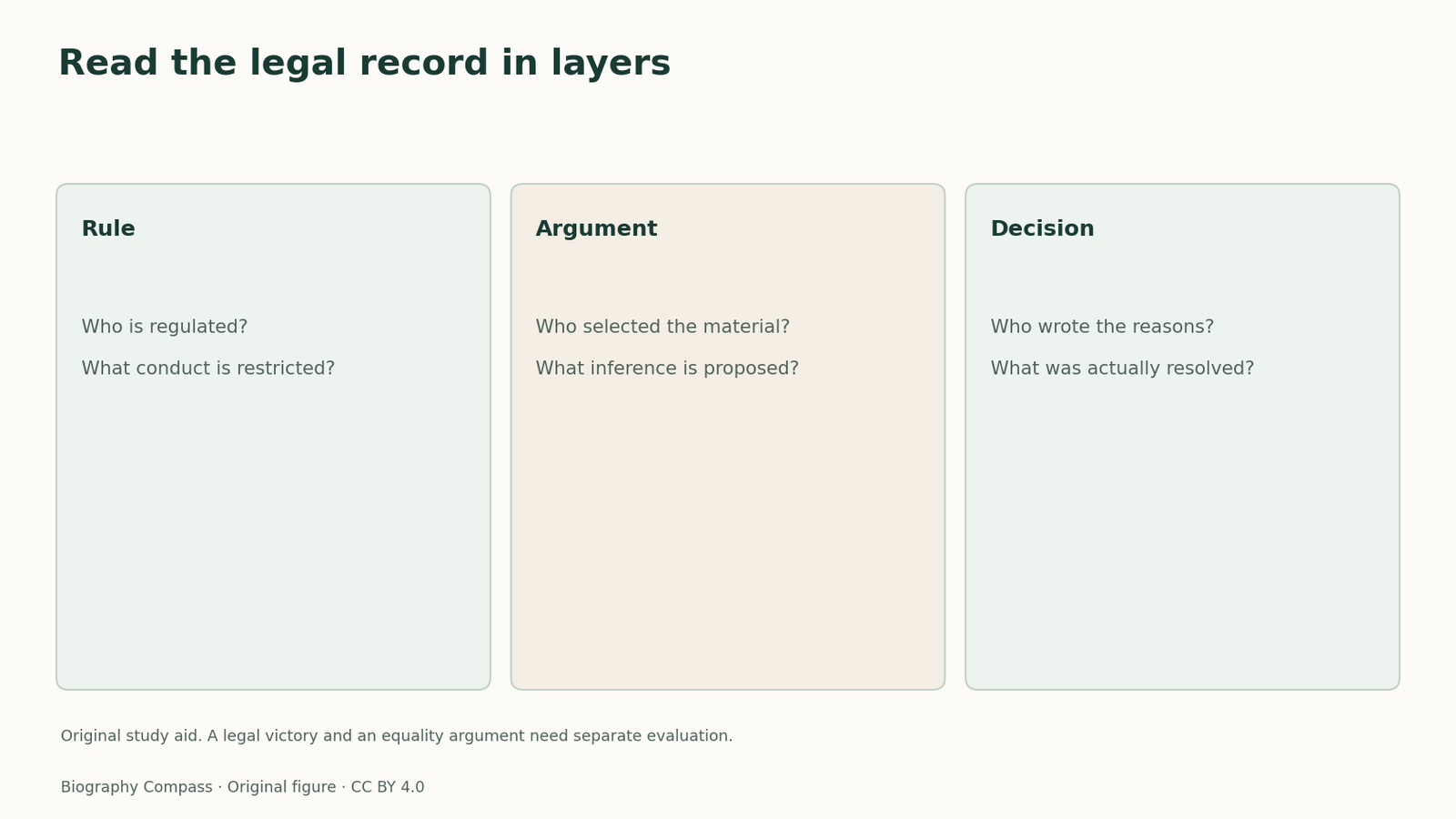
A case can succeed while relying on premises that a later reader should question. This study distinguishes the hours restriction, Oregon’s defence and the Supreme Court’s reasoning; it does not treat a famous brief as a judgment.
Evidence and interpretation
Three records, three different jobs
Use the author and purpose of each record before drawing a conclusion.
| Record | What it supplies | What it cannot establish alone |
|---|---|---|
| State law | An enforceable restriction being challenged | The correctness of every supporting social claim |
| Lawyer’s submission | An argument and a selection of material | The Court’s final reasons |
| Court opinion | Reasoning and the disposition of the case | A complete assessment of all workplace inequality |
Chronology
A timeline of the turning points
Oregon legislation
The state limited women’s daily work in specified establishments.
Supreme Court decision
The Court affirmed the laundry owner’s conviction.
The dispute before the Court
Oregon’s law limited women’s work in factories, mechanical establishments and laundries to ten hours a day. Curt Muller challenged his conviction after a woman worked longer at his laundry. The Supreme Court affirmed on 24 February 1908.
The legal question was the constitutionality of that restriction as applied to a woman’s laundry work. It was not a judgment establishing a universal working day for every worker.
Sources for this section: [1]
Where the research entered
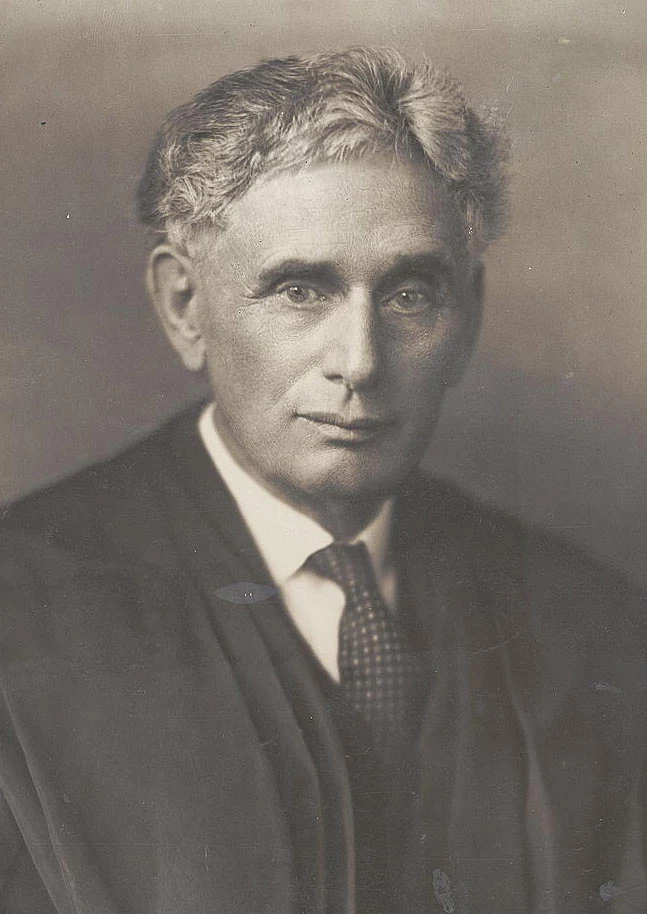
The Louisville law library credits Kelley and Goldmark with bringing Brandeis into the defence, and Goldmark with helping compile social and medical material. Its explanatory introduction presents that reliance on non-legal material as the brief’s defining contribution.
A useful reading sequence is to identify the legal proposition first, then ask what kind of information is offered in support: legislation, reported observation, expert opinion or a claim about social roles. Those categories should not be collapsed into one label such as “the evidence”.
Sources for this section: [2]
A ruling with a gendered premise
Justice Brewer’s opinion acknowledged Brandeis’s compilation but relied on beliefs about physical difference and motherhood to justify a distinct restriction for women. The employer lost; the reasoning did not establish women’s equality at work.
That creates two separate questions for a reader: did the policy protect workers in the dispute, and did the justification confine women to a prescribed social role? Answering one does not settle the other.
Sources for this section: [1]
A short source exercise
Make a two-column note. In the first, record what the judgment permits the state to do; in the second, identify an assumption used to defend that permission. Then mark which author is responsible for each statement.
Reference answer: the disposition sustained the restriction at issue; the gendered rationale belongs to the opinion. Brandeis’s role as counsel does not make him the author of the judgment. To evaluate a particular medical claim from the brief, return to its cited study rather than assuming the Court independently tested it.
Continue the chronology
Related history guides
Biography context
Explore United States through connected lives
Connected biographies
People behind the records
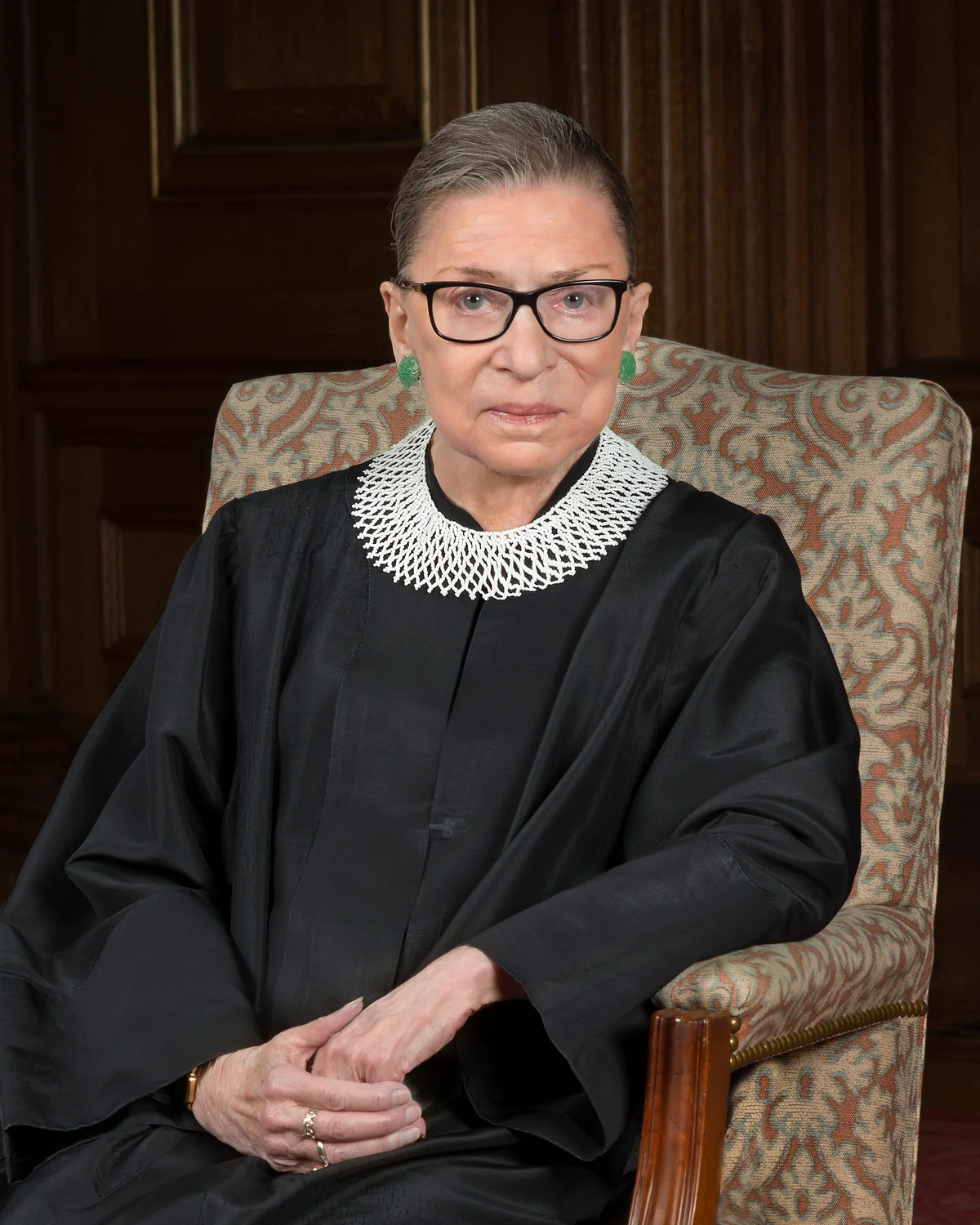
1933–2020
Ruth Bader Ginsburg
U.S. Supreme Court justice and earlier women’s-rights lawyerRuth Bader Ginsburg served on the U.S. Supreme Court from 1993 until 2020. Before becoming a judge, she helped develop the ACLU’s campaign against sex discrimination; on the Court, she wrote major opinions and dissents concerning equal citizenship and access to justice.Read biographyQuick answers
Common questions
- Was the Brandeis Brief itself the judgment?
- No. Counsel submitted an argument; the Court issued a separate opinion.
Primary and institutional sources
How this history was checked
Read the selected records below alongside this explanation. A later recollection, an advocacy text and a court ruling answer different questions; cited excerpts do not stand for a complete archival survey. This article was reviewed on 4 November 2026.