
The short answer
Fools and Other Stories asks how childhood, education and difficult adult relationships can carry political history without turning every character into a public emblem. Ndebele’s collection and the arguments around it are distinct from a general history of apartheid or a retelling of his biography.
Chronology
A timeline of the turning points
Dissertation preface
Ndebele explains a project rooted in a small township community.
South African publication
The original collection appears through Ravan Press.
Noma Award
Recognition follows publication rather than dating its first appearance.
Overseas reviews
US publication prompts reviews including Coetzee’s critical assessment.
Reissue
A later edition does not change the original year.
A collection and its title story are not the same unit
The book contains five stories, one of which is also called Fools. The author’s bibliography dates the original collection to 1983 and a reissue to September 2006. Its Noma Award belongs to 1984. Keeping those units and dates separate prevents a later edition or an award from becoming a false first-publication date.
Publishers Weekly’s 1986 review likewise treats it as a collection. Its overview foregrounds the complexities of township life, rather than describing one continuous novel. Readers can compare recurring concerns across stories without assuming a single narrator or a continuous sequence of events.
A small township was a deliberate artistic choice
In his March 1983 dissertation preface, Ndebele explains that all but one of the stories were set in Charterston, near Nigel. He describes wanting to resist a literary habit of treating metropolitan centres as the only settings worthy of sustained attention.
This makes the scale of the stories consequential. A familiar neighbourhood, a school or a family can reveal experiences that disappear when history is told only through major cities and public confrontations. The preface states an artistic intention; it does not prove that every reader will respond in the same way.
Sources for this section: [4]
The title story complicates a simple opposition between generations
Coetzee’s review discusses Zamani, a compromised teacher, and Zani, a younger student with new political ideas. He recognises the force of their encounter but refuses to reduce Zamani to a label for an entire generation. Characterisation and moral judgement do not collapse into a simple contest between good youth and bad adults.
That critical reading offers a way into the collection without requiring a plot summary of every scene. Ask how authority is gained, lost and challenged, and whether apparent understanding also carries self-deception. These are reading questions, not a claim that fictional conduct documents a particular real teacher’s life.
Ordinary experience does not mean a world outside politics
The preface places seemingly private acts inside an environment of pervasive political control. Ndebele’s later autobiographical account connects his literary choices with Black Consciousness. Attention to ordinary lives was therefore not a denial that apartheid shaped the conditions of those lives.
Coetzee’s review identifies education as an important background. Yet a classroom or household can also contain tensions that a broad political category fails to explain completely. Reading both levels together is more productive than deciding that a story must be either a political statement or a study of individual consciousness.
Recognition and criticism belong in the same reception history
Coetzee praised the depth of the writing while questioning the endings of the two longer stories. The award record and an admiring review excerpt should not erase that criticism. A work can be influential without every formal decision being beyond disagreement.
Begin with a clearly identified edition, then compare the author’s preface with independent contemporary responses. No complete-collection reading or exhaustive account of its reception is claimed here. The 2023 interview photograph is context for the author, not an image of a fictional character or the original publication.
Biography context
Explore Charterston, Nigel, South Africa through connected lives
Njabulo Ndebele
Follow education, fiction, essays and public leadership.
Explore the biographiesCritical readerJ. M. Coetzee
Explore the author of the substantial contemporary review.
Explore the biographiesLiterary comparisonMongane Wally Serote
Compare a different route through poetry, fiction and political commitment.
Explore the biographiesConnected biographies
The author beyond one collection
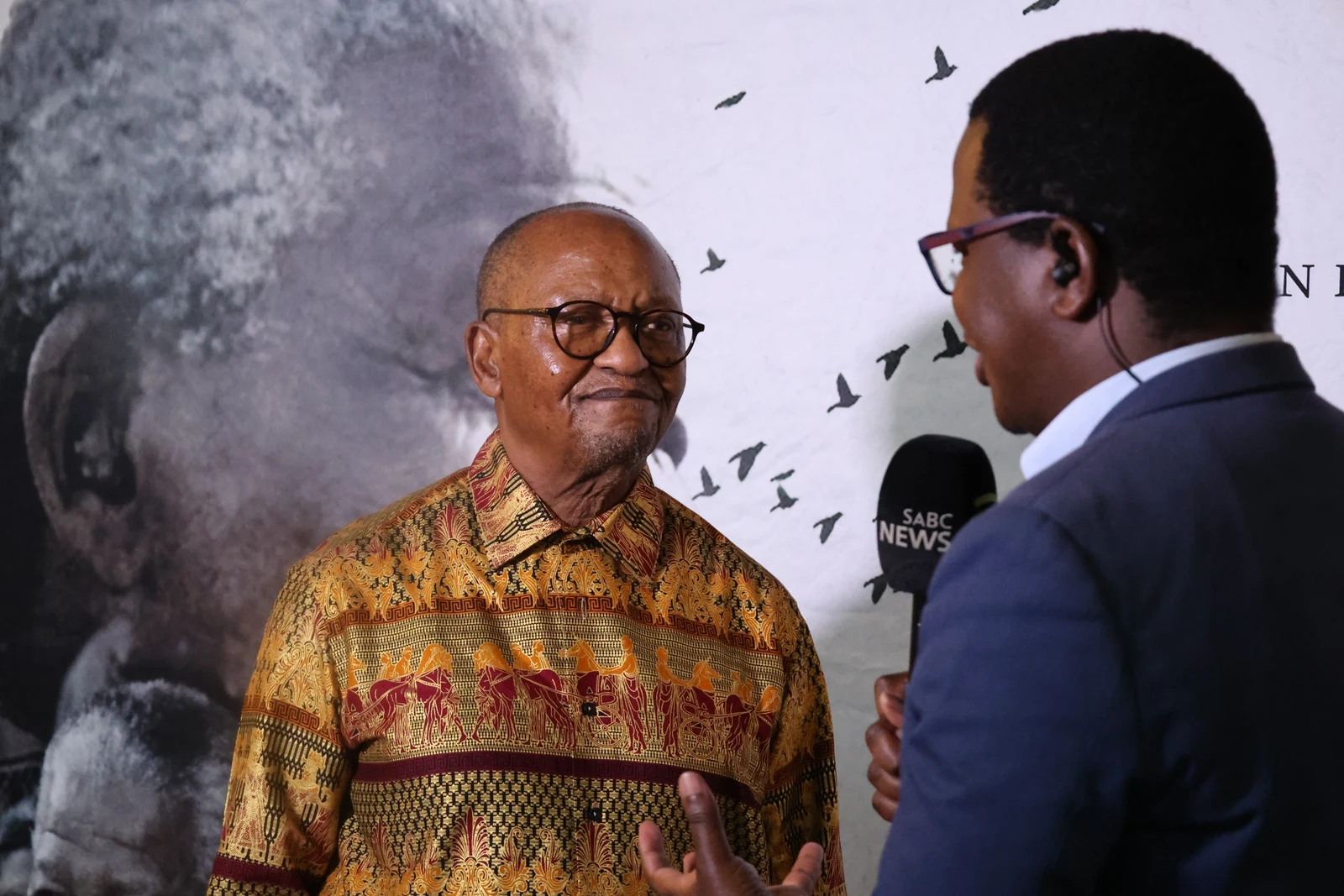
1948–
Njabulo Ndebele
Writer, essayist and former university leaderNjabulo Ndebele’s fiction and essays examine the interior lives too easily obscured by political spectacle. Education in southern Africa, Britain and the United States informed his writing; university leadership and later foundation work added public responsibilities. His literary arguments remain distinct from the institutions he helped lead.Read biographyQuick answers
Common questions
- Is Fools and Other Stories one novel?
- No. It is a five-story collection that includes the title story Fools.
- Was it first published in 2006?
- No. The author’s record identifies 1983 as the original year and 2006 as a reissue.
- Does attention to ordinary life make it apolitical?
- No. The cited preface locates everyday experience within political control.
- Did Coetzee praise every aspect?
- No. His review also criticised the longer stories’ endings.
Primary and institutional sources
How this history was checked
Selected pages 1–2 of the author’s dissertation preface, bibliography and award metadata, the four-page Coetzee review and Publishers Weekly’s short review. No full collection, entire dissertation or exhaustive reception study claimed; no fiction or poetry passages reproduced. This article was reviewed on 24 October 2026.
- Njabulo NdebeleFools and Other Stories — original 1983 date and 2006 reissue record
- Njabulo Ndebele archiveNoma Award citation — 1984 document record; linked PDF not claimed read
- Publishers Weekly1 June 1986 — Fools and Other Stories, short contemporary review
- Njabulo Ndebele / University of Denver dissertationMarch 1983 preface to Fools and Other Stories — selected pages 1–2 only
- J. M. Coetzee / The New Republic, archived by the authorTales Out of School, 1986 — four-page critical review of Fools and Other Stories
- Njabulo NdebeleAutobiographical account — selected childhood, education and literary passages; stale offices not adopted
- flowcomm / Flickr / Wikimedia CommonsNdebele at the 2023 Nelson Mandela Annual Lecture — exact photograph and reviewed CC BY 2.0
- flowcomm / FlickrExact original item 53378136401 — current licence 4, CC BY 2.0
- Google Books bibliographic recordFools and Other Stories — Ravan Press, 1983; metadata only, not the complete book