
The short answer
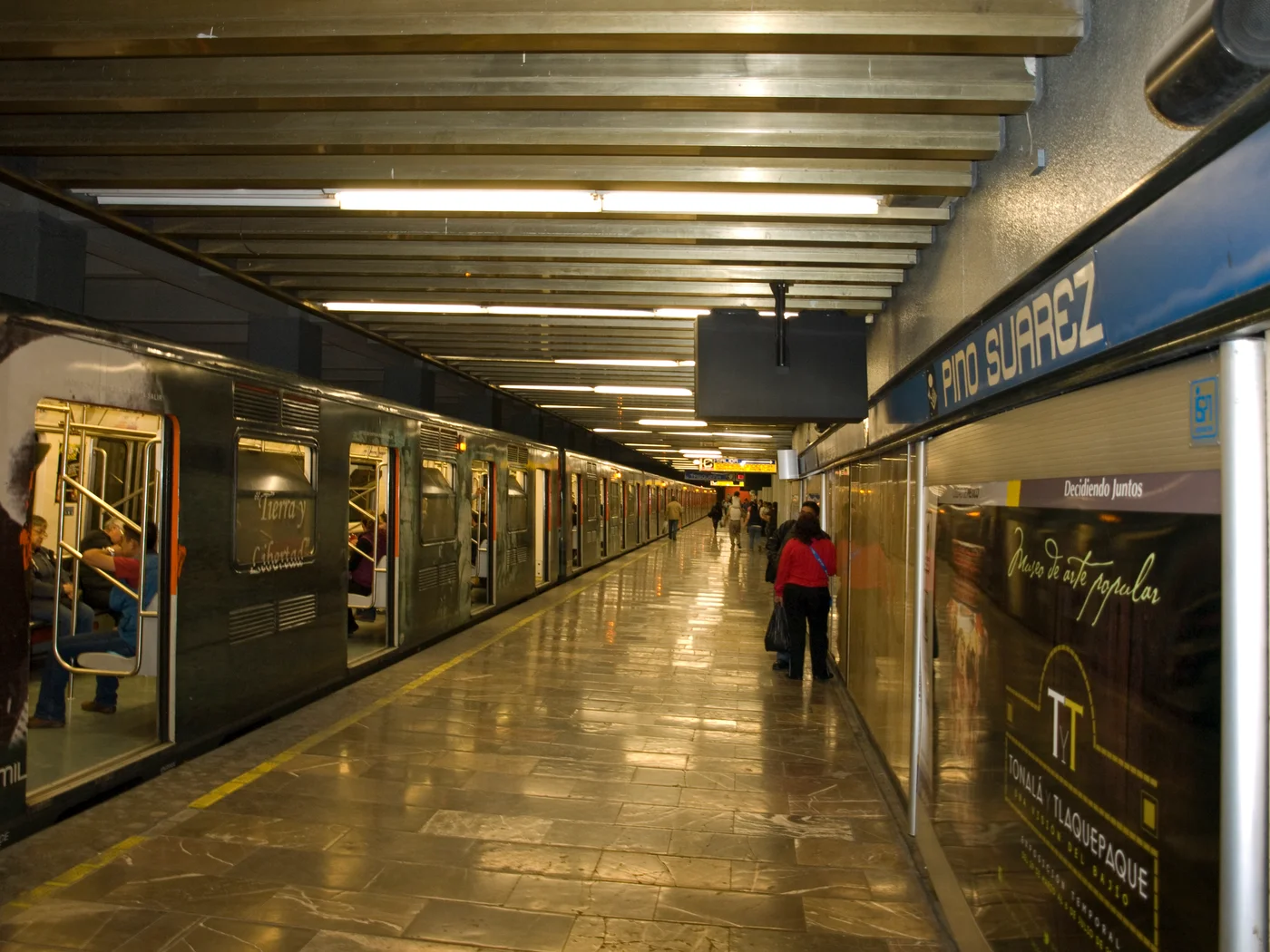
A Mexico City Metro passenger can recognise a stop through a name and a station-specific image. At Pino Suárez the symbol recalls an archaeological structure found during construction. The convention gave individual places a visual identity while helping riders compare a station in a sequence with the signs they met during the trip.
How to read the signs
A station image and a route identifier do different jobs
Passengers can use several clues to identify the train and then recognise their stop.
| Cue | What it answers | Example or use |
|---|---|---|
| Line identifier | Which service am I following? | Match the train and map before travelling. |
| Station image | Which specific stop is this? | Pino Suárez uses a design derived from a temple discovered at the site. |
| Station name | How is this place called? | Use it when reading other information or asking directions. |
Chronology
A timeline of the turning points
Olympic design precedes the Metro commission
Lance Wyman works on the Games before contributing to Metro graphics.
The first Metro section is inaugurated
The operator records the stretch between Zaragoza and Chapultepec.
The station-icon convention extends
New stations use their own images within a recognisable system.
An idea after Mexico 1968
The Metro dates the inauguration of its first stretch to 4 September 1969. In his interview with the Society for Experiential Graphic Design, Wyman describes suggesting an individual icon for each stop after his Olympic work. He ties the idea to the variety of history, people and landmarks in the city and to the needs of travellers from elsewhere. The Mexican embassy’s exhibition account puts the graphics in the wider history of the system, where successive line openings required many more symbols.
What a station image can preserve
Pino Suárez illustrates the connection between a symbol and a place. Research on the Metro iconography connects its image to the temple of Ehécatl found during the works. A rider can use the station image as a recognition cue without already knowing the archaeology. Learning the source of the shape adds a second layer of meaning. That makes the network a record of associations with particular streets, places and histories as well as a transport interface.
Using a symbol on a trip
Line information narrows down which service to take. A station icon then helps the traveller find a particular stop, especially when comparing a repeated symbol on a map, a platform and a sign. The spelled name remains useful for announcements, directions and links to addresses outside the station. The system works because a particular image can recur consistently at the same place, while the colour or number serves the line as a whole.
Continue the chronology
Related history guides
How the Mexico 1968 Olympic Identity Worked Across a City
See the Olympic graphic project that preceded Wyman’s Metro work.
Read the timeline1973–2005How Tokyo Metro Introduced Station Numbering in 2004
Compare station images with the use of letter and number codes in Tokyo.
Read the timeline1972How the Vignelli Map Redrew New York’s Subway in 1972
Compare a subway map built around separate drawn services.
Read the timelineConnected biographies
People connected to this history
Quick answers
Common questions
- When did the Mexico City Metro open its first section?
- The operator lists 4 September 1969 as the inauguration date for Zaragoza to Chapultepec.
- What inspired the Pino Suárez station icon?
- It refers to the temple of Ehécatl discovered during Metro construction at the station.
Primary and institutional sources
How this history was checked
Dates, legal milestones and historical claims are checked against the official and institutional records below. This article was reviewed on 19 November 2026.
- Sociální studia, Masaryk UniversityIconography of the Mexico City Metro
- Embassy of Mexico in the United KingdomMexico symbolised at Metro: Art at Velocity
- Society for Experiential Graphic DesignNavigating Life: interview with Lance Wyman
- Sistema de Transporte ColectivoLine 1 opening dates and station information