
The short answer
A visit, a count of completed work and a change in illness are three different records. Reports submitted to a health department can contain one without establishing the others.
Evidence and interpretation
What each record can establish
Read each record in the context in which it was produced.
| Record | Evidence it supplies | Limit of inference |
|---|---|---|
| 1902 account | Officer’s description and reporting relationship | Every settlement’s conditions |
| 1908 return | Categories and quantities of work reported | Cause of a health outcome |
| Independent outcome series | Recorded changes across comparable periods | Causation without considering other changes |
Chronology
A timeline of the turning points
General report
Pōmare’s account is printed in the public health department’s parliamentary papers.
Inspector’s return
Correspondence to Pōmare includes a table of housing and sanitation work.
Identify who reports to whom
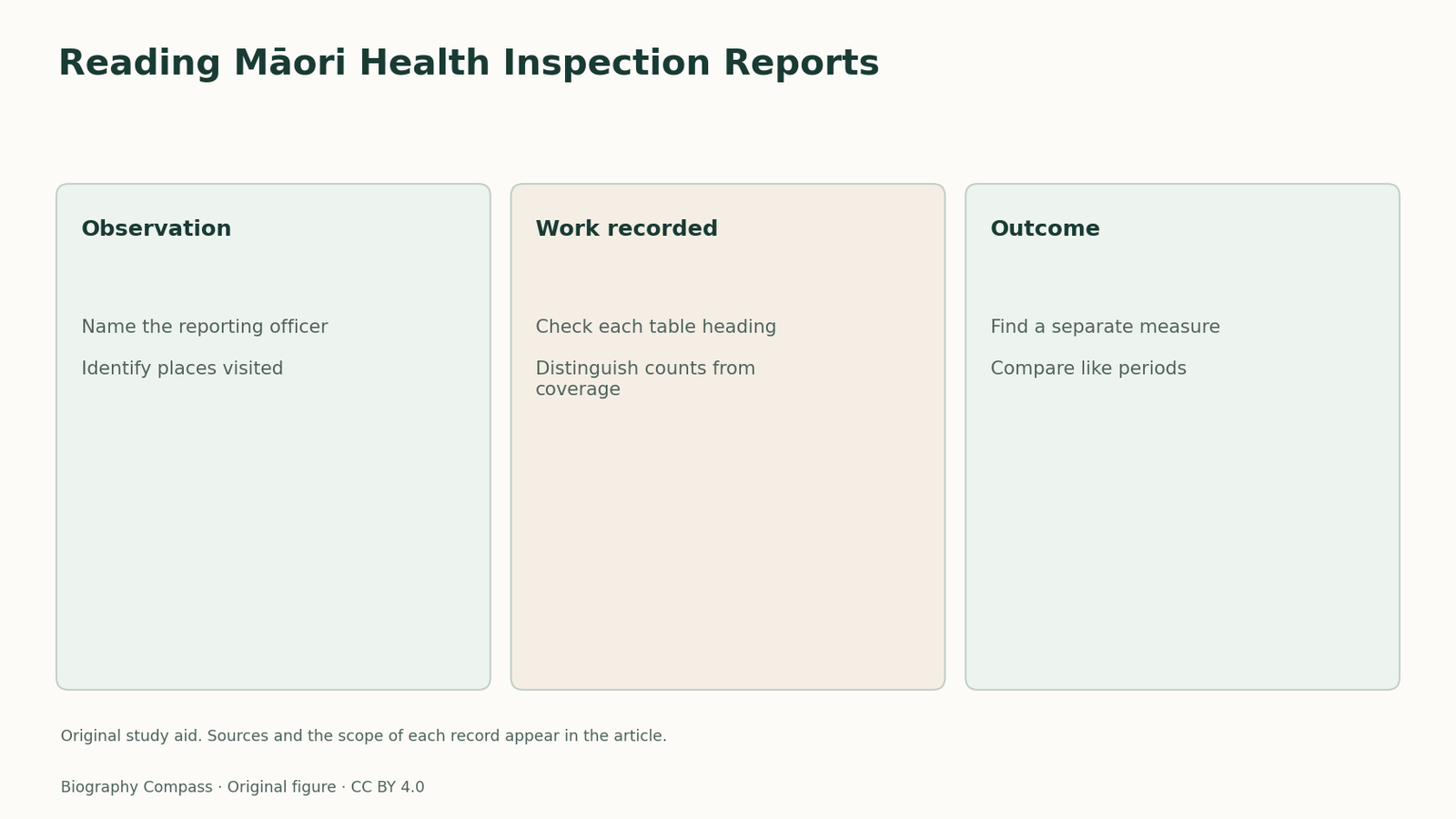
In the 1902 departmental report, Pōmare addresses the chief health officer. He distinguishes detailed inspection material from a more general description of what he observed and how communities responded to health regulation. Separate those scales when citing the report. A synthesis of visits can identify repeated concerns, but it need not give a complete census of places that were never inspected.
Read the columns before the totals
The 1908 page includes an inspector’s return from Masterton addressed to Pōmare. Its table records several kinds of housing and sanitation work over three years. The items describe activity, such as work on houses or installation of facilities. Because scanned columns and optical transcription can separate headings from entries, check the original page image before transcribing figures.
Sources for this section: [2]
Keep purpose and outcome separate
The contemporary records belong to an administration that used local councils and inspectors as part of reform. An entry about visits helps establish contact. An entry about construction helps establish a reported intervention. A claim about reduced illness would need a separate series of health outcomes and enough information about changes in coverage to compare periods.
Design an original return
Invent a two-year inspection record for three settlements. Give it columns for visits, new facilities, households covered and illness reports. Leave one settlement unvisited in the first year. Compare totals with rates based on households actually observed. The exercise shows how coverage can change a total even when the underlying condition has not changed.
Continue the chronology
Related history guides
Biography context
Explore New Zealand through connected lives
Connected biographies
People behind the records
1875/76–1930
Māui Pōmare
Physician and parliamentarianPōmare worked with Māori councils and inspectors as a health officer before representing Western Māori in Parliament.Read biographyQuick answers
Common questions
- Do more recorded facilities establish fewer illnesses?
- They document reported work. A claim about illness requires separate outcome evidence and comparable coverage.
Primary and institutional sources
How this history was checked
The records below support the chronology and the evidence comparison. The reading exercise is original. This article was reviewed on 5 November 2026.