
The short answer
A law can name a class of places eligible for reservation. A separate order is needed to identify which parcel has been set apart and for what use.
Evidence and interpretation
What each record can establish
Read each record in the context in which it was produced.
| Record | Evidence it supplies | Limit of inference |
|---|---|---|
| Section 232 | General conditions and the power to reserve | Which individual parcel was reserved |
| Gazette order | Named parcel and stated common use | Every use after reservation |
| Local records | Evidence of the site’s later operation | Whether the statute covered other holdings |
Chronology
A timeline of the turning points
Power to reserve
Section 232 authorises reservations for common use under specified conditions.
Hereheretau B 3B
A Gazette order identifies a particular parcel and a meeting-place purpose.
Read the threshold
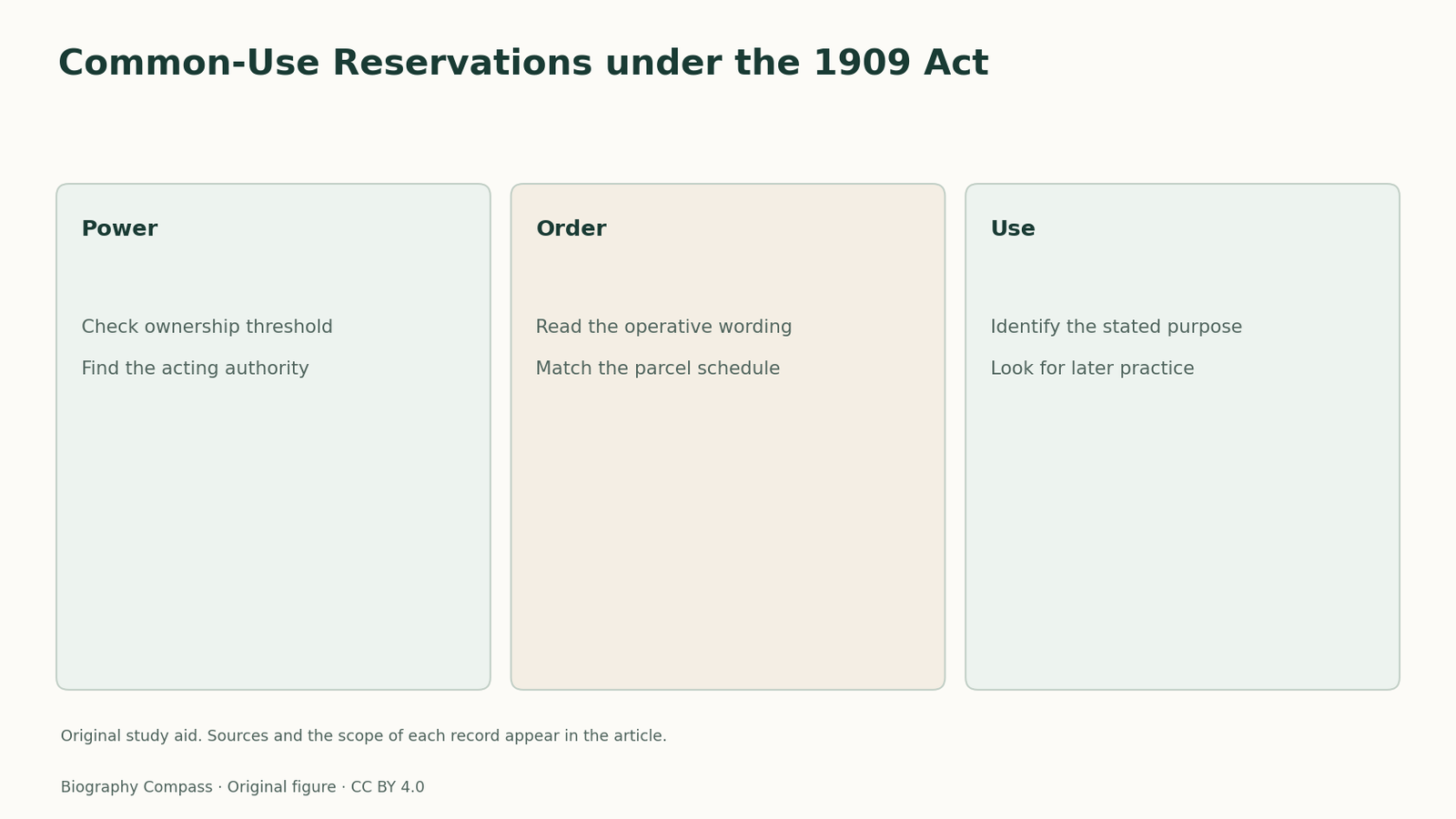
Section 232 deals with Native freehold land held by more than ten owners in common, using the statute’s own terminology. It permits the Governor in Council to set apart land for common use. Listed purposes include meeting places and water supplies. The section supplies an authority and a threshold. It does not automatically reserve every eligible holding or give every parcel the same purpose.
Sources for this section: [1]
Identify the specific act of reservation
An order published in 1926 names Hereheretau B 3B and refers to a Native Land Court partition order. Its preamble records a court recommendation and cites the statutory power. The operative part sets the parcel apart for use as a meeting place. The schedule gives the land description. These parts together show how a general power acquired a named location.
Sources for this section: [2]
Separate reservation and transaction
The same Act also dealt with alienation and the authority of the Māori Land Board. An order preserving a place for common use has a different function from a consent allowing an interest to be transferred. Label which function the document performs before using it as evidence about how much land remained under Māori control.
Test two imaginary documents
A researcher has a printed law allowing reservation of a qualifying holding and a later order reserving a parcel beside a spring. List the threshold, actor, parcel and purpose that each document can establish. Then look for independent evidence that the spring remained in use. The order can fix a purpose even if the later practice needs a different record.
Continue the chronology
Related history guides
Biography context
Explore New Zealand through connected lives
Connected biographies
People behind the records
1857–1926
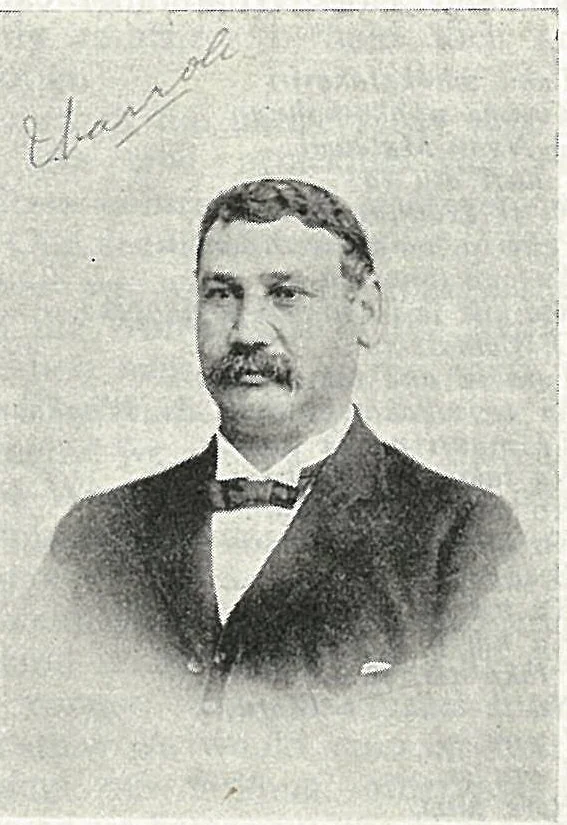
James Carroll
Parliamentarian and minister of native affairsCarroll brought questions of title, leasing and Māori participation into government during the long Liberal administration.Read biographyQuick answers
Common questions
- Did section 232 reserve eligible land automatically?
- It authorised an Order in Council. The individual order identifies the land and the stated common use.
Primary and institutional sources
How this history was checked
The records below support the chronology and the evidence comparison. The reading exercise is original. This article was reviewed on 5 November 2026.