
The short answer
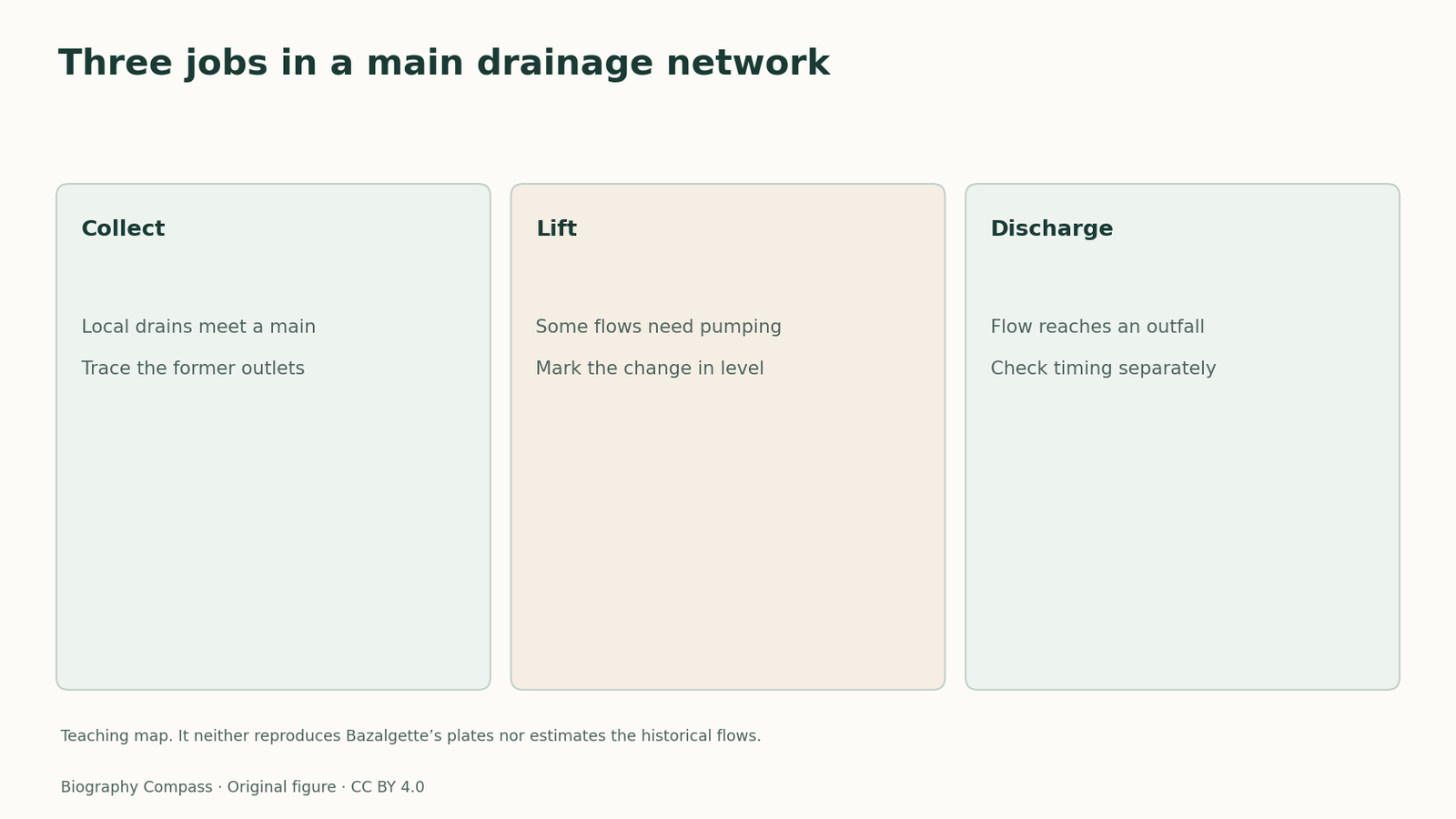
An intercepting sewer changes the route of sewage that already has somewhere to go. The design question is how to collect those separate flows and carry them through a shared system.
Reading the evidence
Follow route, level and timing
Each stage changes a different property of the flow.
| Stage | Job in the network | What to inspect |
|---|---|---|
| Intercept | Collect several former routes into a main. | Which drains connect and where. |
| Lift | Move flow between levels when required. | Pumping station and level difference. |
| Discharge | Send flow through an outlet at an operating time. | Reservoir, sluices and outlet record. |
Draw the local drains before the interceptor
Bazalgette’s 1865 paper describes earlier routes that carried sewage toward the Thames. Start an evidence map by drawing several local drains with separate river outlets. Then add an intercepting line across their paths. In the new arrangement, a connection sends flow toward a main route before it reaches the earlier outlet.
The ICE project history situates the work in the nineteenth-century metropolitan programme. That account explains the public purpose. The engineer’s paper is more useful for tracing an actual section through a network. It identifies pumping stations, reservoirs and different levels rather than presenting one uninterrupted pipe.
Find where gravity needs help
Give each segment a starting level and an end level. Where flow can proceed by a useful fall, show that route with a sloping line. Where a lower route has to enter a higher one, place the pumping stage at that connection. In the paper, pumping can be an intermediate lift or part of the route to the outfall.
The outfall is another distinct part. A reservoir can change the timing of a discharge, as the paper’s discussion of sluices illustrates. Moving an outlet and changing its timing do not by themselves describe the later treatment of the wastewater.
Sources for this section: [1]
Check a small invented network
Suppose a branch carries 4 units and a second branch adds 7 units to the same main. In a steady teaching model with no losses or other inputs, the downstream segment carries 11 units. If a segment must rise before the route continues, the sum does not tell you how much lifting power you need. Add the height difference and label any missing assumptions. The calculation is for the exercise, not an estimate for London.
Continue the chronology
Related history guides
Biography context
Explore United Kingdom through connected lives
Connected biographies
People in the records
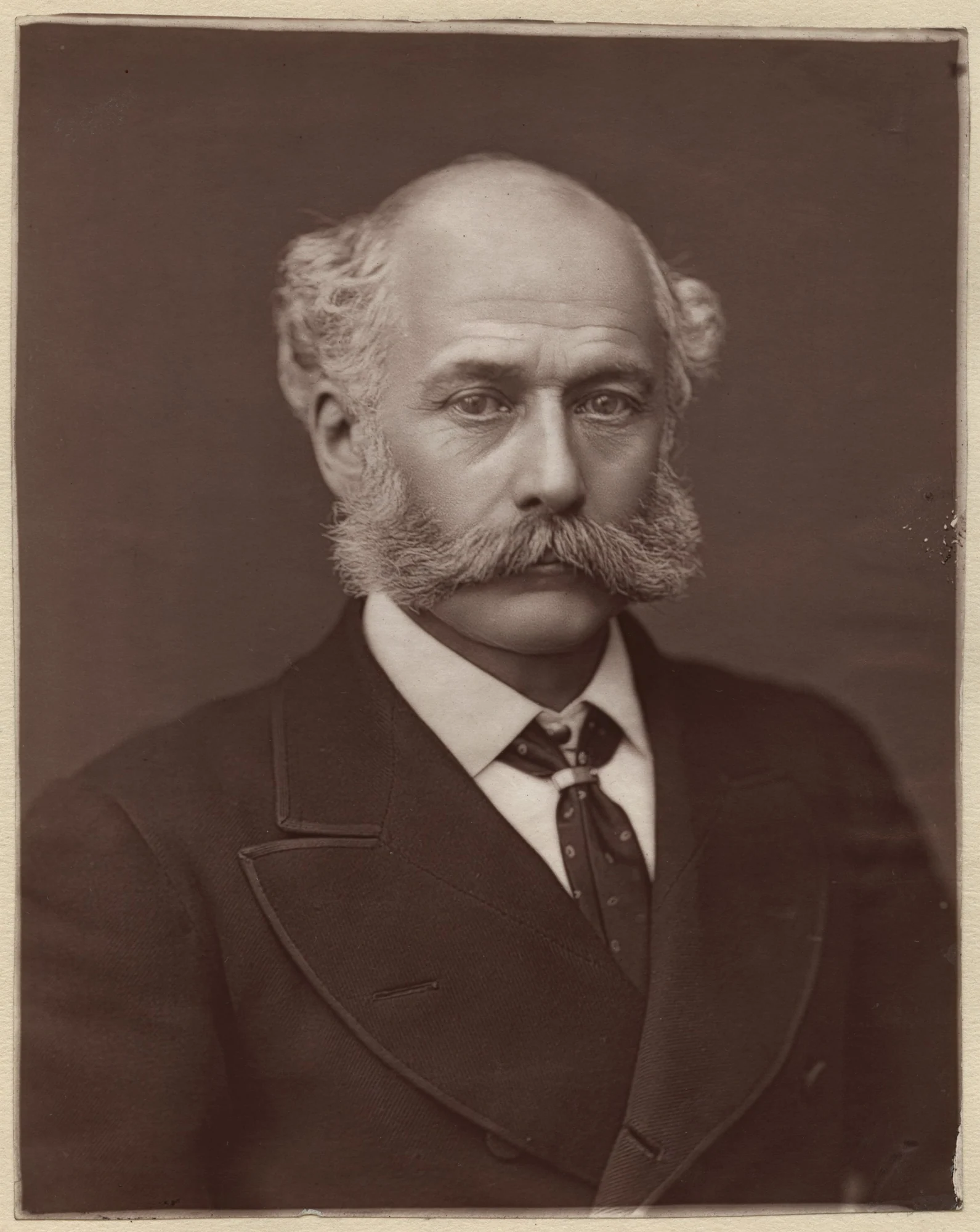
1819–1891
Joseph Bazalgette
Civil engineer and metropolitan drainage designerBazalgette designed main drainage works that carried much of London’s sewage away from central river outlets.Read biographyQuick answers
Common questions
- Did interception and treatment mean the same thing?
- No. Interception changes where flows are collected and routed. Treatment changes the properties of wastewater before discharge.
Primary and institutional sources
How this history was checked
Dates, legal milestones and historical claims are checked against the official and institutional records below. This article was reviewed on 5 November 2026.