
The short answer
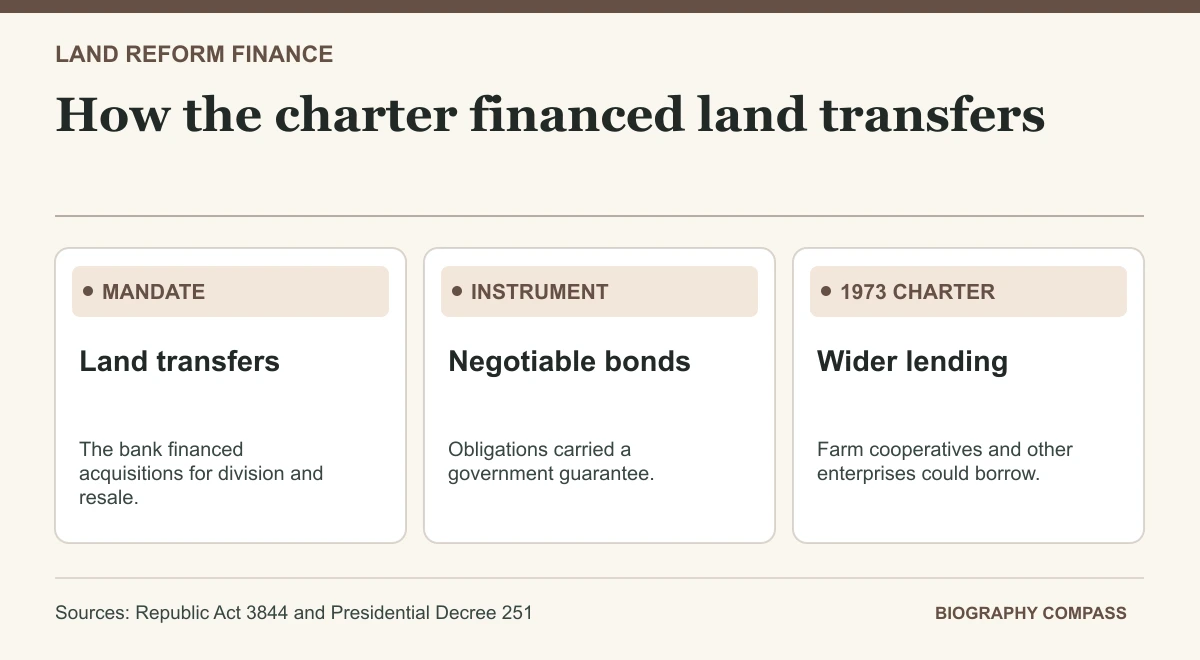
A land transfer can involve three different transactions. An owner gives up an estate, a farming family acquires a holding, and someone must finance the interval between compensation and repayment. The 1963 Philippine land code created a bank to help bridge that interval. Its original bond provisions explain why a land reform law contains so much banking language.
Reading the records
Follow the financing problem
Read these entries as separate parts of the original land code and its first decade of development.
| Question | Instrument | Purpose |
|---|---|---|
| Who needed financing? | 1963 section 74 | Government acquisition for resale and lessees buying holdings. |
| How could the bank raise funds? | 1963 section 76 | Negotiable bonds and other obligations under statutory limits. |
| What else could it finance? | 1973 decree | Loans for productive businesses and farmers’ cooperatives. |
Chronology
A timeline of the turning points
Agricultural Land Reform Code
Section 74 established the Land Bank in a law on rural tenure.
Financing powers
Section 76 provided for issuing government-guaranteed obligations.
Charter revised
Presidential Decree 251 introduced wider lending and banking powers.
Two ways a holding could change hands
The land code passed during Diosdado Macapagal’s presidency gave the bank a role both when the government acquired an estate for division and when an agricultural lessee bought directly from a landowner. These routes had different parties. A reader looking for the bank’s part in a particular transfer should establish who acquired the land before trying to identify the financing instrument.
Reading a bond as a promise over time
Under the original section 76, the bank could issue negotiable obligations secured by its assets and guaranteed by the government. The provision set a maturity ceiling of 25 years and specified half-yearly income payments. A bondholder could therefore hold a claim payable over time. The face amount of such a claim cannot by itself tell us how much cash a landowner received on the date of transfer.
Sources for this section: [1]
How the 1973 decree widened the balance sheet
Presidential Decree 251 allowed lending for agricultural, industrial and housing projects and specifically addressed loans to farmers’ cooperatives. It also gave the bank broader powers under the general banking law. Land Bank’s institutional account dates its expanded commercial banking powers to this decree. When a later document describes a commercial banking operation, the founding land-transfer mandate and the expanded charter supply two different sources for tracing its authority.
Continue the chronology
Related history guides
Connected biographies
People in this history
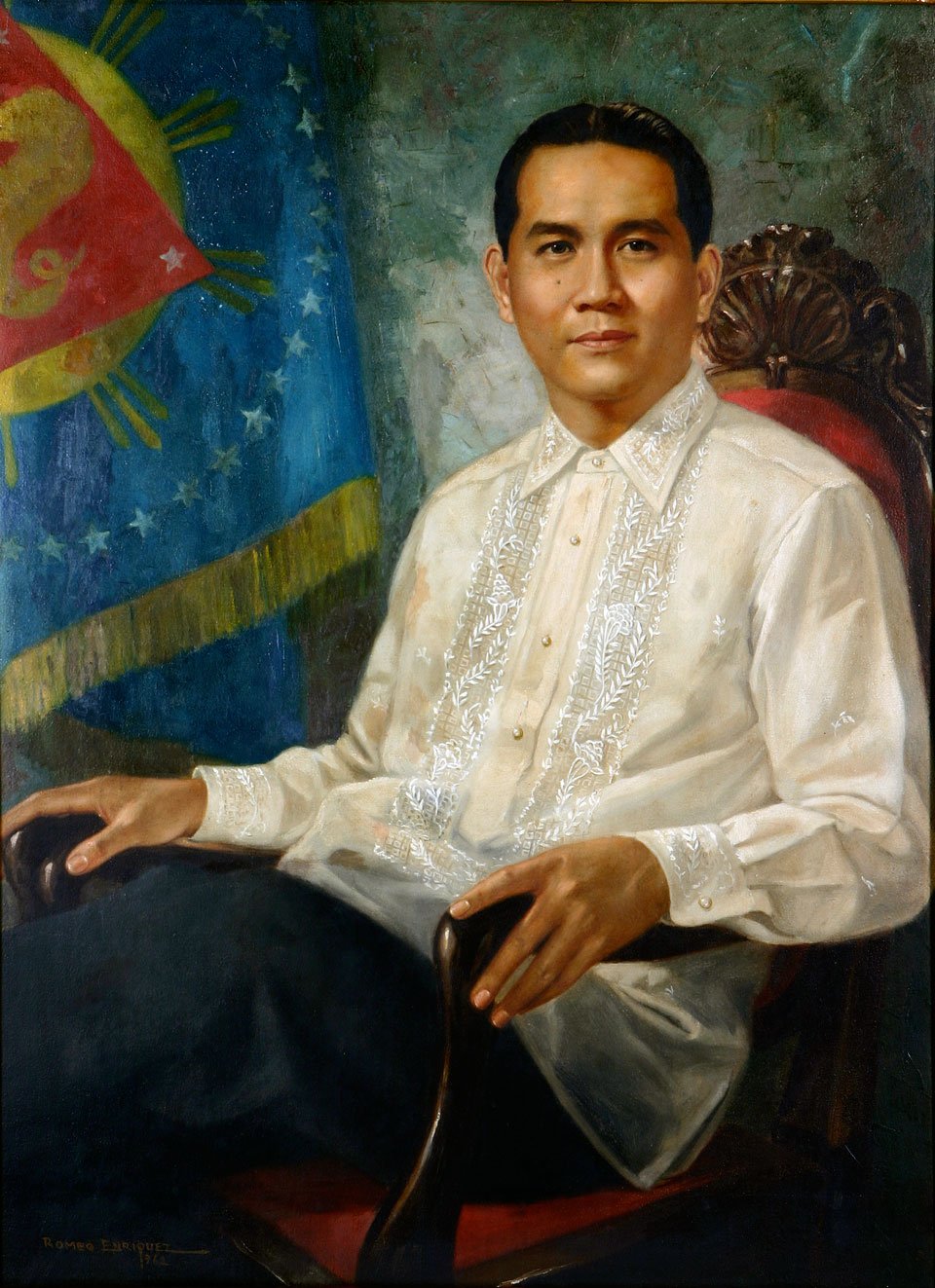
1910—1997
Diosdado Macapagal
President of the Philippines, 1961–1965The Lubao-born president who pursued economic decontrol and agricultural reform, and changed the national calendar to commemorate the 1898 declaration of independence.Read biographyQuick answers
Common questions
- What law created the Land Bank?
- Republic Act 3844, the Agricultural Land Reform Code approved on 8 August 1963.
- What did Presidential Decree 251 do?
- It revised the Land Bank’s charter in 1973, widening lending and other banking powers while retaining its agrarian reform role.
Primary and institutional sources
How this history was checked
Dates, legal milestones and historical claims are checked against the official and institutional records below. This article was reviewed on 19 November 2026.