
The short answer
Alanis Obomsawin’s documentary asks an audience to hear more than the immediate language of a security crisis. Its barricade footage is placed within a much longer history of land, community and resistance.
Chronology
A timeline of the turning points
The confrontation escalates
The proposed golf-course expansion and land defence lead to a confrontation with Quebec police.
Filming behind the barricades
Obomsawin and changing crew arrangements document the prolonged standoff.
A completed documentary
The edited work is released and becomes the first documentary to win TIFF’s Best Canadian Feature award.
A retrospective interview
Obomsawin discusses danger and changes in how the film was received.
The filmmaker returns to the longer history
Her Art21 interview connects the film with education and continuing Indigenous resistance.
The 1990 events and the 1993 film are not the same date
In summer 1990, opposition to extending a golf course onto Mohawk land near Oka developed into an armed standoff involving land defenders, Quebec police and the Canadian military. The 78-day confrontation preceded the documentary’s release by three years.
The delay matters as form, not only production chronology. A completed film can assemble testimony and earlier history around images that live television initially presented as an unfolding emergency. The title asks the viewer to look beyond the immediate news cycle.
Land defence is not simply a traffic dispute
POV’s account identifies the threatened Pines and ancestral burial ground, along with the proposed development. What one observer sees as an obstruction can therefore be understood by participants as protection of a place with a history of dispossession.
The documentary’s perspective changes the starting question from how quickly a blockade can be removed to why the land has to be defended. That shift does not erase the violence or the people endangered. It changes the historical frame within which those events are interpreted.
Sources for this section: [2]
Who is making the film, and whose community is shown?
Obomsawin is Abenaki, not Mohawk. Her film centres Kanien’kehá:ka voices and experiences at Kanehsatà:ke, with the wider confrontation also involving Kahnawà:ke. Naming those communities avoids turning different Indigenous nations into one generic identity.
Her first-person accounts emphasize listening before bringing a crew. That working relationship helps explain the attention to voices and personal experience behind the barricades. Access is not a neutral absence of viewpoint; it is one of the conditions that makes this particular account possible.
The danger of remaining with a camera
In the 2015 CityNews interview, Obomsawin recalls the fear of escalation and the difficulty of filming at night under military searchlights. POV also records her explanation of remaining after the crew could no longer be assured of safety.
These accounts give filming a physical and ethical context. The resulting proximity should not be confused with omniscience: a camera can record what happens before it while the people making the film remain uncertain about what will happen next.
Voice, editing and a documentary argument
The NFB credits Obomsawin as writer, director, researcher and narrator, and Yurij Luhovy as editor. It also lists numerous camera and sound contributors. The film is an authored arrangement of recorded material, not two hours of an untouched surveillance feed.
Those credits make two complementary facts visible: Obomsawin’s organizing perspective and the work of collaborators. Testimony can supply a narrative authority usually reserved for outside commentary, while editing joins moments that were separated in the days of filming.
Recognition does not close the historical question
In 1993 Kanehsatake became the first documentary to receive TIFF’s Best Canadian Feature award. Obomsawin later described initially hostile responses in Quebec and a different reception on re-release; that remains her reported recollection, not a survey of every viewer.
The film’s durability does not make the land struggle or its consequences neatly finished. It provides a way to examine the gulf between a brief headline and the history a community carries, while keeping the documentary, the event and later interpretation distinct.
Continue the chronology
Related history guides
Incendies: conflict in fictional adaptation
The unnamed setting and family inquiry are not equivalent to documentary testimony.
Read the timeline1941Karsh’s Churchill portrait and public memory
Another case where the circumstances of image-making influence a public historical narrative.
Read the timelineBiography context
Explore Kanehsatà:ke and Kahnawà:ke, Quebec, Canada through connected lives
Alanis Obomsawin: listening before filming
Abenaki childhood, performance, children’s stories and a long documentary practice.
Explore the biographiesCompare formsDenis Villeneuve
Fictional adaptation offers a different relationship between conflict, memory and a viewer’s knowledge.
Explore the biographiesConnected biographies
Image-makers and historical perspective
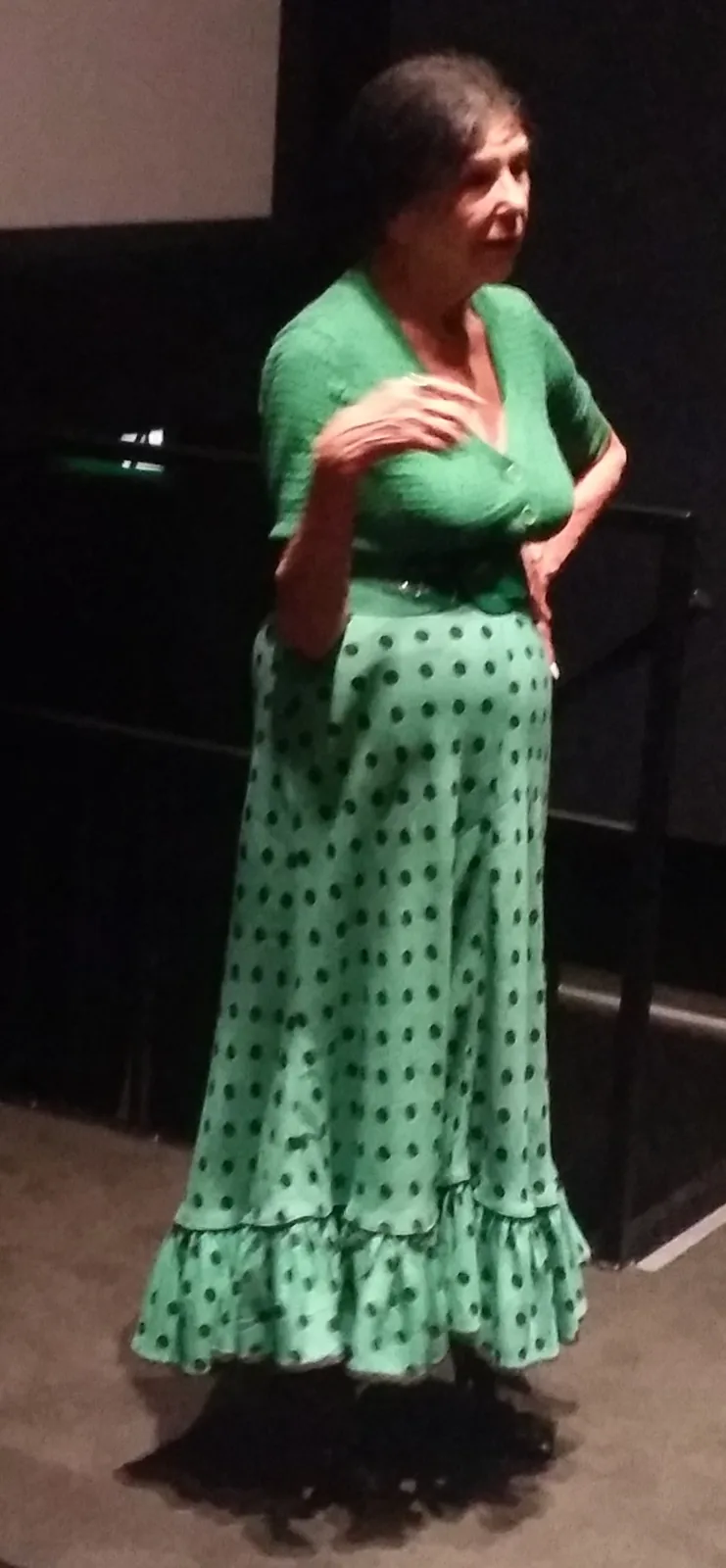
1932–
Alanis Obomsawin
Abenaki filmmaker, singer, storyteller and visual artistAlanis Obomsawin is an Abenaki filmmaker and storyteller whose Canadian documentary career connects listening, education, children’s experiences and Indigenous struggles over land and public institutions.Read biography
1967–
Denis Villeneuve
Film director, screenwriter and producerDenis Villeneuve is a Canadian filmmaker whose career links Quebec cinema with international thrillers and science fiction, using visual storytelling to explore violence, memory and uncertain knowledge.Read biography
1908–2002
Yousuf Karsh
Portrait photographerYousuf Karsh was an Armenian Canadian photographer, born in the Ottoman Empire, whose carefully lit portraits and accounts of his sitters helped shape the public image of twentieth-century cultural and political figures.Read biographyQuick answers
Common questions
- Was Kanehsatake released in 1990?
- The confrontation and filming took place in 1990. The documentary was released in 1993.
- Is Obomsawin a Mohawk filmmaker?
- She is Abenaki, from Odanak. The distinction matters when discussing the Mohawk communities whose experiences the film records.
- Is it simply a chronological TV-news compilation?
- No. Credits, narration, testimony and the historical frame identify an authored documentary assembled after the events.
Primary and institutional sources
How this history was checked
NFB synopsis and credits, published filmmaker interviews and POV’s critical account were read. The complete documentary was not newly viewed for this guide; its stills, soundtrack and footage are not reproduced. This article was reviewed on 23 October 2026.
- National Film Board of CanadaFilm synopsis, release year, credits and TIFF recognition
- Marc Glassman / POV2017 critical account and filmmaker testimony about the shoot
- CityNews2015 interview: remembered night filming, danger and reception
- Max Levin / Art212025 interview: listening, community relationships and the longer resistance
- International Documentary AssociationThe filmmaker on documentary viewpoint and community voices
- National Film Board of CanadaAbenaki director profile, distinct from the Mohawk communities
- Bull-Doser / Wikimedia CommonsLater filmmaker portrait and explicit public-domain dedication