
The short answer
A court can spend its time correcting many individual outcomes or selecting a smaller set of questions for review. The 1925 legislation changed that allocation of work without making selection itself a judgment that one side was right.
Access and decision
Do not combine the stages
Entering a process and obtaining the desired result are different events.
| Instrument or measure | What follows | What does not follow |
|---|---|---|
| Petition | A request to enter review. | A guaranteed hearing. |
| Specified appeal exception | A route defined by the selected clause. | Success on the underlying federal question. |
| Invented queue | Separate selection and result rates. | A historical docket or classification of unseen merits. |
Chronology
A timeline of the turning points
A judicial draft
A committee submits its proposed legislation.
Congress acts
The enacted law changes review routes.
The institution behind the reform
The Judges’ Bill, approved on 13 February 1925, expanded the Court’s discretionary docket while preserving specified routes for review as of right. Van Devanter led the justices’ drafting committee; Taft promoted the reform and Congress enacted it.
This was a redistribution of judicial work, not the invention of appellate review. A litigant’s ability to ask for another hearing and the Court’s obligation to provide one are different institutional arrangements.
Sources for this section: [1]
Two routes in the selected provision
Amended section 240(a) allowed certiorari on a party’s petition in cases in a circuit court of appeals, before or after judgment. Section 240(b) preserved an appeal route for the party relying on a state statute that the appellate court had held invalid on federal grounds.
The direction of the lower court’s decision therefore mattered within that provision. This is a deliberately narrow reading of two clauses, with other jurisdictional and transitional requirements left outside the exercise. It is not a guide to filing a case today.
Sources for this section: [2]
Original routing exercise
Assume two otherwise eligible cases under that selected provision. In Case A the appellate court rejects a federal challenge to a state statute. In Case B it holds the state statute invalid on federal grounds. In each, the party relying on the statute seeks further review. Which case fits the stated exception?
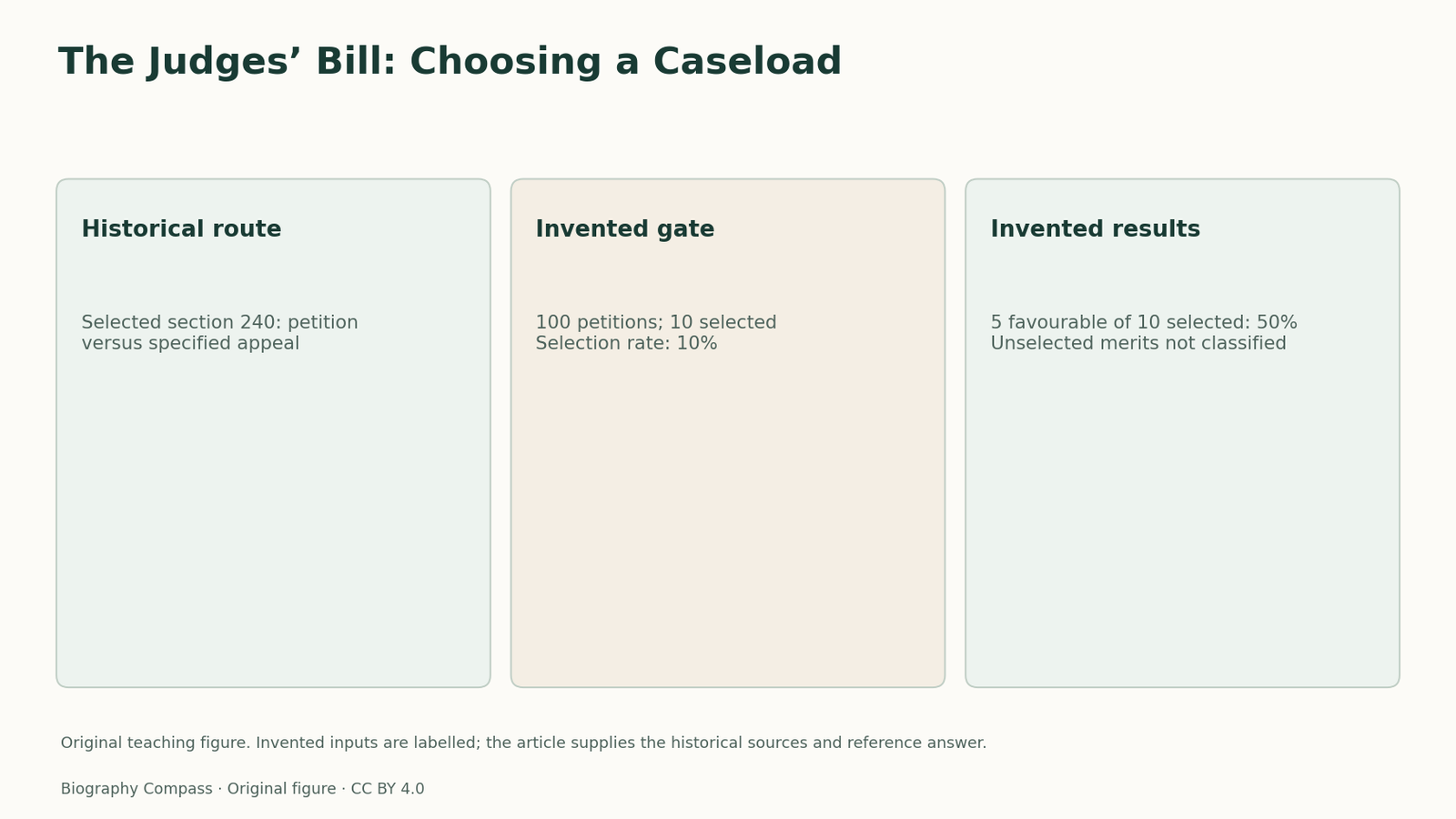
Now add fictional recordkeeping: 100 petitions enter a discretionary queue, 10 are accepted and 5 of those eventually receive the requested merits result. Calculate the selection rate and the favourable-result rate among selected cases. Keep this invented queue separate from the statutory classification.
Sources for this section: [2]
Reference answer: access is a separate stage
Case B fits the stated appeal exception; the supplied Case A facts do not establish that route. The 100-petition model has a 10% selection rate and a 50% favourable-result rate among the 10 selected cases. These are different denominators.
Only 5 favourable merits results are supplied. Nothing in the fictional counts classifies the merits of the 90 unselected petitions. The exercise therefore cannot support a claim that 95 petitions were legally wrong, or reproduce the Court’s actual workload. Historical law and invented arithmetic serve different parts of the explanation.
Sources for this section: [2]
Continue the chronology
Related history guides
Biography context
Explore United States through connected lives
Connected biographies
The connected working life
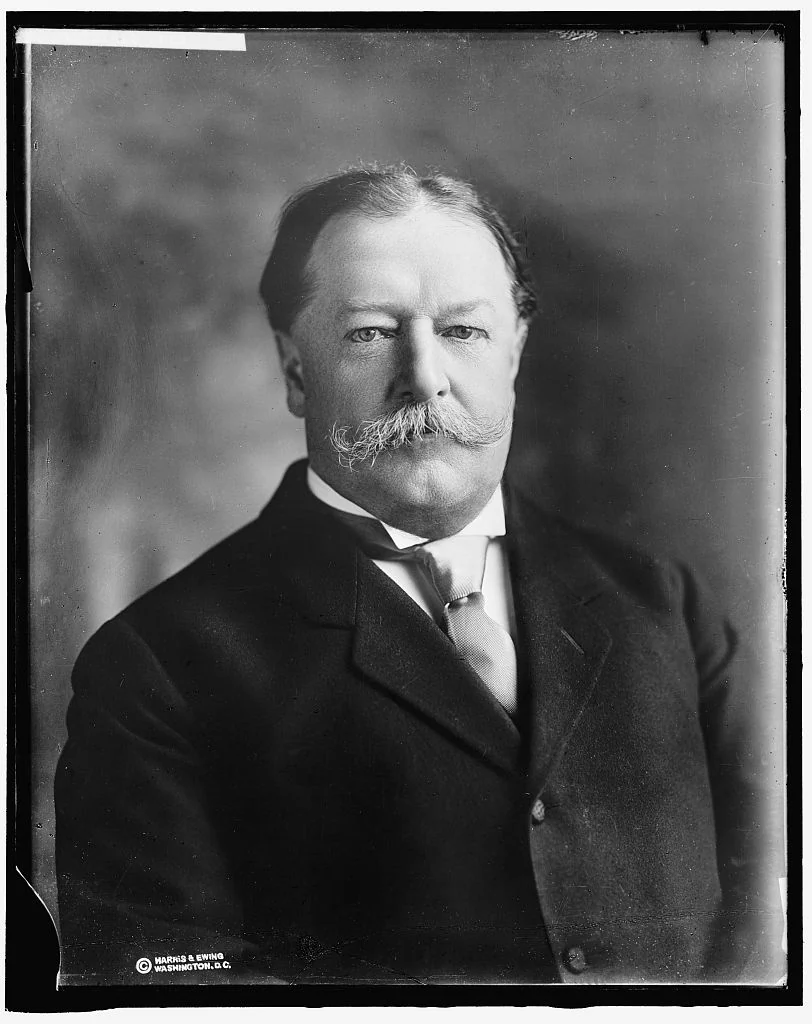
1857–1930
William Howard Taft
President and chief justiceA president whose earlier and later careers centred on courts, administration and the organisation of government.Read biographyQuick answers
Common questions
- Is the 100-petition queue a historical Court dataset?
- No. It is an invented model whose selection and result counts are supplied only for this exercise.
Primary and institutional sources
How this history was checked
The article uses the selected passages identified below. Original exercise inputs are supplied here, rather than presented as a historical dataset or a ruling on a present dispute. This article was reviewed on 31 October 2026.