
The short answer
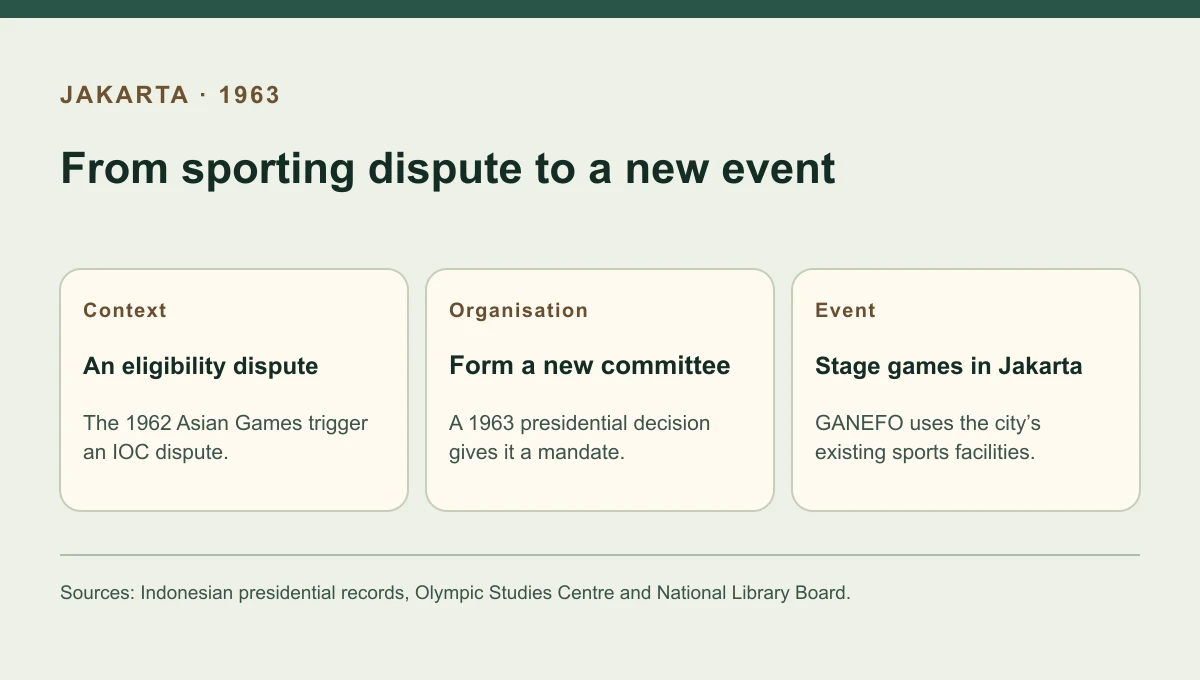
The Games of the New Emerging Forces brought an international field to Jakarta in November 1963 under a new organising structure. The event grew out of a dispute over entries at the previous year’s Asian Games and became part of President Sukarno’s wider diplomacy. A founding decision and the presidential archives let us follow the steps between disagreement and competition.
Read three kinds of evidence
What turning a dispute into an event required
A political rationale, an organising mandate and an actual competition have separate records.
| Evidence | What it establishes | Limit |
|---|---|---|
| 1962 dispute | An entry controversy and subsequent suspension | Does not by itself explain how the 1963 event was organised. |
| Presidential decision | Authority and tasks for a national committee | Records instructions before the competition. |
| Presidential archive | Speeches, dates and events at Senayan | Shows preparations and functions held during the Games. |
Chronology
A timeline of the turning points
Asian Games entries prompt a dispute
Israel and the Republic of China delegation from Taiwan are excluded from the Jakarta games.
Indonesia builds an organising structure
A presidential decision forms the committee and the archive records a May speech on the work.
Jakarta stages the first GANEFO
Sukarno helps open the event at the main stadium and gives its closing address.
The dispute that preceded GANEFO
At the 1962 Asian Games, Indonesia excluded delegations from Israel and the Republic of China, based in Taiwan. The National Library Board describes the ensuing suspension from the Olympic movement and links it to the creation of GANEFO. Indonesia’s organisers understood the new event through a different view of how sport could support international solidarity. The dispute concerned both who could enter an event and who had authority over the conditions of participation.
The organising decision is a separate piece of evidence
Presidential Decision No. 74 of 1963 established a national committee to organise the new games. Indonesia’s national archives also record a May address on the presidential staff for GANEFO. These records give the project a timetable and identifiable responsibilities before the opening. Reading them separately from the claims made about international sport helps explain how officials turned a diplomatic initiative into an event with venues, staff and a schedule.
What the November records establish
The games took place from 10 to 22 November in Jakarta. The national archive identifies Sukarno’s closing speech at the main Gelora Bung Karno stadium on the twenty-second. The archive also records a flame-lighting event on 8 November, before the formal opening. This is a useful distinction when comparing a ceremonial photograph with the dates of the competition itself. Olympic historians separately document how some international sports bodies responded to athletes’ participation.
Continue the chronology
Related history guides
How Jakarta Built Gelora Bung Karno for the 1962 Asian Games
Read how the stadium used for GANEFO was originally part of the 1962 Asian Games project.
Read the timeline1955Bandung Conference 1955: Countries, Principles and Legacy
Read about the Bandung Conference and an earlier part of Indonesia’s diplomatic context.
Read the timelineConnected biographies
People connected to this history
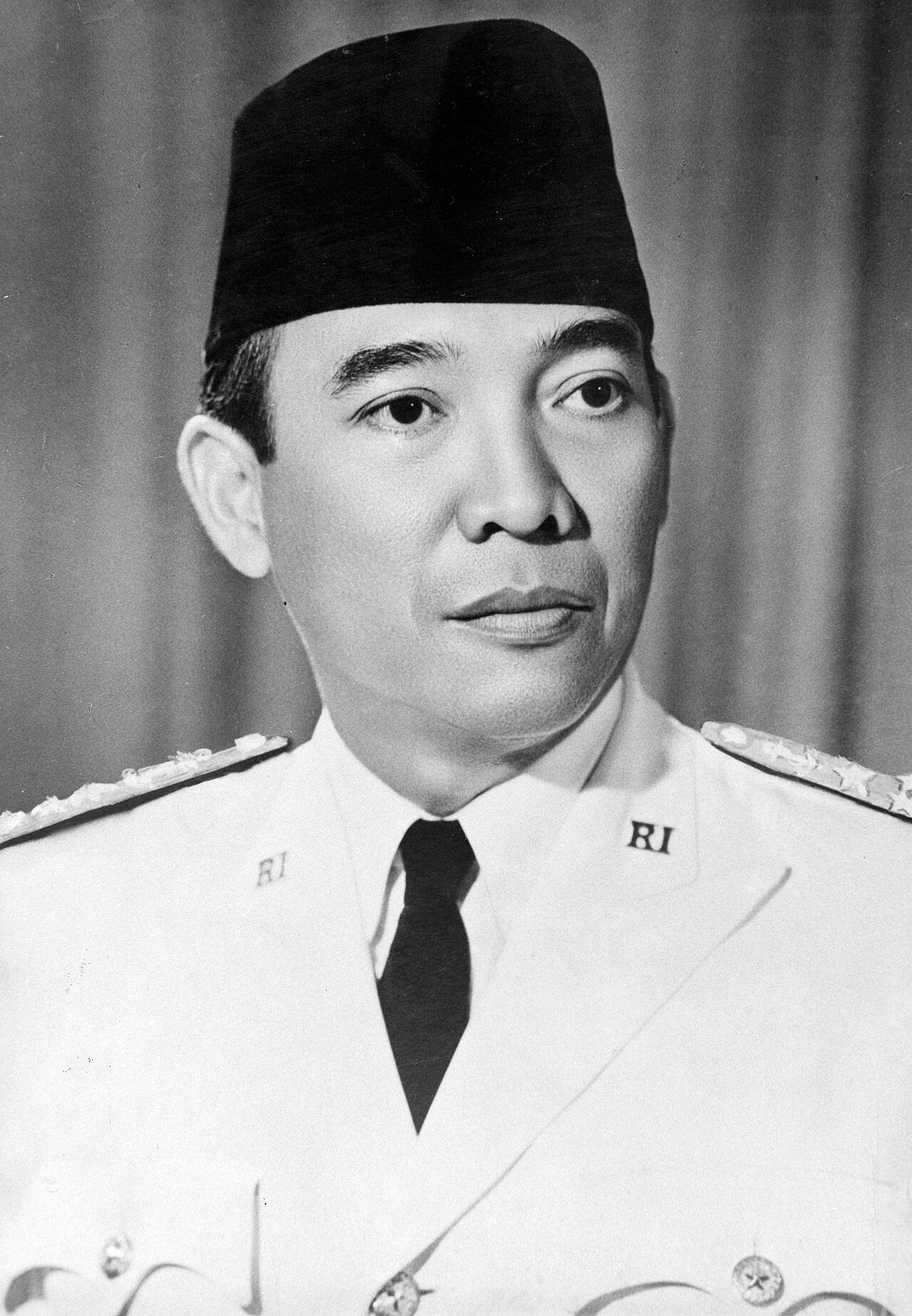
1901—1970
Sukarno
First President of IndonesiaAn independence leader, orator and Indonesia’s first president, who helped unite a vast archipelago around a new republic.Read biographyQuick answers
Common questions
- What did GANEFO stand for?
- It stood for Games of the New Emerging Forces.
- When did the first GANEFO take place?
- Jakarta staged it from 10 to 22 November 1963.
Primary and institutional sources
How this history was checked
Dates, legal milestones and historical claims are checked against the official and institutional records below. This article was reviewed on 19 November 2026.
- National Legal Development Agency, IndonesiaPresidential Decision No. 74 of 1963: GANEFO national committee
- National Archives of IndonesiaThematic guide to Sukarno’s presidential records, 1945–1967
- Lamongan Regency, national unity and politics officeGANEFO: Indonesia’s alternative multi-sport games
- Olympic Studies CentreThe Olympic Movement’s response to the challenge of GANEFO
- National Library Board, SingaporeSporting Glory: games history and memorabilia