
The short answer
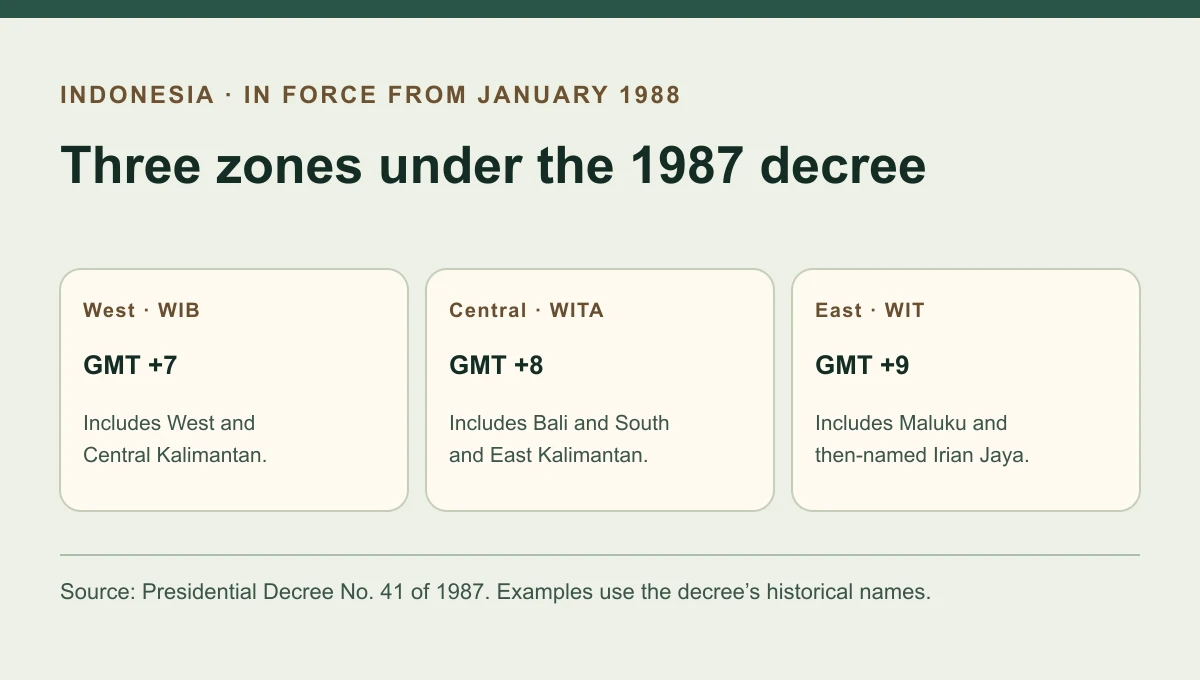
Indonesia’s 1987 presidential decree redrew the assignment of provinces among three time zones. It named Bali and parts of Kalimantan as places where the old division needed reconsideration. From 1 January 1988, the decree placed West and Central Kalimantan in the western zone and Bali in the central zone.
Offsets and their territory
A clock rule has both a time and a boundary
The decree lists the reference and named geographic assignments. Examples below use the historical province names.
| Zone | Offset | Examples of assignments |
|---|---|---|
| WIB — Western Indonesia | GMT+7 | West Kalimantan and Central Kalimantan. |
| WITA — Central Indonesia | GMT+8 | Bali, South Kalimantan and East Kalimantan. |
| WIT — Eastern Indonesia | GMT+9 | Maluku and the then-named Irian Jaya. |
Chronology
A timeline of the turning points
An earlier decree establishes a three-zone structure
The 1987 decree identifies this arrangement as the one it replaces.
Decree No. 41 issued
The text lists provincial assignments and specifies each time reference.
New assignments apply
The previous decree is revoked when the replacement enters into force.
What the decree was trying to fix
Decree No. 41 says that some boundaries no longer matched geographical and time conditions. Its preamble names West Kalimantan, Central Kalimantan and Bali. The existing system already used three time references under an earlier 1963 decree.
This made the reform a question of assignment. The government could keep three offsets while changing which clock applied in a particular province.
How the geographic rule worked
The text links the western, central and eastern zones to reference meridians at 105°, 120° and 135° east. Their offsets are seven, eight and nine hours ahead of Greenwich. Its province list tells a reader which reference applied under the decree.
For example, West and Central Kalimantan appear in the western zone, while South and East Kalimantan appear in the central one. Longitude helps explain the difference among reference times. The province list determines how they are assigned under this text.
Why the historical names matter
The decree lists the administrative names used when it was made. Applying its wording to a later map requires checking how provinces and administrative boundaries changed. A historical explanation should keep the old names identifiable instead of translating them into a modern list without evidence.
The issue date and the effective date serve different purposes. Suharto signed the decree in November 1987 and its own commencement clause says that the replacement took effect on 1 January 1988.
Continue the chronology
Related history guides
Connected biographies
People connected to this history
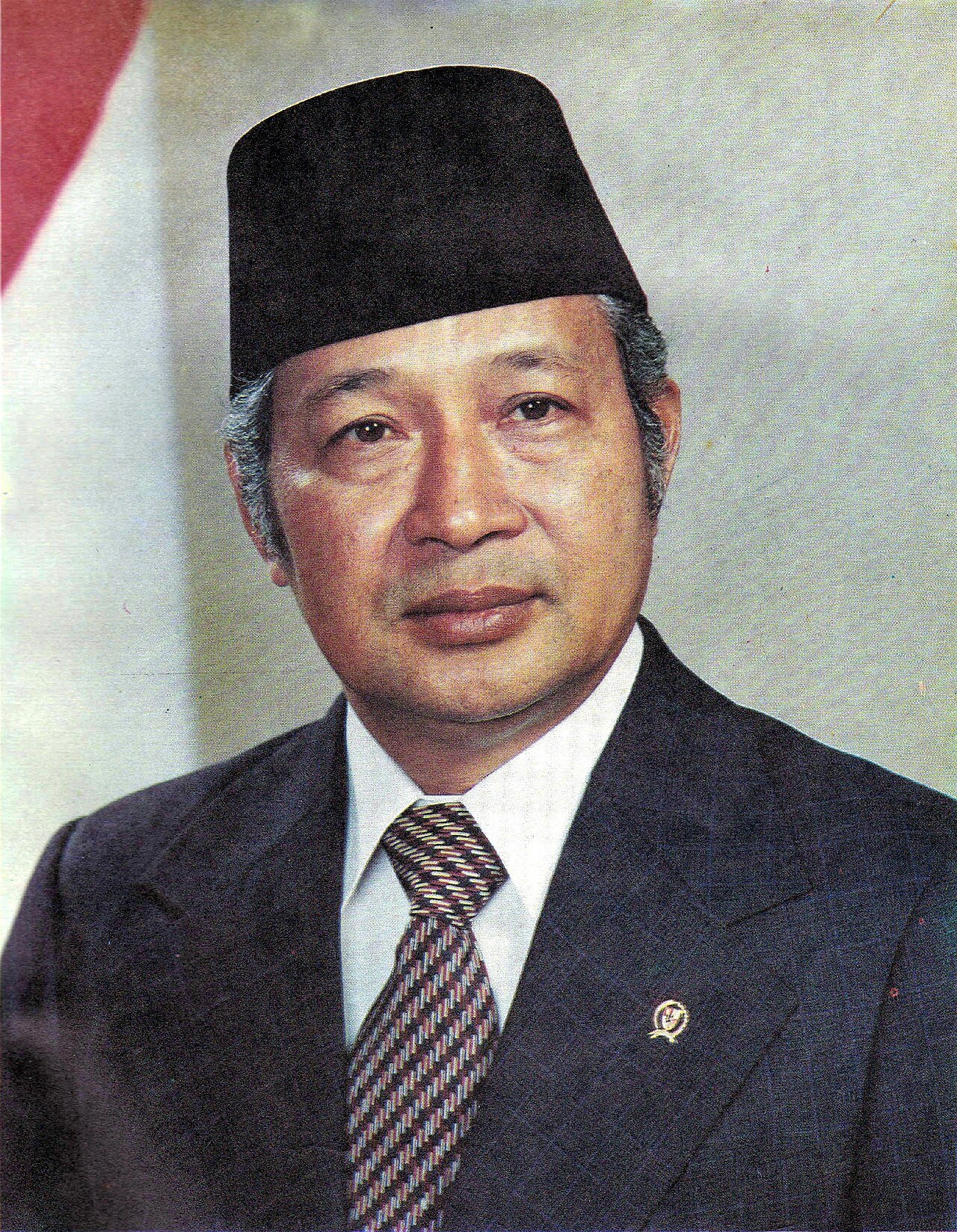
1921—2008
Suharto
Second President of IndonesiaThe army general who displaced Sukarno and led Indonesia’s New Order from 1967 to 1998, combining economic growth with authoritarian rule.Read biographyQuick answers
Common questions
- When did Indonesia’s revised time-zone decree take effect?
- Decree No. 41 of 1987 took effect on 1 January 1988.
- Which zone did the decree assign to Bali?
- It puts Bali in Central Indonesian Time, or WITA, eight hours ahead of Greenwich under the decree’s reference.
Primary and institutional sources
How this history was checked
Dates, legal milestones and historical claims are checked against the official and institutional records below. This article was reviewed on 19 November 2026.
- Audit Board of Indonesia legal repositorySigned text of Presidential Decree No. 41 of 1987
- Audit Board of Indonesia legal repositoryCatalogue record and statutory history for Decree No. 41 of 1987
- National Legal Development Agency of IndonesiaPresidential Decree No. 41 of 1987: signed text and repeal of the 1963 decree