

The short answer
Finding a gene associated with an experimental state does not establish its function. Compare what the early PD-1 records say, then audit three claims that cross different evidential boundaries.
Original source comparison
Evidence changes when the question changes
Match each observation to the question it can actually answer.
| Evidence | What the evidence supports | What it does not establish |
|---|---|---|
| Expression association | A gene’s expression differs in the specified system. | Direct execution of cell death. |
| Knockout phenotype | A role in regulation in the reported mouse context. | An identical immediate disease in every background. |
| Therapeutic principle | A reason for further clinical investigation and recognised applications. | Benefit for every patient. |
Chronology
A timeline of the turning points
Expression report
Ishida and colleagues published the initial PD-1 report.
Knockout creation
Honjo’s later lecture dates generation of the model to this year.
Functional report
Nishimura and colleagues published autoimmune-phenotype evidence.
Nobel recognition
Honjo and Allison shared the Medicine Prize.
The name records a discovery context
Ishida, Agata, Shibahara and Honjo’s 1992 report describes PD-1 expression in specified cell-line experiments associated with programmed cell death. The abstract also characterises a predicted member of the immunoglobulin superfamily. These are meaningful findings about a gene, its expression and inferred structure. The name PD-1 is not itself an experimental demonstration that the molecule directly executes cell death. Reading a name as a settled mechanism would replace the biological question with a linguistic shortcut. Honjo’s later lecture explains how determining function required additional work.
A functional intervention changes the question
The 1999 paper by Nishimura and colleagues reports consequences of disrupting PD-1 in mice. Its abstract describes autoimmune phenotypes and supports an interpretation involving peripheral tolerance and negative immune regulation. The evidence is stronger for that functional question than expression association alone, but its stated mouse backgrounds and ages remain important. An effect in older animals is not the same as an immediate identical effect in every animal. The paper’s reported context belongs in the explanation rather than being treated as inconvenient detail. This guide uses its abstract, not the complete original figures or raw animal records.
Sources for this section: [2]
The later lecture separates creation from discovery of the phenotype
Honjo’s 2018 written lecture says Nishimura generated knockout mice in 1994 and describes the difficulty of interpreting them on mixed backgrounds. It then discusses later findings, including the 1999 results and differences between backgrounds. Creating the genetic model and publishing a clear phenotype are separate milestones. The retrospective lecture offers an account of how the interpretation developed, while the original abstract records a narrower contemporary report. Neither source makes the original gene name a sufficient explanation of function. Collaborators’ roles are also more specific than the claim that Honjo alone performed every step.
Classify three proposed captions
The following claims are invented for this learning exercise, not quotations from the papers. CaptionA says: “The 1992 expression result proves PD-1 is the direct executor of cell death.” CaptionB says: “The 1999 disruption study supports a role in restraining immune responses in the reported mouse settings.” CaptionC says: “Because PD-1 can act as an immune brake, blocking it benefits every cancer patient.” Classify each as supported, unsupported by the cited evidence or requiring a different evidence base. For the problematic captions, identify the missing step rather than merely replacing “proves” with a softer word.
Reference answer: each inference has a different bridge
A overreaches: association of expression with the experimental state and predicted protein structure do not establish direct execution of death. A functional mechanism would need appropriate tests and alternatives addressed. B is supported as a bounded description of the knockout results, retaining species, background and outcome limits. C is unsupported: a mechanistic rationale does not show universal patient benefit. Clinical outcomes require their own studies, defined populations and adverse-effect evidence. This guide has not reviewed that complete clinical literature and makes no treatment recommendation. Calling all three captions equally uncertain would also be wrong; they use materially different evidence.
Recognition does not remove the earlier distinctions
The 2018 Nobel Prize recognised cancer therapy through inhibition of negative immune regulation and was divided equally between Honjo and James P. Allison. That award can recognise a transformative principle while individual responses still vary. PD-1 and CTLA-4 are distinct programmes, not two names for the same receptor. The prize citation is a record of recognition, whereas the 1992 and 1999 records help explain how one line of evidence developed. The original figure classifies the three captions without copying an experimental image or inventing patient counts.
Read this alongside the antibody-gene history
Honjo’s biography also includes class-switching and AID research, which should not be confused with the PD-1 programme. Tonegawa’s initial antibody-gene rearrangement work supplies another distinct question, while Ohsumi’s mutant screen illustrates a different use of genetic disruption. Connecting these pages is useful when the link explains the comparison. It is less useful to merge all three into a generic story that a scientist “discovered a gene and cured disease.” The identified original abstracts and selected lecture pages set the scope of this guide; no complete clinical efficacy assessment is claimed.
Continue the chronology
Related history guides
How Did the 1976 Antibody Study Show DNA Rearrangement?
Compare a different primary-source question and its explicitly bounded teaching exercise.
Read the timeline1988–2016Does Autophagosome Accumulation Show a Faster Process?
Compare a different primary-source question and its explicitly bounded teaching exercise.
Read the timelineBiography context
Explore Japan through connected lives
Connected biographies
People behind the work
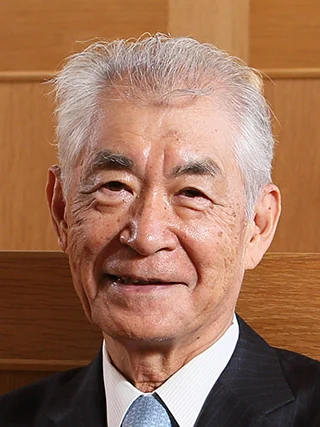
1942–
Tasuku Honjo
Physician-scientist and molecular immunologistTasuku Honjo investigated how immune cells change antibody genes and how immune responses are restrained. His group’s PD-1 research developed from gene-expression experiments into genetic tests of immune regulation, before later therapeutic applications.Read biography1939–2026
Susumu Tonegawa
Molecular biologist and neuroscientistSusumu Tonegawa used molecular biology to investigate how an inherited genome could support an enormous range of antibodies. His later work at MIT moved into neuroscience and memory. He died on 11 July 2026, after a career spanning Japanese, American and Swiss laboratories.Read biography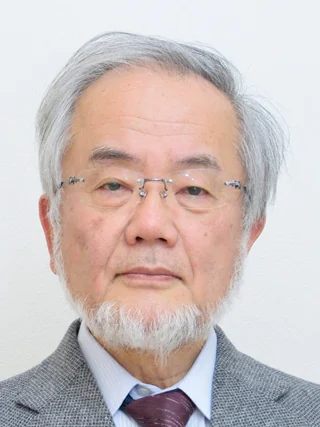
1945–
Yoshinori Ohsumi
Cell biologistYoshinori Ohsumi developed yeast-based ways to observe and genetically investigate autophagy, the delivery of cellular material for degradation. His career grew from membrane-transport work into a collaborative search for the machinery of cellular recycling.Read biographyQuick answers
Common questions
- Did finding PD-1 settle its function immediately?
- No. The later genetic and functional work answered questions not settled by the expression report.
- Does this guide compare treatments?
- No. It compares historical evidence and explicitly does not assess individual care.
Primary and institutional sources
How this history was checked
Compare the identified original texts, participant accounts and institutional records; the teaching examples are separately labelled. This article was reviewed on 27 October 2026.
- Y. Ishida, Y. Agata, K. Shibahara and T. Honjo; Europe PMCInduced expression of PD-1…upon programmed cell death, EMBO11,3887–3895 (1992): original abstract
- H. Nishimura, M. Nose, H. Hiai, N. Minato and T. Honjo; Europe PMCDevelopment of lupus-like autoimmune diseases by disruption of the PD-1 gene…, Immunity11,141–151 (1999): original abstract
- Tasuku Honjo; Nobel FoundationSerendipities of Acquired Immunity, Nobel Lecture, 7 December 2018
- Nobel FoundationTasuku Honjo: Nobel Prize facts
- Nobel Foundation; Tasuku HonjoTasuku Honjo: autobiographical account