In this biography
Quick facts
- Born
- 27 January 1942
- Birthplace
- Kyoto, Japan
- Country
- Japan
- Nationality
- Not independently established
- Known for
- Antibody diversification and the PD-1 immune-regulation programme
- Birth
- 27 January 1942, Kyoto
- PD-1 report
- Ishida and colleagues,1992
- Genetic evidence
- Nishimura and colleagues,1999
- Nobel Prize
- Physiology or Medicine,2018; half share
Why this life matters
His career shows why finding and naming a molecule, identifying its function and testing a treatment are separate scientific achievements.
Timeline
Key moments
Birth
Born in Kyoto.
Graduate research
Worked in Osamu Hayaishi’s department.
Return to Japan
Returned after research in the United States.
Osaka appointment
Headed the Department of Genetics at Osaka University.
Kyoto return
Returned to Kyoto University.
PD-1 publication
Ishida and colleagues reported the expression-linked gene.
Functional evidence
A knockout-mouse paper supported a negative-regulatory role.
Nobel Prize
Shared the Medicine Prize with James P. Allison.
Medical training led towards molecular mechanisms
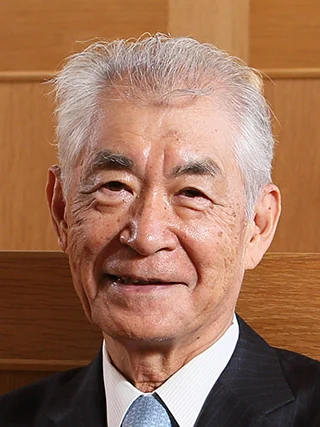
Honjo was born in Kyoto on 27 January 1942. His autobiography places his graduate research in Osamu Hayaishi’s department between 1967 and 1971 and credits Yasutomi Nishizuka’s mentorship. The laboratory encouraged biochemical investigation rather than relying only on clinical descriptions of disease. Research periods in the United States broadened his experience in molecular methods and immunology. His later recollections explain scientific choices in personal terms; they are participant accounts, rather than complete contemporary laboratory records. The career that followed addressed several different immune-system problems, not only the molecule associated with his Nobel Prize.
Antibody genes were an early central question
After returning to Japan in 1974, Honjo investigated how antibody-producing cells change the kind of antibody they make. Class-switch recombination differs from the initial assembly of variable-region gene segments studied in Tonegawa’s programme. Honjo’s account describes work on immunoglobulin heavy-chain genes and collaboration with students and colleagues. In 1979 he moved to lead genetics at Osaka University, then returned to Kyoto in 1984. His later AID research connected an enzyme with class switching and somatic hypermutation. These distinctions matter because antibody diversity includes several processes occurring at different stages, rather than one interchangeable form of rearrangement.
Sources for this section: [1]
The PD-1 name came before its function was established
In the early 1990s Yasumasa Ishida compared gene expression in experimental cell systems associated with growth and programmed cell death. The 1992 coauthored report identified PD-1 and described a predicted member of the immunoglobulin superfamily. Its title and the name “programmed death” record the discovery context. They did not demonstrate that PD-1 was the machinery directly executing cell death. Honjo’s 2018 lecture describes the subsequent difficulty of determining its function. A biography that jumps directly from the name to an established inhibitory role hides the years of testing between those stages.
Knockout experiments changed the interpretation
Hiroyuki Nishimura generated PD-1 knockout mice in 1994, according to Honjo’s lecture, but a clear functional interpretation took longer. The 1999 paper reported autoimmune phenotypes in specified mouse backgrounds, including effects that emerged with age. Its results supported a role in restraining immune activity and maintaining peripheral tolerance. The different backgrounds and timescales were part of the evidence; they should not be replaced with a claim that every knockout animal immediately showed the same disease. Gene disruption tested consequences beyond the earlier correlation between expression and a particular experimental state.
Therapeutic applications required another evidence base
PD-1’s inhibitory role helped motivate a later approach to releasing immune responses against cancer. That development involved additional researchers, experimental systems and patient studies. The 2018 Nobel Prize was divided equally between Honjo and James P. Allison for cancer therapy through inhibition of negative immune regulation; their PD-1 and CTLA-4 programmes were related but distinct. Recognition of a therapeutic principle is not a claim that every tumour or every patient benefits. This biography and its linked historical guide compare discovery evidence and experimental inference; they do not evaluate an individual’s treatment choices.
The broader career includes more than one discovery
Honjo’s antibody-diversification research and his PD-1 programme share an interest in how immune cells acquire capabilities and limits. They used different questions, assays and genetic interventions. His autobiographical account names collaborators whose roles disappear in a single-inventor story. Reading those contributions alongside the original abstracts makes the chronology more precise: expression-linked identification, later functional evidence and eventual applications are different milestones. The accompanying guide asks readers to classify claims against these sources and to notice what additional evidence would be required before moving from a mouse phenotype to a general clinical conclusion.
Quick answers
Frequently asked questions about Tasuku Honjo
- Does the name PD-1 prove that it directly causes cell death?
- No. The name arose from the discovery setting; function required further experiments.
- Did Honjo receive the whole 2018 Medicine Prize?
- No. He received one half, with James P. Allison receiving the other half.
Keep exploring
Lives connected to this story
- Susumu Tonegawa
Distinguish initial antibody-gene assembly from Honjo’s class-switching questions.
- Yoshinori Ohsumi
Compare how genetic disruption can test the function of a biological process.
Sources and further reading
Explore the evidence
These references support the biography and offer further reading. Official records, first-person accounts and independent reporting provide different perspectives; image records document attribution and licensing.
- 1. Nobel Foundation; Tasuku HonjoTasuku Honjo: autobiographical account
- 2. Nobel FoundationTasuku Honjo: Nobel Prize facts
- 3. Y. Ishida, Y. Agata, K. Shibahara and T. Honjo; Europe PMCInduced expression of PD-1…upon programmed cell death, EMBO11,3887–3895 (1992): original abstract
Actual original abstract read, PMID1396582/doi10.1002/j.1460-2075.1992.tb05481.x. Expression in specified experimental cell lines and predicted sequence; title/name not proof of death-executor function. Full original paper not read.
- 4. H. Nishimura, M. Nose, H. Hiai, N. Minato and T. Honjo; Europe PMCDevelopment of lupus-like autoimmune diseases by disruption of the PD-1 gene…, Immunity11,141–151 (1999): original abstract
Actual original abstract read, PMID10485649/doi10.1016/s 1074-7613(00)80089-8. Defined mouse backgrounds, age-dependent autoimmune phenotypes and peripheral-tolerance interpretation; not full paper or universal patient outcomes.
- 5. Tasuku Honjo; Nobel FoundationSerendipities of Acquired Immunity, Nobel Lecture, 7 December 2018
Actual29-page written lecture acquired, distinct from slides. PDF10–12/printed342–344 read for Ishida isolation,1992 publication, Nishimura1994 knockout creation versus1999 results and genetic-background differences. No whole clinical trial review or therapeutic recommendation.