

The short answer
A joint publication need not be a jointly written essay. The 1858 Linnean communication combines separately written Darwin and Wallace documents under an introduction signed by Lyell and Hooker. Its structure lets readers distinguish intellectual authorship from editorial presentation.
Evidence comparison
Read the role of each record
This original comparison follows the cited source scopes.
| Record | Evidence | What it supports | Limit |
|---|---|---|---|
| Printed heading | Darwin and Wallace as authors | Attribution of scientific contributions | Not proof of joint drafting. |
| Signed introduction | Lyell and Hooker communicate papers | Editorial selection and priority argument | Not independent advance approval by Wallace. |
| Gray letter date | Printed October; edited correction 5 September 1857 | Distinguishes record from annotation | Do not silently propagate the printed month. |
Chronology
A timeline of the turning points
Earlier manuscript
Darwin manuscript later excerpted.
Joint record
Read at the Linnean Society on 1 July.
A separate book
Origin of Species appeared.
Read the heading before the legend
The printed heading attributes the scientific contributions to Charles Darwin and Alfred Wallace, and identifies Charles Lyell and Joseph Hooker as communicators. It records reading on 1 July 1858; the introductory letter is dated 30 June. These labels identify different kinds of participation.
Lyell and Hooker’s introduction argues that the two naturalists conceived related ideas independently. It is also an intervention in how credit should be allocated: the organisers wanted Darwin’s earlier work published alongside Wallace’s essay. A source can preserve a collaboration and advocate a particular account of it at the same time.
Three documents did different work
The organisers identify an extract from Darwin’s species manuscript, a private-letter abstract addressed to Asa Gray, and Wallace’s essay on varieties departing from an original type. The visible opening of Wallace’s section names him as its author. They were assembled into a common communication, not merged into a single jointly drafted text.
One date requires care. The printed introduction calls Darwin’s Gray letter October 1857. The Correspondence Project’s editorial note identifies the letter as 5 September 1857. A comparison should preserve that correction rather than quietly copying the introduction’s month as settled fact.
The printed case cannot answer every consent question
The introduction states that the papers were placed in the organisers’ hands and describes Darwin permitting use of his materials. It records their justification for the arrangement. That is not equivalent to possessing a surviving pre-meeting statement from Wallace approving this exact edited package.
The 1859 Origin of Species is another publication altogether. Its existence should not replace the 1858 joint record when explaining how these ideas entered the Linnean Society’s proceedings. Nor should the shared publication erase the different circumstances in which the separate contributions were written.
Learning exercise: attribute three claims
Claim A: “Lyell and Hooker wrote Wallace’s theory.” Correction: they communicated the assembled papers and wrote the introduction; the separate essay is credited to Wallace. Claim B: “A private document date equals the meeting date.” Correction: document composition, the 30 June introduction and the 1 July reading are distinct events.
Claim C: “The heading proves everyone approved every editorial detail in advance.” Correction: a printed attribution establishes the publication’s stated roles; it cannot substitute for missing correspondence. A strong answer names both what the record establishes and what further document would be needed.
Continue the chronology
Related history guides
Newton’s 1672 Prism Experiment: What Did the Second Prism Test?
Read Newton’s 1672 light letter, compare his prism tests and practise separating an observation from the inference that sunlight contains differently refracted rays.
Read the timeline1831–1832Faraday’s 1831 Induction Ring: Why Did the Needle Settle?
Read Faraday’s induction-ring observations, compare making, holding and breaking contact, and test the difference between a transient response and a steady current.
Read the timelineBiography context
Explore United Kingdom through connected lives
Connected biographies
Researchers and related lives
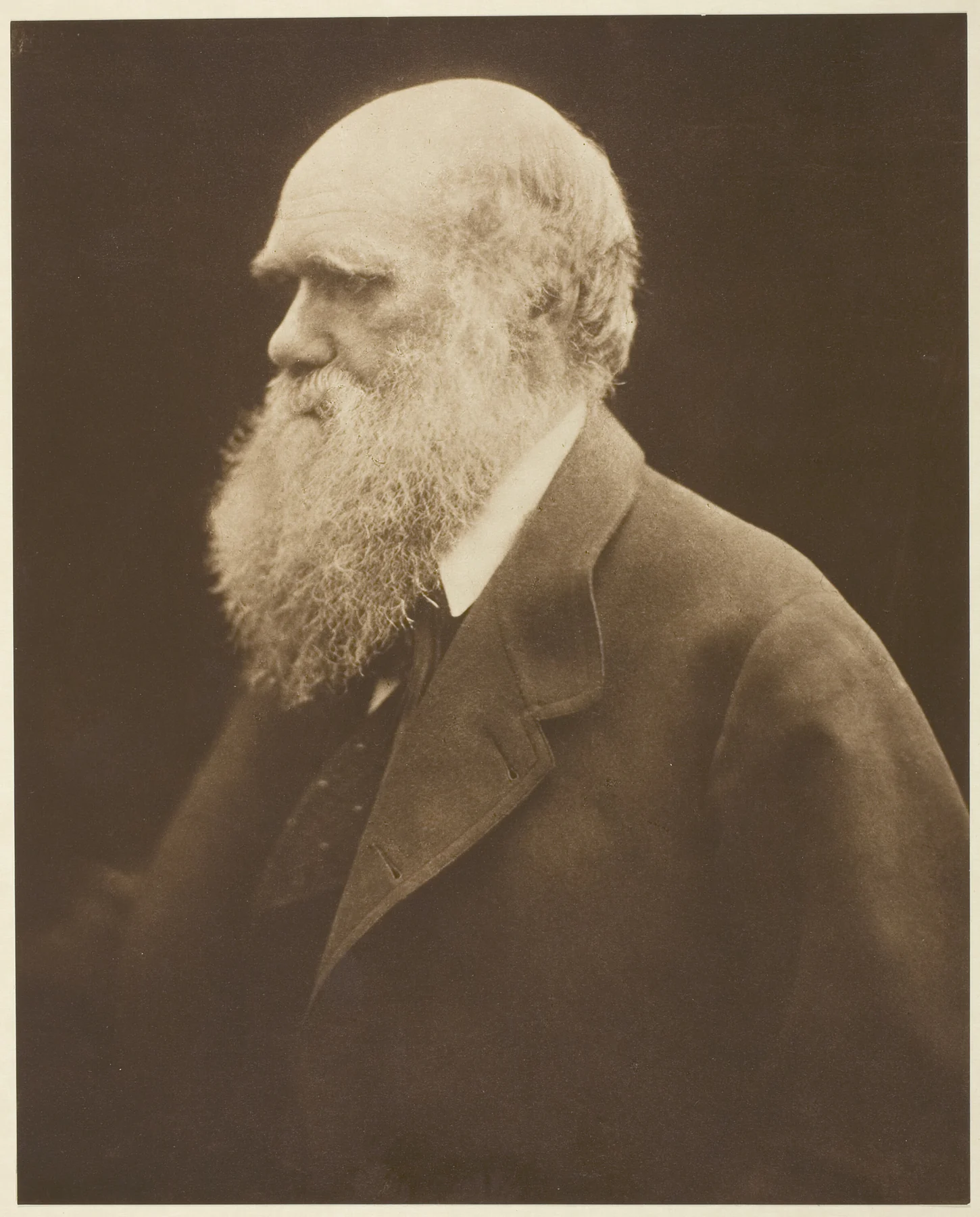
1809–1882
Charles Darwin
Naturalist and authorCharles Darwin developed natural selection through travel, correspondence and long-term research; his 1858 publication shared credit with Alfred Russel Wallace.Read biographyQuick answers
Common questions
- Did Darwin and Wallace write one shared essay?
- The communication assembled separately written contributions; a shared publication is not the same as a jointly drafted essay.
- Who read it aloud?
- The Correspondence Project notes that the identity of the reader is unclear. Communicator credit should not be converted into a definite claim about who spoke.
Primary and institutional sources
How this history was checked
Original source comparisons distinguish historical observations, interpretations and publication roles. Exercises are editorial learning materials, not newly performed experiments. This article was reviewed on 27 October 2026.
- Charles Darwin and Alfred Russel Wallace; Darwin Online original scanOn the tendency of species to form varieties (1858), pp.45–62
- Darwin Correspondence ProjectLyell and Hooker to the Linnean Society, 30 June 1858, with editorial notes
- Darwin Correspondence Project, Cambridge University LibraryAbout Darwin