
The short answer
A fossil grain can be assigned a name for its preserved form. A proposed relationship to living plants calls for a different level of evidence.
Evidence at a glance
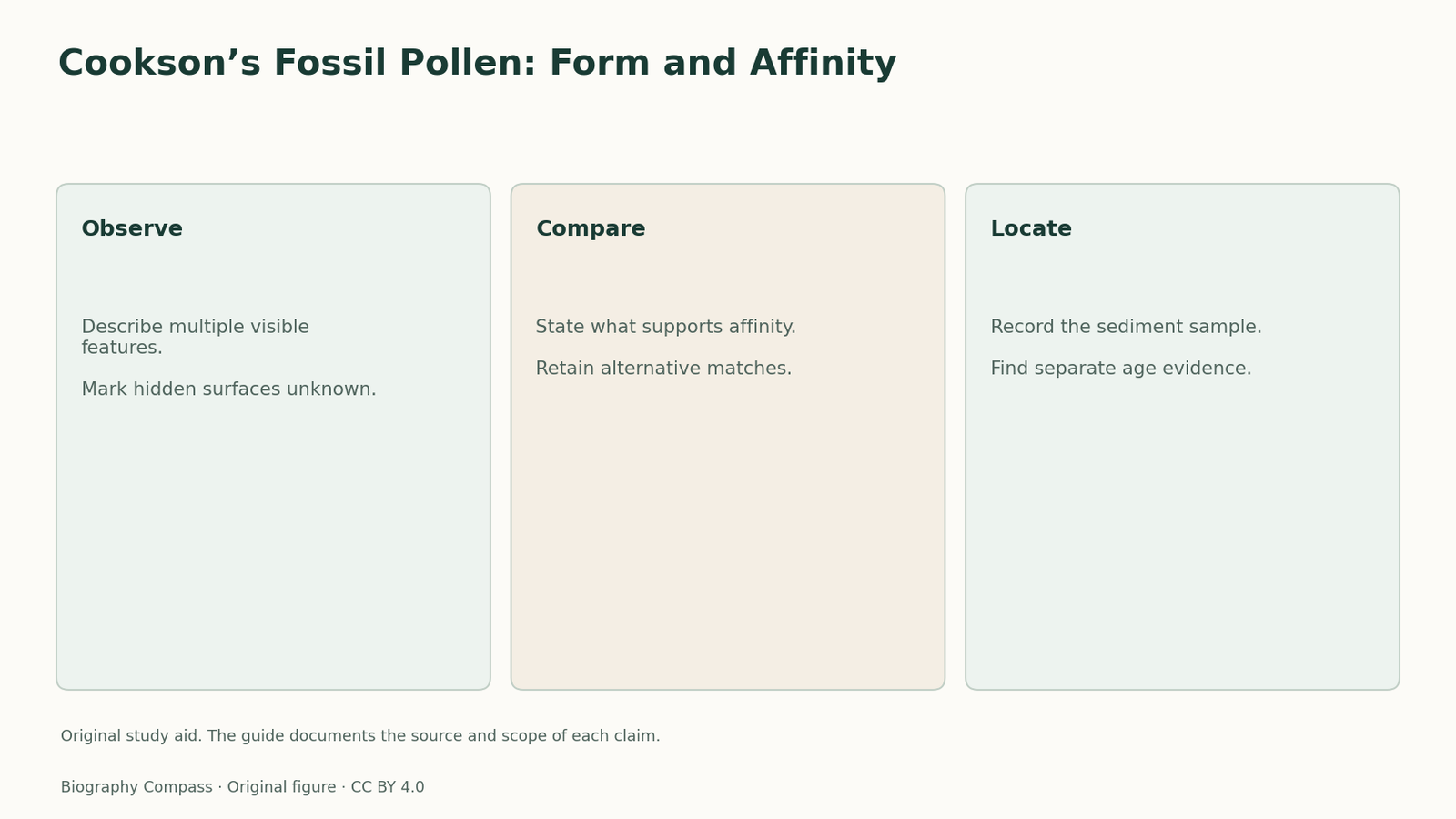
How can a pollen grain support a plant comparison?
Match each piece of evidence to a specific inference.
| Evidence | What it supplies | How to read it |
|---|---|---|
| Grain | Preserved structures can be described. | Check which features are visible. |
| Affinity | Several features can support comparison. | State the proposed relationship cautiously. |
| Deposit | Context links grains to a sample. | Keep age evidence separate. |
Chronology
A timeline of the turning points
Pollen publication
Cookson describes fossil grains of proteaceous type.
Read the scope of the publication
Cookson’s 1950 article concerns fossil pollen grains of proteaceous type from Australian deposits. A reader can start by asking which visible features support the comparison. A resemblance is easier to assess when a description records several aspects of the grain, such as shape, surface and the position of openings. The word type leaves room to discuss affinity without identifying an individual modern plant as the source.
Sources for this section: [1]
Follow one name into a later catalogue
The GNS Science catalogue records Proteacidites rectomarginis and attaches Cookson’s name and 1950 to the taxon. It also supplies later records that use the name. A catalogue brings observations from different publications into contact with one another. Its record can help someone locate comparisons without implying that all deposits or slides in those publications were the same.
Sources for this section: [2]
Use an original feature card
Draw three invented grains. Put three visible openings on A and B, and put a similar surface pattern on A and C. Hide one edge of C in the sketch. Ask which grain agrees with A on more independently visible features. A feature hidden by an edge should stay unknown. Then add a second view. The teaching example asks what observations would make a comparison stronger without inventing actual grain measurements.
Separate the grain from the plant and the bed
A report can distinguish a description of the grain from a proposed affinity and a record of the sediment that contained it. This makes later revisions easier to follow. If another observer assigns a different affinity, the specimen and its locality can still remain useful. If a date is attached to the deposit, it should have its own supporting evidence and should not be taken from the publication year in a taxon’s name.
Continue the chronology
Related history guides
Biography context
Explore Australia through connected lives
Connected biographies
The researcher behind the records
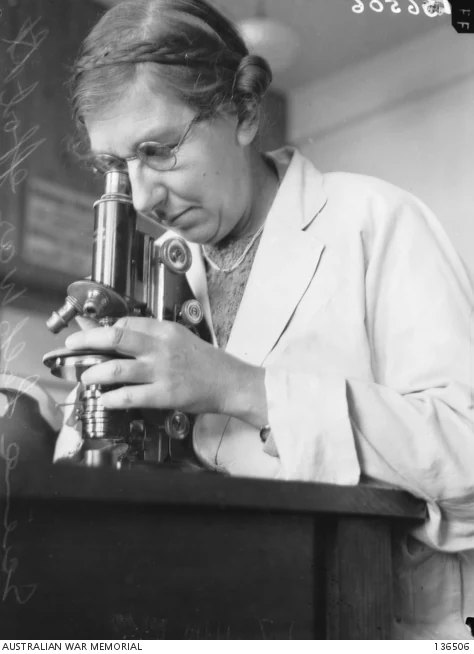
1893–1973
Isabel Cookson
Botanist and palaeobotanistCookson worked with both large plant fossils and microscopic pollen and spores.Read biographyQuick answers
Common questions
- Does the year in a fossil pollen name give the age of the sediment?
- No. In the catalogue, 1950 refers to the naming publication. The sediment has a separate geological age.
Primary and institutional sources
How this history was checked
Publication dates and specimen records describe different events. Invented exercises are labelled. This article was reviewed on 5 November 2026.