
The short answer
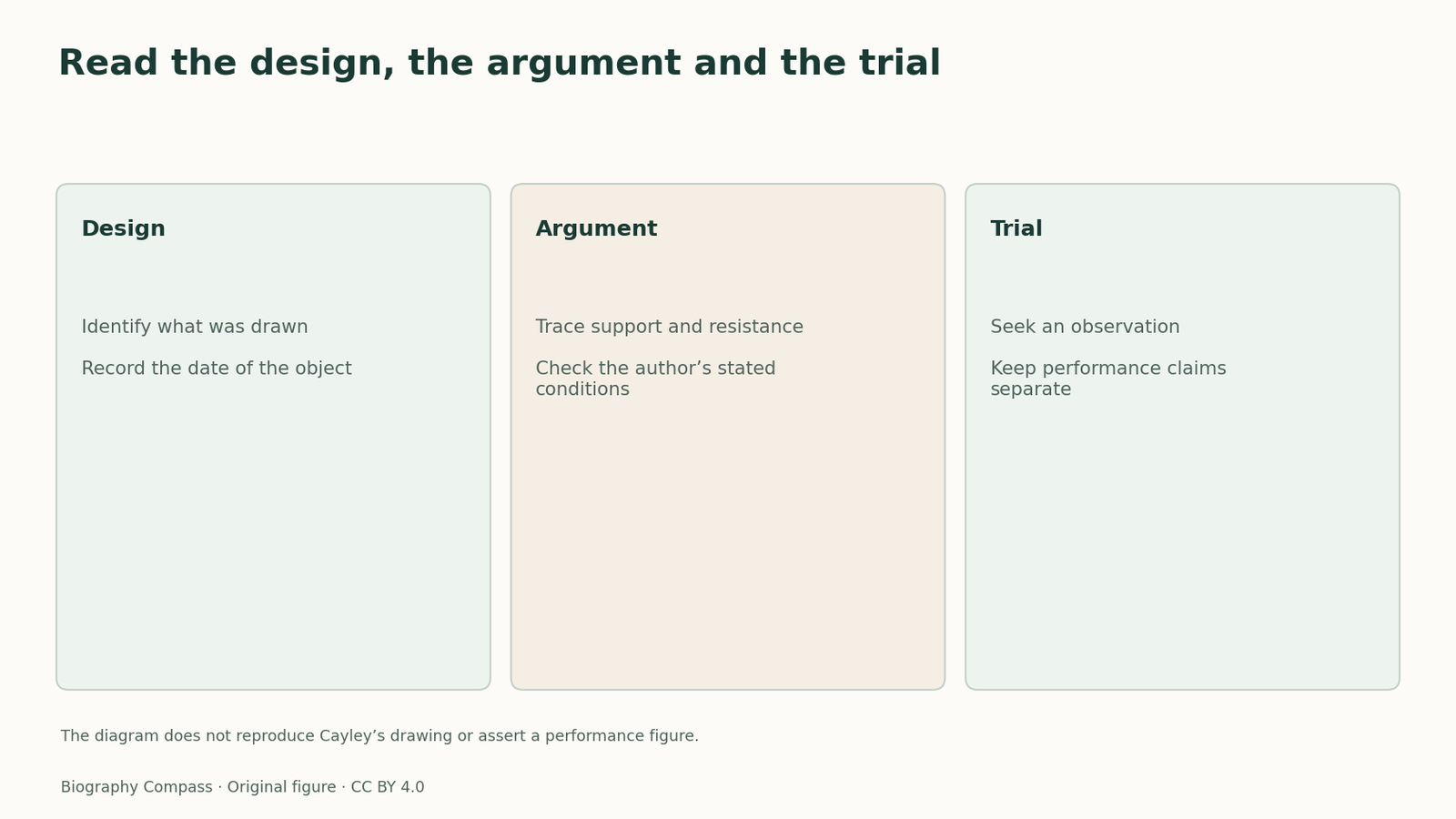
A sketch can identify an aircraft’s intended functions. An essay can explain their relationships. Evidence of an actual flight requires a further record of what was built and observed.
Reading the evidence
A design does not carry all the test evidence
Identify the claim before assigning the record.
| Stage | What it supports | What further evidence would add |
|---|---|---|
| Design | A proposed arrangement dated on an object. | Build details and actual configuration. |
| Essay | A stated relationship between support and resistance. | Performance of a tested machine. |
| Trial | An observation under reported conditions. | Replication or tests with different loads. |
Read the date as part of the object
The Science Museum catalogs a small silver disc bearing a Cayley design dated 1799. Begin by stating what survives: a design engraved on an object. This supports a claim that a configuration was contemplated. It does not show what weight a machine carried or how long it stayed aloft.
Use the 1809 essay to ask what the machine was meant to do. Cayley discusses how an inclined surface can support a weight when moving through air, and how resistance creates a demand for power. Those relationships give the drawing a more precise context without treating it as a test report.
Separate support from sustained motion
Sketch a glider in a steady descent. It can develop lift while losing height, even when it has no engine. The descent helps supply the energy lost to resistance. If the goal is to keep the same height and speed indefinitely in still air, the problem now includes a continuing supply of energy.
This conceptual exercise distinguishes gliding from sustained powered flight. It does not claim that a specific historical machine achieved a particular glide angle. Such a claim would require a recorded distance and height change, conditions and a description of the machine.
Use three lines for three claims
Write “drawn,” “explained” and “observed” on separate lines. Put the dated object on the first and the published argument on the second. On the third, describe what you would need from a model trial. A drawing with a clearly labelled function is valuable even if no trial record establishes how well that function was performed.
Continue the chronology
Related history guides
Biography context
Explore United Kingdom through connected lives
Connected biographies
People in the records
1773–1857
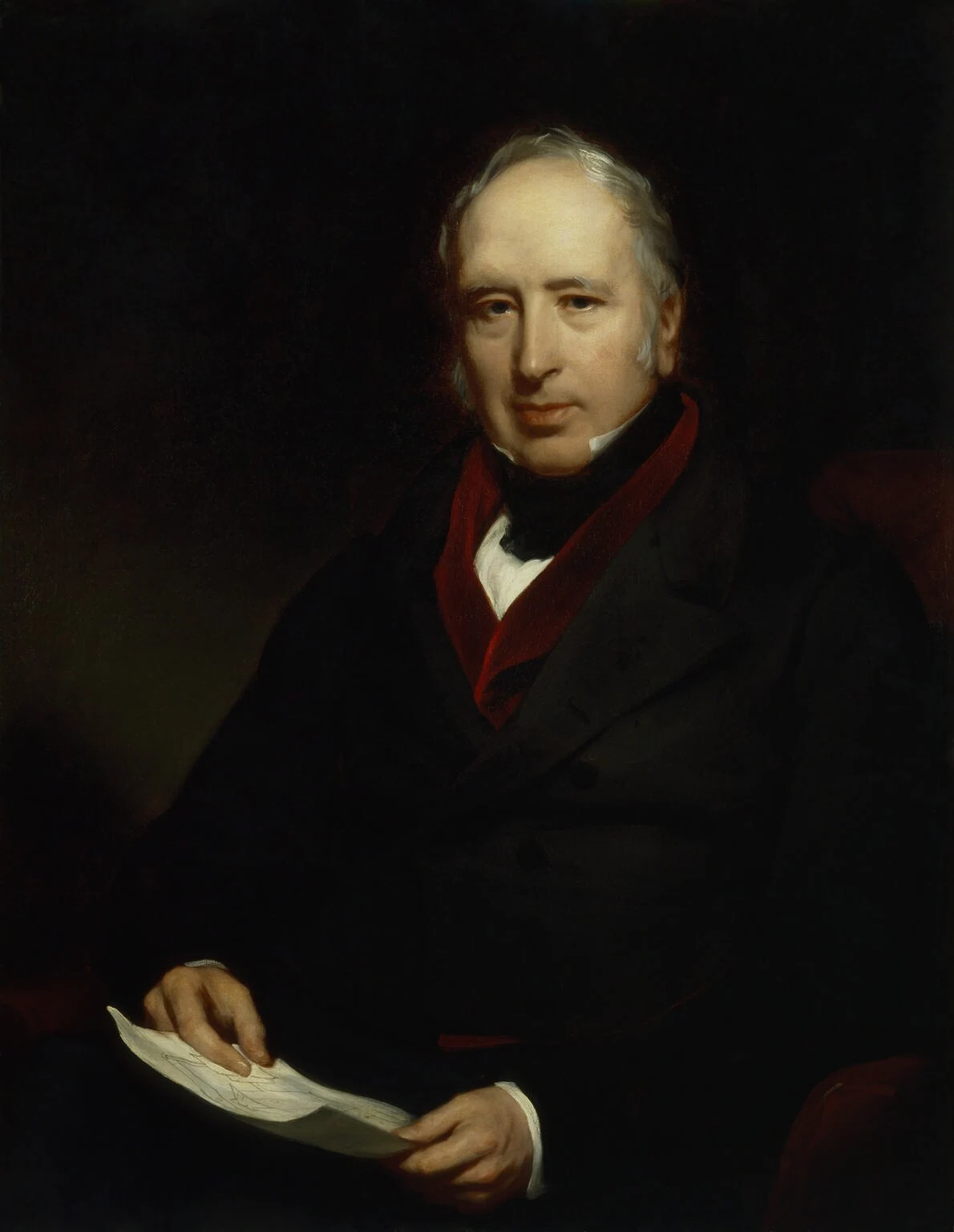
George Cayley
Aeronautical experimenterCayley used models, drawings and published experiments to study how a fixed-wing machine could fly.Read biographyQuick answers
Common questions
- Why can a glider fly without an engine?
- A glider can use a loss of height to keep moving through the air while its wings provide lift.
Primary and institutional sources
How this history was checked
Dates, legal milestones and historical claims are checked against the official and institutional records below. This article was reviewed on 5 November 2026.