
The short answer
The Canadian Bill of Rights received assent on 10 August 1960. It made rights protection an explicit instruction for federal law, but it was not the constitutional Charter adopted in 1982. Its significance becomes clearer when the rights it names, its federal limits and an actual court application are considered separately.
Chronology
A timeline of the turning points
Diefenbaker forms government
A minority victory is followed by a large Conservative majority.
Bill of Rights enacted
The federal statute recognizes named freedoms and legal protections.
Drybones judgment
The Supreme Court renders a discriminatory Indian Act provision inoperative; the report citation is [1970] SCR 282.
Charter
Constitutional rights protection takes a different and broader legal form.
Why Diefenbaker pursued a written federal statement
Diefenbaker’s rights project drew on a legal and political career attentive to discrimination and individual citizenship. His government used its parliamentary position to enact a federal Bill of Rights in 1960. The reform belonged to a wider debate about how public power could be restrained, not simply to a personal declaration of goodwill.
The choice of a statute was consequential. It allowed Parliament to legislate without completing a federal–provincial constitutional amendment, but it also limited the instrument’s reach. Its political ambition and legal architecture were related, not identical.
The Act named freedoms, equality and property
Section 1 recognizes fundamental freedoms and protections without discrimination on specified grounds. Its list includes equality before the law, freedom of religion, speech, assembly and the press, as well as life, liberty, security and enjoyment of property with due process.
Property is a useful point of comparison with the later Charter, whose text does not reproduce the same property guarantee. That difference does not make every property dispute a successful Bill of Rights claim. The statutory wording must be read within the Act’s application to federal law and the courts’ interpretation of it.
Federal scope and an express override limited its operation
The Bill applies to laws of Canada as defined in the statute; it is not a general code invalidating every provincial law. Section 2 directs federal laws to be construed and applied consistently with the named rights unless Parliament expressly provides that a law will operate notwithstanding the Bill.
Section 3 also requires federal review of proposed legislation and regulations for inconsistency. These are practical institutional duties, but they do not turn the Act into a constitutionally entrenched instrument. Its express-override provision should not be confused with the later Charter’s differently framed section 33.
Drybones showed that statutory rights could change a case
In The Queen v. Drybones, the Supreme Court considered an Indian Act provision that penalized an Indigenous person for conduct not subject to the same legal penalty for others. The Court rendered the discriminatory provision inoperative because it conflicted with the Bill’s equality guarantee.
The decision was delivered in 1969 but is commonly cited through the 1970 Supreme Court Reports volume. It demonstrates a concrete legal effect; it does not establish that every later equality challenge succeeded. Nor should the narrow result be rewritten as a judicial repeal of the entire Indian Act.
The Charter did not make the earlier statute disappear
The Charter became part of the Constitution in 1982 and applies to federal and provincial government action within its terms. The Bill of Rights remains in force as a separate federal law. “Earlier” and “replaced” are therefore not interchangeable descriptions.
Readers should also distinguish both instruments from the Canadian Human Rights Act, which creates a different framework for discrimination complaints in areas under federal jurisdiction. Understanding which instrument applies is part of understanding the history: the 1960 statute, the 1977 human-rights legislation and the 1982 Charter were connected developments with different legal mechanisms.
Continue the chronology
Related history guides
Biography context
Explore Canada through connected lives
Connected biographies
Two different stages in federal rights protection
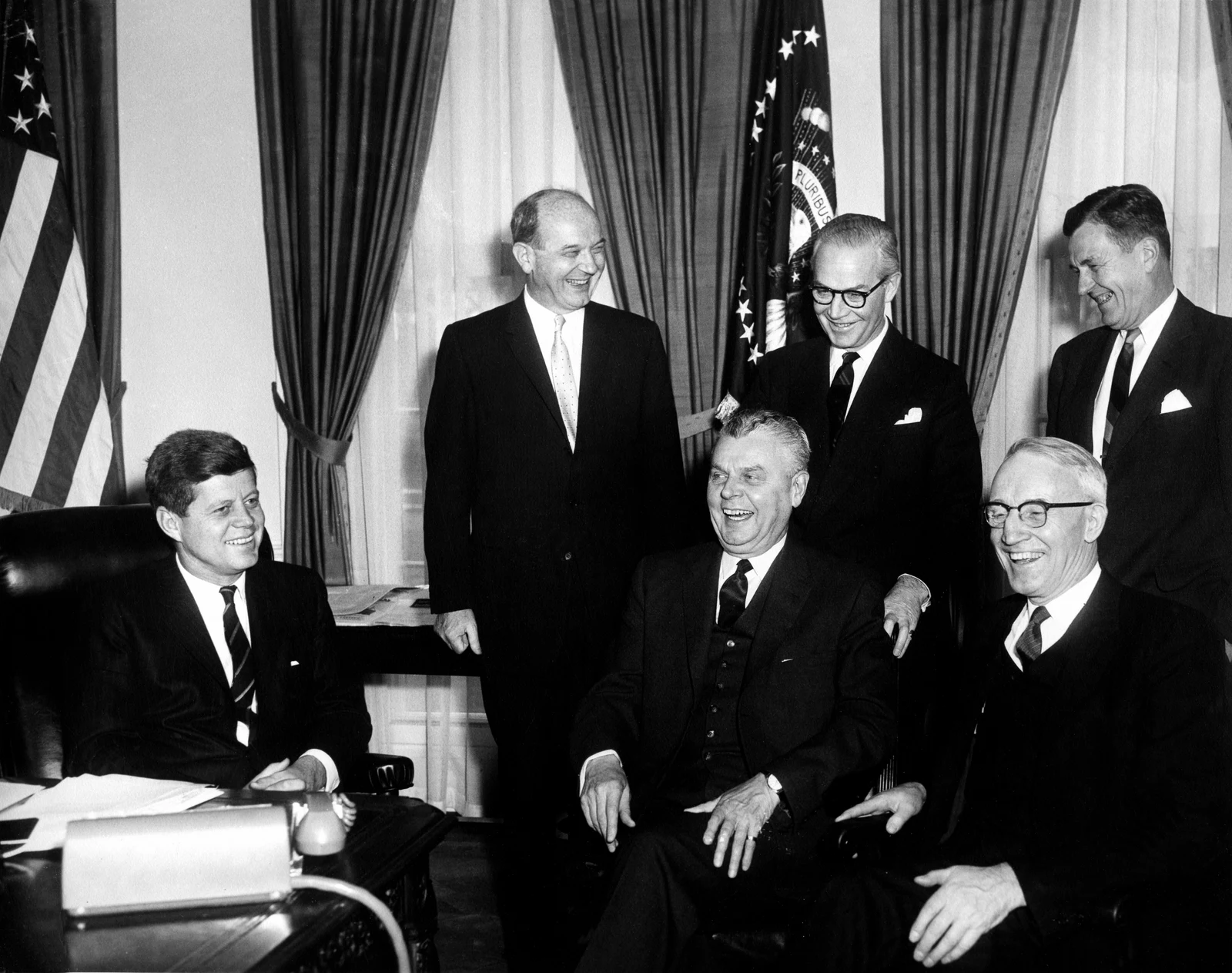
1895–1979
John Diefenbaker
Lawyer, Progressive Conservative leader and prime minister of CanadaJohn Diefenbaker was Canada’s prime minister from 1957 to 1963. A Saskatchewan lawyer and forceful parliamentary speaker, he promoted the 1960 Canadian Bill of Rights and broader federal participation. His governments also cancelled the Avro Arrow and fractured over nuclear weapons and relations with the United States.Read biography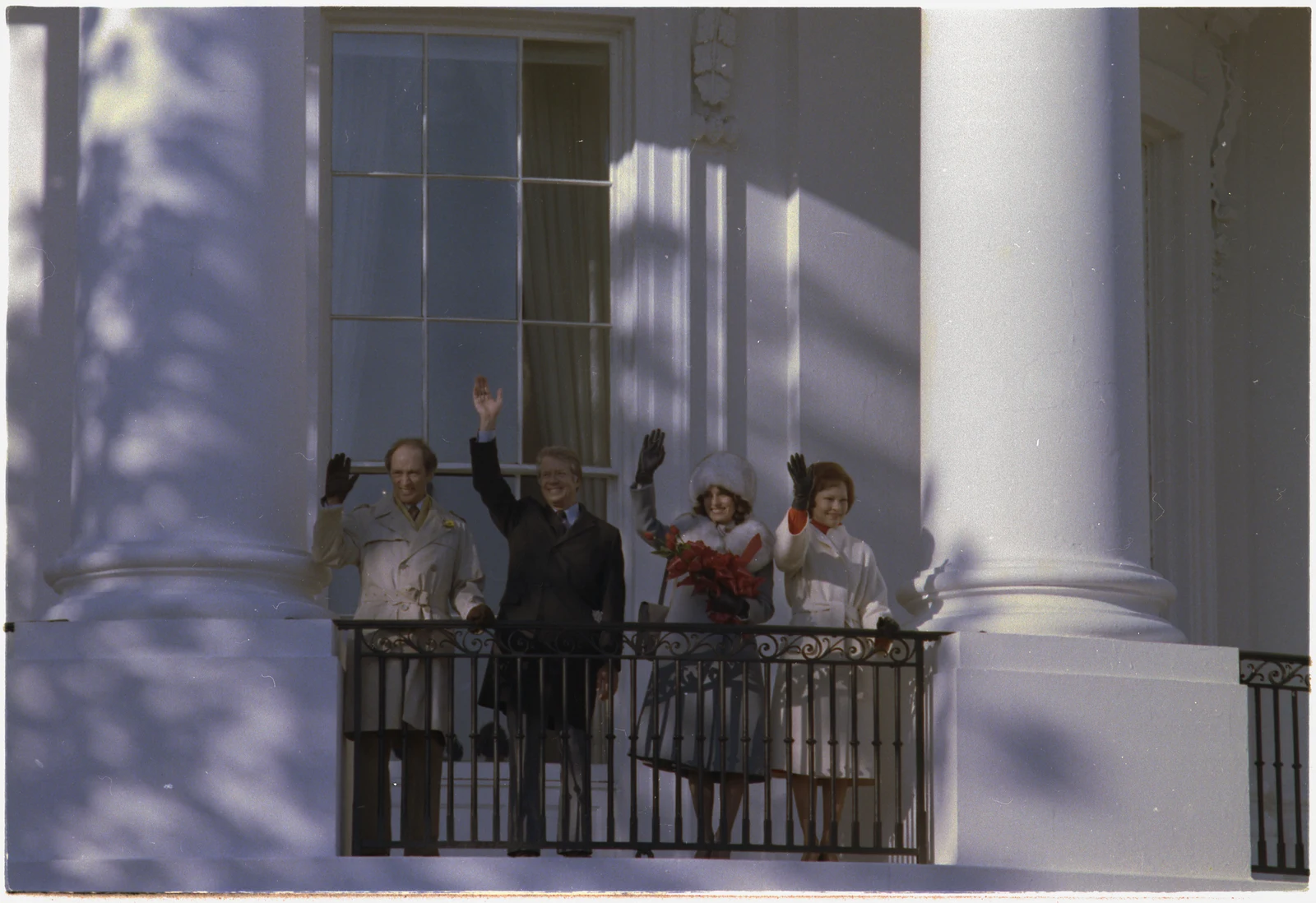
1919–2000
Pierre Trudeau
Lawyer, Liberal leader and prime minister of CanadaPierre Elliott Trudeau served as Canada’s prime minister in 1968–1979 and 1980–1984. He promoted federal bilingualism and constitutional rights while resisting Quebec sovereignty. His governments’ record also includes the suspension of civil liberties during the October Crisis, economic intervention and lasting federal–provincial conflict.Read biographyQuick answers
Common questions
- When was the Canadian Bill of Rights passed?
- It received royal assent on 10 August 1960 under John Diefenbaker’s government.
- Does it apply to all provincial laws?
- No. It is a federal statute whose definition of the laws of Canada limits its scope; the later Charter has a broader governmental application.
- Is the Bill of Rights still in force?
- Yes. It continues as a federal statute alongside the constitutional Charter.
- What did Drybones decide?
- The Supreme Court rendered a discriminatory Indian Act provision inoperative because it conflicted with the Bill’s equality guarantee. It did not invalidate the whole Indian Act.
Primary and institutional sources
How this history was checked
The Act controls its date and legal scope; Canadian Heritage distinguishes the three rights instruments. The university case summary supports the bounded Drybones account; direct access to the linked original judgment returned HTTP 403. The 1961 photograph is a diplomatic meeting, not the Bill’s assent ceremony. This article was reviewed on 23 October 2026.
- Department of Justice CanadaCanadian Bill of Rights: full statutory text
- Canadian HeritageHow your rights are protected
- Diefenbaker Canada Centre / University of SaskatchewanThe Canadian Bill of Rights
- Dictionary of Canadian BiographyDiefenbaker, John George: indexed biographical passages
- Brian Mulroney Institute of Government / St. Francis Xavier UniversityThe Queen v. Drybones: case summary and judgment reference
- Abbie Rowe / John F. Kennedy Presidential Library / Wikimedia CommonsKennedy meets Diefenbaker and others, 20 February 1961, AR6363-A