
The short answer
Burroughs Wellcome & Co began as a partnership between two American-trained pharmacists in London. Its growth combined an existing importing business with selling, compressed preparations, manufacture and research. The company’s later reputation can obscure the partners’ different roles, their conflict and the imperial commercial setting in which the business expanded.
Chronology
A timeline of the turning points
Burroughs in London
He arrived as an agent for an American pharmaceutical firm and developed his own importing concern.
Wellcome joins
Henry Wellcome became junior partner in the renamed business.
Manufacture and larger premises
London production expanded towards the Dartford works; Tabloid was registered in 1884.
A strained partnership
An unsuccessful dissolution action preceded further renegotiation.
Death and ownership dispute
Burroughs’s death in February 1895 led to litigation before Wellcome gained full control.
An existing business, then a new partner
Silas Mainville Burroughs came to London in 1878 as an agent for John Wyeth & Bro. He subsequently established his own concern importing American medicines. In 1880 he invited Henry Wellcome, another Philadelphia pharmacy graduate with sales experience, to become junior partner.
The new company therefore did not begin with two identical roles or an empty market. Burroughs brought a London business and commercial connections; Wellcome brought experience of pharmaceutical representation and an active interest in products and promotion. A surviving correspondence catalogue records financial and practical negotiations behind the partnership.
Compressed doses, a brand and the limits of a claim
Compressed preparations offered a more standardised amount of a substance than an individually compounded pill might provide. The business imported and then manufactured such products, while patents covered machinery and other pharmaceutical processes. Consistency of manufacture was an industrial proposition as well as a selling point.
Tabloid, registered as a trademark in 1884, identified the firm’s compressed products. A trademark controlled a commercial name; it did not establish that the partners discovered every active substance, invented all tablets or proved every product effective. Keeping manufacture, branding and therapeutic discovery separate makes their actual contribution easier to understand.
What it took to manufacture at scale
The archive dates the start of London manufacture to 1882 and the opening of a Wandsworth site to 1884. As the premises became inadequate, a former paper mill at Dartford provided room for expansion. Burroughs originally bought that property and leased it to the company, which acquired ownership in 1892.
Later departmental records distinguish compressing, grinding, sugar coating, preparation, packing, analytical work and printing. These functions show why a pharmaceutical company depended on workers, technicians and systems of quality control. They should not be collapsed into the actions of the two owners, or projected as a fully formed organisation on the first day of 1880.
Sources for this section: [5]
Research support alongside partnership conflict
A physiological research laboratory opened in 1894, adding organised experimentation to the commercial enterprise. Scientific staff generated knowledge that could support products and medical research. The presence of a laboratory does not make the owner the personal author of every discovery associated with it.
Meanwhile relations between Burroughs and Wellcome deteriorated. Burroughs’s 1889 attempt to dissolve the partnership failed. When he died in February 1895, renegotiation was unfinished; his widow contested the transfer of her interest. Wellcome’s full control followed in 1898. The succession depended on contracts and litigation as well as personal ambition.
Imperial markets and the later charitable institution
The firm expanded through international trading networks. Wellcome’s own institutional history acknowledges that Indigenous medical knowledge and imperial policies helped the company obtain materials and sell in colonised territories. Commercial success and the power relationships surrounding it belong in the same explanation.
Wellcome later used wealth for collecting and research, and his 1936 will created the basis for the Wellcome Trust. That later charity should be distinguished from the 1880 partnership. Its resources had a business history involving manufacturing labour, branding, unequal global relationships and a contested change of ownership, not simply an uncomplicated philanthropic origin.
Biography context
Explore United Kingdom through connected lives
Connected biographies
People in related histories of business and philanthropy
1853–1936
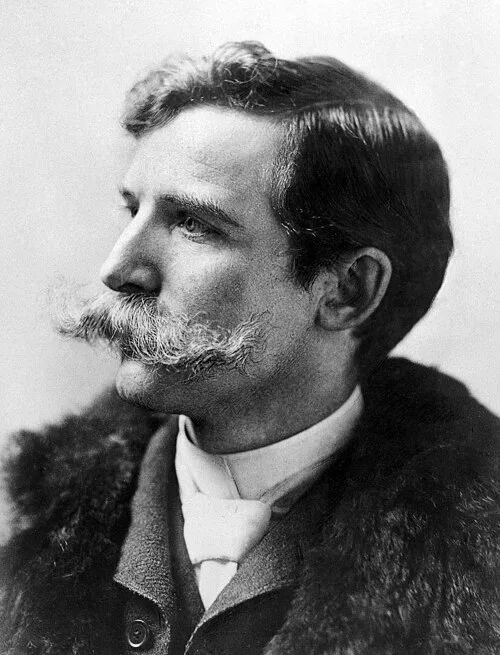
Henry Wellcome
American-born pharmaceutical entrepreneur and collectorHenry Wellcome built a pharmaceutical business in London with Silas Burroughs, supported research laboratories and assembled enormous medical collections. Born in the United States, he became a British subject in 1910. His bequest created a research trust, while his business and collecting remain bound to imperial power.Read biography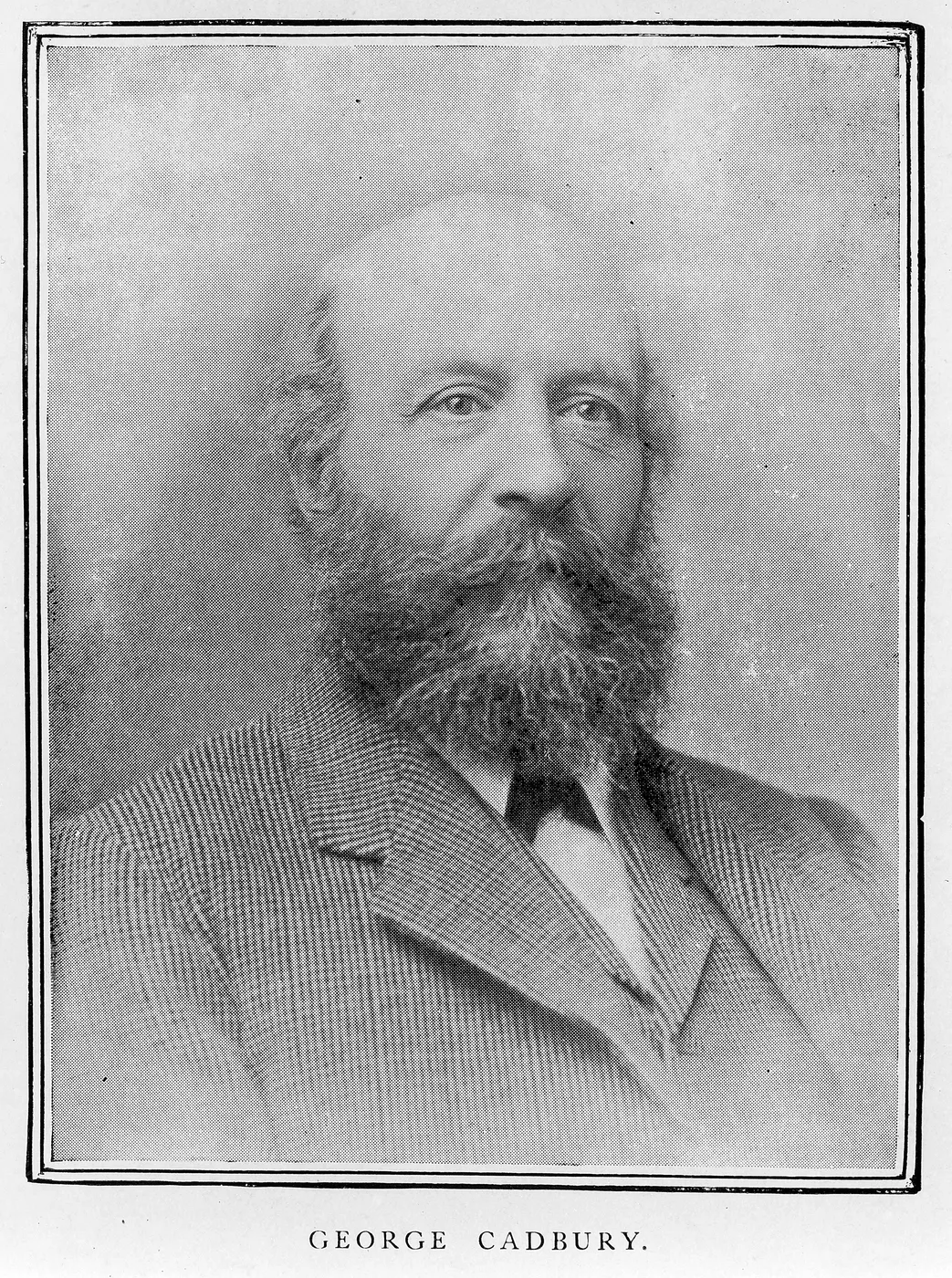
1839–1922
George Cadbury
Chocolate manufacturer, housing reformer and philanthropistGeorge Cadbury helped turn a struggling family cocoa firm into a major manufacturer and used its wealth for housing, education and social reform. Bournville’s benefits coexist with employer paternalism and the company’s delayed withdrawal from cocoa produced through coerced African labour.Read biographyQuick answers
Common questions
- Did Wellcome start the London business alone?
- No. Burroughs had an importing concern before Wellcome joined as junior partner in 1880.
- Was Tabloid a scientific discovery?
- It was a trademark associated with compressed products. Manufacturing consistent doses, controlling a brand and discovering a medicine are different activities.
- Did Burroughs’s death immediately settle ownership?
- No. He died in February 1895 while partnership terms were being renegotiated. His widow contested the transfer, and the archive dates Wellcome’s full control to 1898.
- Was the Wellcome Trust founded in 1880?
- No. The commercial partnership began in 1880. The trust was formed in 1936 under Henry Wellcome’s will.
Primary and institutional sources
How this history was checked
Read catalogue descriptions and biographical notes for Burroughs, Wellcome’s patents and personal papers, partnership correspondence and the Dartford works, together with the institution’s colonial-history statements. These are catalogue-level readings, not inspection of all original letters, patents, formula cards, factory rules or accident books. Only the film transcript’s selected trademark/business passage was used; its December 1895 death claim is rejected in favour of the archive biography’s February date. Standardisation is discussed historically and does not provide modern medical advice or a claim of efficacy for every historical product. This article was reviewed on 23 October 2026.
- WellcomeHistory of Wellcome: business, empire and the 1936 trust
- Wellcome CollectionHenry Solomon Wellcome: patents, MS.9217, catalogue description
- Wellcome CollectionPersonal papers of Henry Solomon Wellcome: biographical outline
- Wellcome CollectionThe colonial roots of our collections, and our response (2021)
- Wellcome CollectionWellcome Chemical Works, Dartford: archive description and ownership note
- Wellcome CollectionSilas Mainville Burroughs: personal papers and biographical note
- Wellcome CollectionCorrespondence between Burroughs and Wellcome concerning their partnership: catalogue
- Wellcome LibraryWellcome Film Project: Henry Wellcome transcript, selected business passage
- Wellcome Library / Wikimedia CommonsHenry Wellcome 1890: image, CC BY licence and revision record
- Creative CommonsAttribution 4.0 International