
The short answer
How does A Land Imagined connect land reclamation, migrant labour and a missing-person narrative without becoming a documentary?
Compare the records
Different records answer different questions
The distinctions below follow the identified sources.
| Record | What it establishes | Limit of the conclusion |
|---|---|---|
| Film Comment interview | Identifies characters, research encounters and cinematographic collaboration. | An interview account is not a complete shot log. |
| BOMB development conversation | Documents a shift from an insomnia idea toward workers and reclamation. | The finished fiction is not an unedited fieldwork transcript. |
| National Arts Council record | Confirms the 2018 feature and named award recognition. | An award does not certify every social claim made about a film. |
A missing person gives the film an entry point
A Land Imagined uses a detective’s search for a missing Chinese migrant worker to lead into a landscape built through imported sand and labour. Film Comment’s account identifies the policeman Lok, the worker Wang, his Bangladeshi friend Ajit and Mindy at a cybercafé. The characters connect construction sites with sleeping quarters and places of temporary escape. Those are elements of a deliberately organised fiction. Their relationship to researched labour conditions does not turn Wang’s disappearance into a documented individual case or make the characters representatives of every migrant experience in Singapore.
Sources for this section: [3]
Fieldwork altered the initial idea
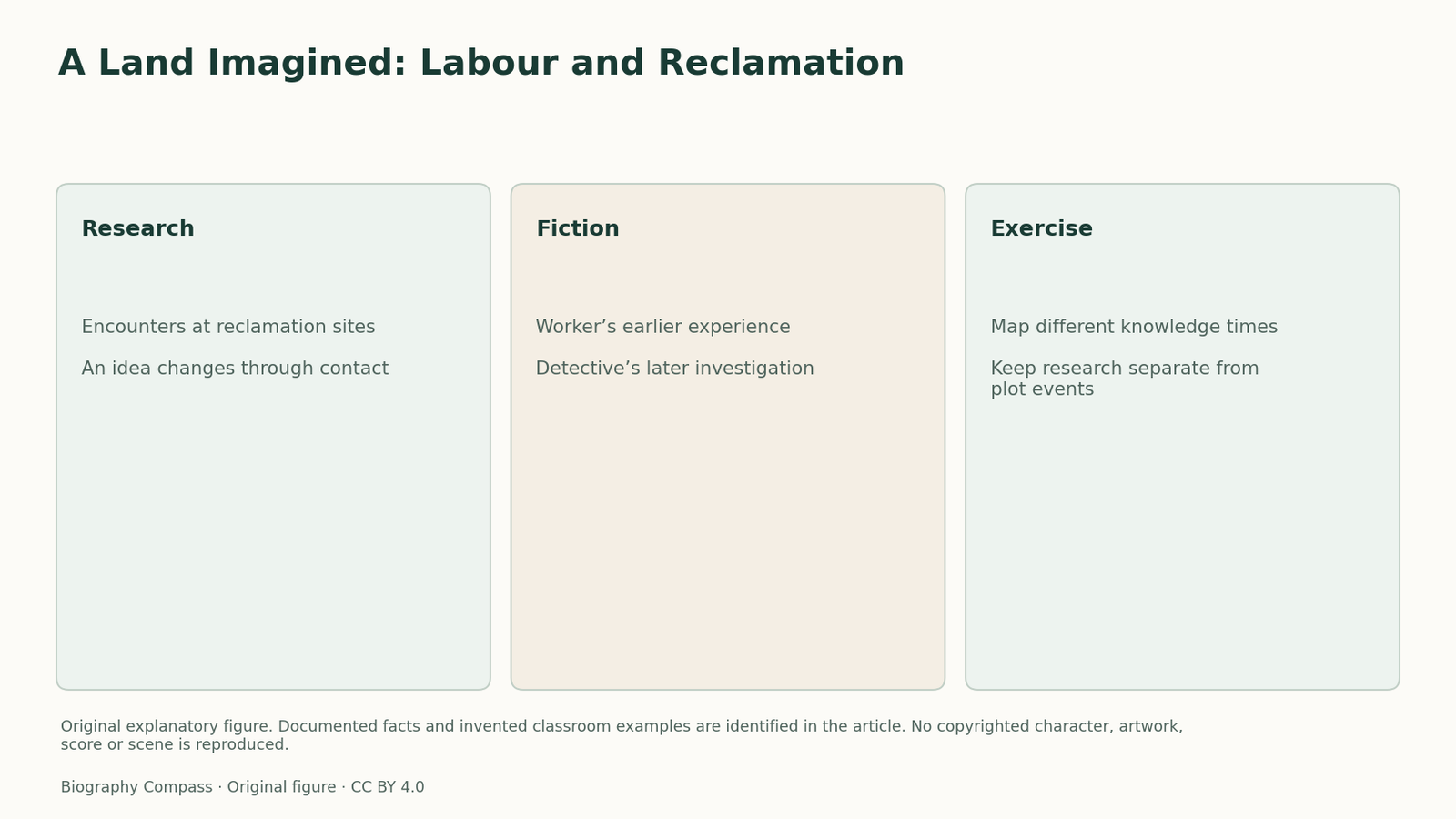
In the BOMB interview, Yeo recalls beginning with an interest in insomnia and the changing city. Visits to reclamation sites and relationships with workers shifted the project toward the people making that landscape. Film Comment’s conversation similarly distinguishes institutional information from time spent talking with people and encountering places. This evidence explains a change in artistic development rather than proving that a finished film transparently reproduces fieldwork. As an interpretation, the physical construction of territory and the narrative construction of a national image can be read together, but each requires its own evidence.
Landscape complicates a simple investigation
The director describes the film as organised around landscape even though its central investigation is relatively simple. The written Film Comment account notes a movement back toward the period before Wang’s disappearance and an atmosphere shaped through collaboration with cinematographer Hideho Urata. A wide view of a construction site can make a person seem small within a built environment, while a change in narrative order can alter what the audience knows about that person. These are analytical possibilities grounded in the recorded discussion, not newly observed shot descriptions. Yeo also resists assigning shared stylistic decisions to a single collaborator as if the team had worked in isolation.
Sources for this section: [3]
Narrative-map exercise and answer
Draw two original horizontal lines. On one, place events in the fictional worker’s life before the disappearance; on the other, place the later investigation. Mark where a viewer might learn something about the first line only after following the second. Then add a separate box for the director’s research interviews. Ask whether that third box should become a scene on either fictional timeline. A supported answer says not automatically: research informs construction, but an interview and an invented plot event are different records. It also explains how delayed information can redistribute sympathy and uncertainty without requiring a more complicated sequence of events. The diagram is a reading aid for the documented narrative structure, not a complete plot chart reconstructed from a viewed print.
Continue the chronology
Related history guides
Biography context
Explore Singapore through connected lives
Connected biographies
People and practices to explore
b. 1985
Yeo Siew Hua
Filmmaker and screenwriterYeo Siew Hua examines territory, identity and perception through films including A Land Imagined, combining researched settings with deliberately constructed fictional narratives.Read biographyb. 1981
Kirsten Tan
Filmmaker and screenwriterKirsten Tan is a Singaporean filmmaker whose debut feature Pop Aye joined a Thai road story with carefully prepared human-animal performance and won a Sundance screenwriting prize.Read biography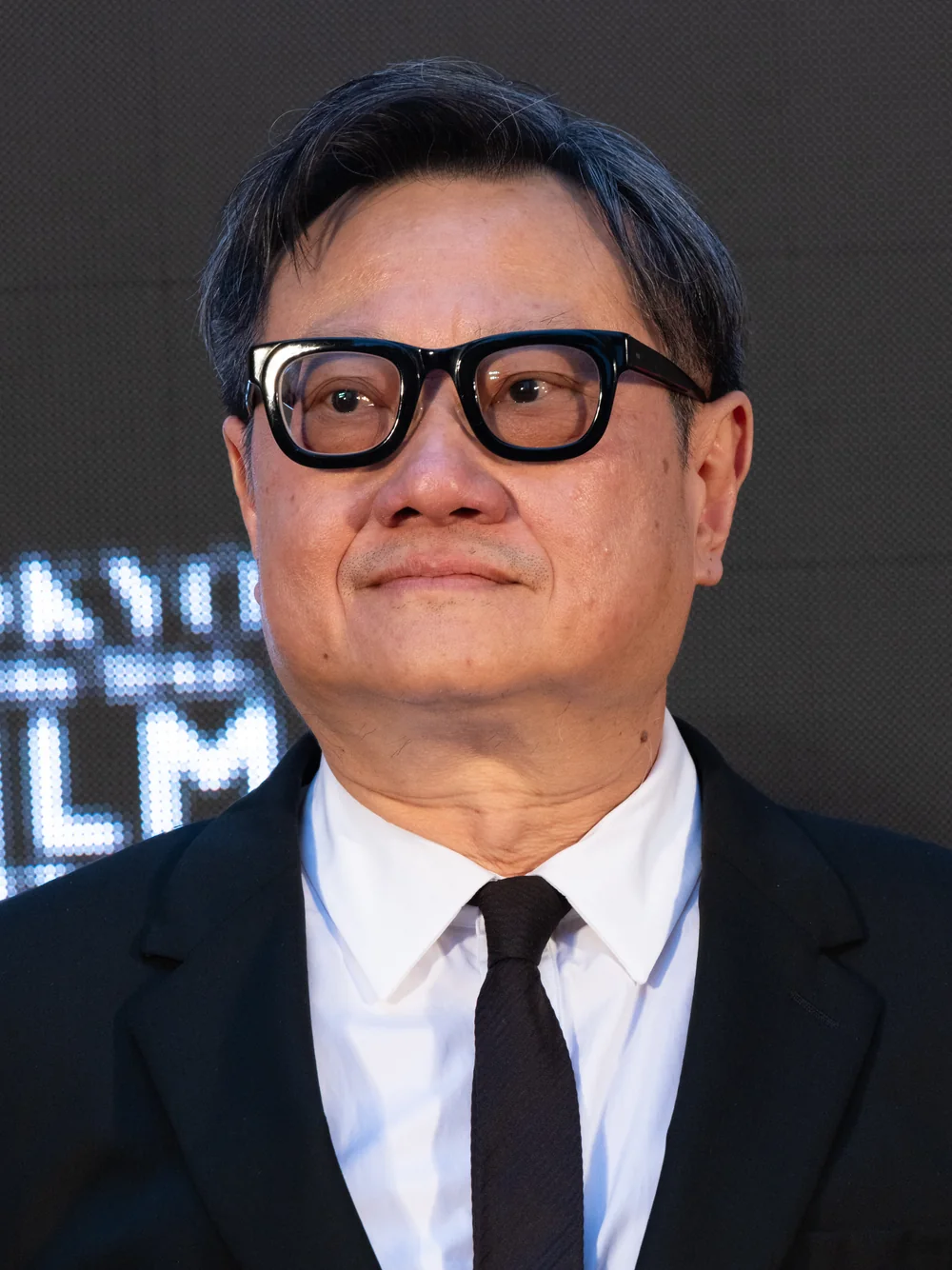
1965—
Eric Khoo
Film director, screenwriter and producerThe Singaporean filmmaker whose features helped renew the country’s international cinema presence, while his production work supported other directors and regional collaborations.Read biographyQuick answers
Common questions
- Is A Land Imagined a documentary?
- The cited records describe a fiction feature informed by research and relationships with workers. Its named characters and detective narrative should not be treated as a documentary case file.
Primary and institutional sources
How this history was checked
Written catalogues, production records and interviews are distinguished from our own learning exercise. No complete film viewing, song listening or full-novel reading is claimed where only the identified written material was inspected. This article was reviewed on 7 November 2026.
- National Arts Council SingaporeYeo Siew Hua:2021 Young Artist Award
- NTU Centre for Contemporary Art Singapore digital archiveYeo Siew Hua
- Film Comment / Film at Lincoln Center, Becca VoelckerLocarno Interview: Yeo Siew Hua
- BOMB Magazine, interview by Sihan TanNative Sand: Yeo Siew Hua
- Film Movement / production materialsStranger Eyes pressbook
- Singapore Film SocietyYeo Siew Hua: Seeing Differently