
The short answer
How do Pop Aye’s documented location and elephant-performance decisions shape a Singaporean director’s Thai road film?
Compare the records
Different records answer different questions
The distinctions below follow the identified sources.
| Record | What it establishes | Limit of the conclusion |
|---|---|---|
| Director’s synopsis and Sundance record | Establish the fictional journey, countries and screenwriting recognition. | An Academy submission is not an Oscar nomination. |
| Director’s production interview | Describes casting and preparation for particular scenes. | A participant account does not document every shot. |
| Director-and-actor interview | Adds the actor’s experience and the mahouts’ role. | Onscreen ease should not be equated with an unprepared encounter. |
The road story is a fictional structure
Pop Aye follows Thana, a disenchanted architect, after an encounter with an elephant from his past in Bangkok. The pair travel across Thailand in search of an earlier home. Tan’s own synopsis establishes that premise, while the Sundance record identifies the film as a Singapore-Thailand production written and directed by her. A Singaporean director and a Thai setting are therefore not contradictory labels. They describe different features of the work. The journey is a fictional narrative through which the character confronts change, not a documentary itinerary that can automatically be followed as a record of an actual reunion.
The apparent partnership required preparation
In her 8 Days interview, Tan describes meeting many elephants before choosing Bong and arranging time for actor Thaneth Warakulnukroh to become familiar with the animal. The Japan Foundation’s written conversation adds the actor’s perspective and the team’s discussions with mahouts in Surin. These sources establish rehearsals and a working relationship involving more people than the two performers visible together. They do not make the scenes spontaneous simply because the encounters may appear unforced. The filmmaking problem concerned how to prepare repeatable actions while maintaining a credible relationship within a story.
Keep a production account separate from a screen effect
Tan discusses tactile exercises and moments filmed with a real elephant rather than a digitally substituted figure. Those are statements about particular production choices, attributed to a participant. They should not be inflated into a claim that the entire feature used no visual effects, or that every interaction was improvised. Sundance’s award record, meanwhile, concerns screenwriting, not certification of production methods. The sources let us distinguish an authored journey, a prepared performance and festival recognition. This guide compares those written records without claiming to have inspected raw footage or newly viewed every scene of the finished feature.
Scene-planning exercise and answer
Devise an original scene in which a traveller must wait while a large companion stops beside the road. List one story decision, one performer-preparation decision and one framing decision. Then explain why a believable pause need not be an unplanned accident. A supported answer might give the pause an emotional purpose in the journey, allow the performers to practise a simple repeated action, and frame the waiting person beside the companion rather than showing only a reaction. The exercise is a conceptual storyboard, not an instruction for handling an animal. It shows how a natural-looking relationship can emerge from coordinated work while leaving the film’s actual preparation attached to the accounts of its makers.
Continue the chronology
Related history guides
Biography context
Explore Singapore through connected lives
Connected biographies
People and practices to explore
b. 1981
Kirsten Tan
Filmmaker and screenwriterKirsten Tan is a Singaporean filmmaker whose debut feature Pop Aye joined a Thai road story with carefully prepared human-animal performance and won a Sundance screenwriting prize.Read biography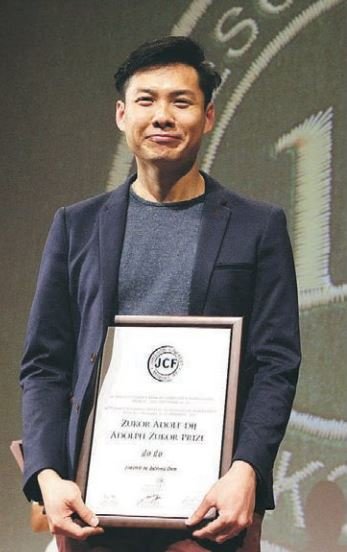
1984—
Anthony Chen
Film director, screenwriter and producerA filmmaker whose intimate stories of family, work and migration brought Singaporean cinema major recognition at Cannes and the Golden Horse Awards.Read biographyb. 1985
Yeo Siew Hua
Filmmaker and screenwriterYeo Siew Hua examines territory, identity and perception through films including A Land Imagined, combining researched settings with deliberately constructed fictional narratives.Read biographyQuick answers
Common questions
- Did Pop Aye receive an Oscar nomination?
- The sources identify it as Singapore’s submission. That is different from reaching the Academy’s final nomination list. Sundance awarded Kirsten Tan a screenwriting jury prize.
Primary and institutional sources
How this history was checked
Written catalogues, production records and interviews are distinguished from our own learning exercise. No complete film viewing, song listening or full-novel reading is claimed where only the identified written material was inspected. This article was reviewed on 7 November 2026.
- National Arts Council SingaporeKirsten Tan:2015 Young Artist Award
- Kirsten TanFilmmaker biography
- Sundance Institute2017 Sundance Festival Awards
- Kirsten TanPop Aye
- 8 Days / Mediacorp, interview by Douglas TsengMaking Pop Aye with an elephant
- Japan Foundation, interview with director and actorJourney to a Human and an Elephant, part 2