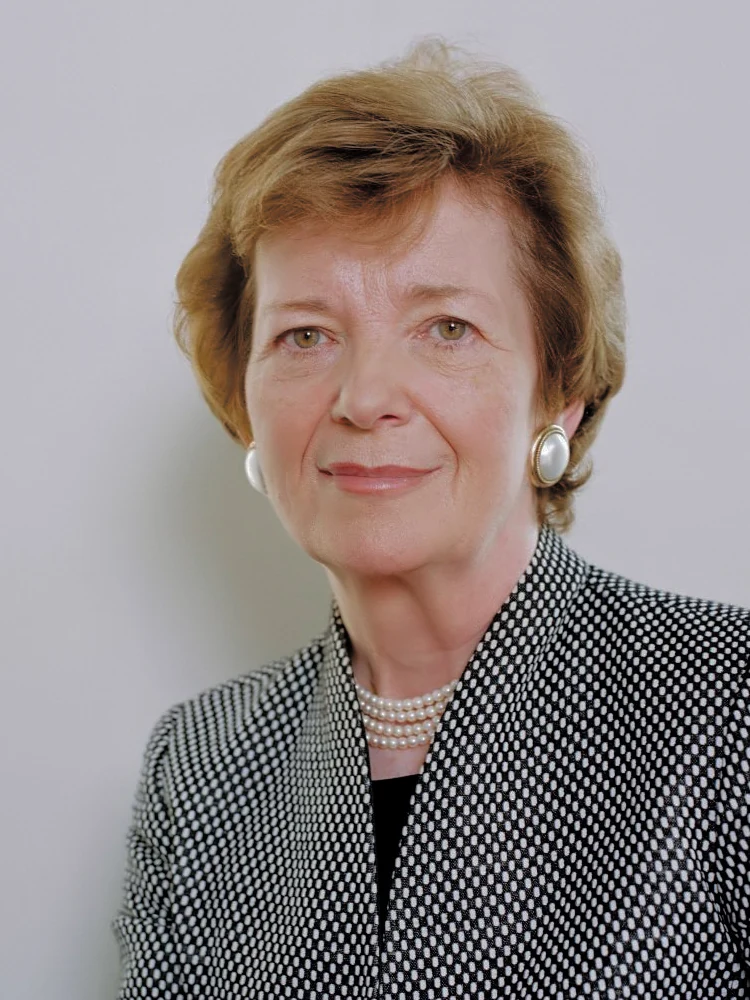
In this biography
Quick facts
- Born
- Unknown
- Birthplace
- Unknown
- Country
- Kenya
- Nationality
- Not independently established
- Known for
- Kenya’s Chief Justice, 2011–2016, and judicial reform
- Chief Justice
- 2011–2016
- Legal education
- Dar es Salaam; doctorate at York University
- Earlier work
- Teaching, legal rights organisations and the Ford Foundation
Why this life matters
His career connects the struggle for political freedoms with the practical task of changing how a national court system serves the public.
Timeline
Key moments
Studies law in Dar es Salaam
Completes undergraduate and postgraduate legal degrees.
Detained
His university and pro-democracy activism brings conflict with the government.
Completes a doctorate
Earns a PhD at Osgoode Hall Law School.
Leads the judiciary
Serves as Chief Justice and president of the Supreme Court.
Advises on constitutional work
Afrobarometer records an advisory period in The Gambia.
Teaching law and organising for rights
Willy Mutunga studied law at the University of Dar es Salaam, completing degrees in 1971 and 1974, and later earned a doctorate at York University’s Osgoode Hall Law School in 1992. He taught at the University of Nairobi and served as secretary-general of its staff union. Legal scholarship and collective organisation developed together in his early career.
His opposition to the restrictions of Daniel arap Moi’s government brought personal consequences: the Judiciary’s career account records detention in 1982–1983. He subsequently worked through the Law Society of Kenya, Kituo Cha Sheria and the Kenya Human Rights Commission. These organisations provided different ways to pursue access to justice, professional independence and political reform. Before entering judicial office, he also represented the Ford Foundation in Eastern Africa.
A public route into judicial leadership
In 2011 Mutunga became Chief Justice and the first president of the newly established Supreme Court. His selection came during the constitutional transition, when the Judicial Service Commission, political executive and National Assembly had distinct responsibilities. The parliamentary committee’s report preserves notification, scrutiny and recommendation as separate stages; its recommendation should not be mistaken for the appointment instrument.
His background differed from a career spent entirely on the bench. Teaching, legal practice, civil-society management and grant-making had exposed him to institutions outside the courts. Becoming Chief Justice placed that reform experience inside a judicial organisation whose everyday work depended on judges, registries and staff across the country.
Reform as an organisational task
In a 2015 interview with Princeton’s Innovations for Successful Societies programme, Mutunga discussed the Judiciary Transformation Framework. The published abstract describes efforts to change administration, training and oversight while confronting corruption and entrenched organisational habits. It also records difficulties involving regional supervision, loyalties and competing interests.
This account gives a participant’s view of reform rather than an independent score of its success. Its most useful insight is that constitutional authority did not automatically change conduct throughout the institution. Implementation required cooperation and could remain vulnerable to a successor’s choices. Mutunga’s chief justiceship ended in 2016.
Work beyond the chief justiceship
Mutunga continued to advise and teach after leaving office. Afrobarometer’s profile records constitutional advisory work in The Gambia in late 2019 and an adjunct public-law role at Kabarak University from 2021. These dated activities extend a career concerned with how public institutions justify and exercise power.
His contribution is best understood across these settings: university, professional association, rights organisation and judiciary. The move between them brought an activist’s priorities into court leadership while exposing the limits of changing an institution through one officeholder.
Quick answers
Frequently asked questions about Willy Mutunga
- Why is his birth year withheld?
- The retained sources disagree; the date remains unresolved.
Keep exploring
Lives connected to this story
- Paul Muite
Compare legal-profession organising before the constitutional transition.
- Njoki Ndung’u
Explore another lawyer’s work in legislation and the Supreme Court.
Sources and further reading
Explore the evidence
These references support the biography and offer further reading. Official records, first-person accounts and independent reporting provide different perspectives; image records document attribution and licensing.
- 1. Judiciary of KenyaChief Justices: Willy Mutunga, 2011–2016
Only the Willy Mutunga subsection was substantively read; the page contains many other biographies. Its exact appointment day is not adopted.
- 2. Kenya National Assembly, Constitutional Implementation Oversight CommitteeReport on nominees for Chief Justice, Deputy Chief Justice and Director of Public Prosecutions (June 2011)
Original 73-page parliamentary report acquired and title/content validated. Selected PDF pages 2–3, 40 and 50–51 were read; page 50 was visually viewed in its supplied upside-down orientation. The report introduction and committee recommendation are used. No plenary adoption, original JSC letter or appointment Gazette was inspected. Personal vetting allegations and irrelevant questions are not reproduced.
- 3. Princeton University, Innovations for Successful SocietiesWilly Mutunga interview profile and abstract, 8 October 2015
Actual rendered profile and abstract, lines 181–246, read through web access. The full interview transcript and audio were not read or heard. Direct origin acquisition returned 403.
- 4. AfrobarometerWilly Mutunga biography
Actual rendered biographical body, lines 118–125, read through web access. Direct HTML was a JavaScript shell. Later appointments are dated as described; ambiguous Maldives wording is omitted.
- 5. Ford-Foundation on FlickrThe Honorable Willy Mutunga: exact photograph caption and licence
Actual primary item HTML read for caption identity, full-name spelling, author, CC BY 2.0 grant and original-size URL. This short caption supports the middle-name alias; it is not a substantive career biography. The full original acquisition failed with 429.