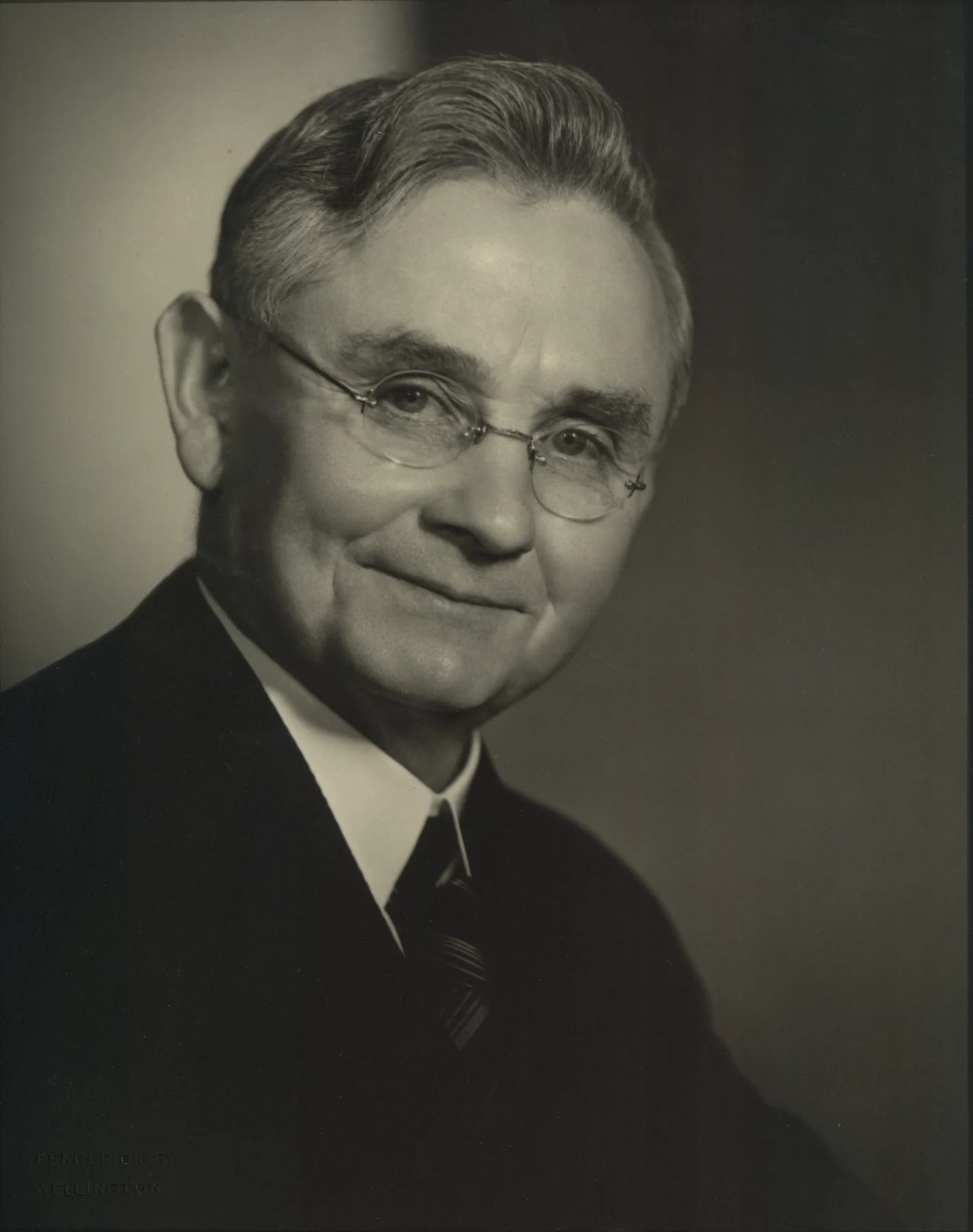
In this biography
Quick facts
- Born
- 1831
- Died
- 1903
- Birthplace
- Maltby Hall, Yorkshire, England
- Country
- New Zealand
- Nationality
- Not independently established
- Known for
- William Rolleston helped build Canterbury’s educational institutions and shaped land policy, while his national public career also involved the coercive government action at Parihaka.
- Field
- Provincial leader and education institution builder
Why this life matters
William Rolleston helped build Canterbury’s educational institutions and shaped land policy, while his national public career also involved the coercive government action at Parihaka.
Timeline
Key moments
Canterbury
Arrived after a Cambridge education.
Superintendent
Began provincial leadership.
College ordinance
Participated in the governing structure of the new college.
Classical education and a colonial career
William Rolleston was born at Maltby Hall in Yorkshire in 1831. Education at Rossall and Cambridge gave him a classical training before he arrived in Canterbury in 1858. He first worked in a rural setting, but educational and administrative responsibilities soon drew him toward public office. Service on the 1863 education commission led into provincial government, while work in the Native Department from 1865 connected him with national administration. These moves placed him between different kinds of institution: farms, schools, provincial councils and the colonial government. His later career reflects that range rather than a single lifelong post, with education and access to land emerging as recurring concerns.
Sources for this section: [1]
Building a college required a coalition
As Canterbury’s superintendent from 1868 to 1876, Rolleston helped develop a network of educational institutions. The 1873 Canterbury College Ordinance named him among a board whose authority covered property, staff and courses. A companion measure enabled museum and library property to pass to the college while preserving the purposes of the trusts. The work involved other organisers, including William Montgomery; the university’s history records their joint efforts to secure buildings and funding in 1874. This was institution building through laws, boards, resources and negotiated sites. It should not be compressed into the suggestion that Rolleston personally designed a curriculum, taught all classes or created an operating college simply by signing a founding document.
National office exposes the limits of reform
Rolleston entered national ministerial office in 1879, with land, immigration and education among his responsibilities. His support for leasehold opportunities formed part of a debate about how settlers could obtain land without immediate freehold purchase. That reforming outlook did not prevent his involvement in the administration that moved against the Māori community at Parihaka in 1881. The biography records a public career marked by paternalism and coercion as well as educational ambition. He died in 1903. Reading the constructive and destructive consequences together gives a more useful account than either a purely celebratory founding story or a list of offices. His collaborations left durable institutions, but their authority operated within the unequal colonial system of which he was a participant.
Quick answers
Frequently asked questions about William Rolleston
- What is William Rolleston known for?
- William Rolleston helped build Canterbury’s educational institutions and shaped land policy, while his national public career also involved the coercive government action at Parihaka.
Keep exploring
Lives connected to this story
- John McKenzie
Compare another minister’s work on land institutions and the distinction between a legal power and its practical administration.
- William Pember Reeves
Explore the later Canterbury politician whose national reform work operated through different institutions.
- William Larnach
Explore William Larnach’s work: combining banking and political office with the commission of the Otago Peninsula house known as Larnach Castle.
Sources and further reading
Explore the evidence
These references support the biography and offer further reading. Official records, first-person accounts and independent reporting provide different perspectives; image records document attribution and licensing.
- 1. Dictionary of New Zealand Biography / Te AraRolleston, William
- 2. Canterbury Provincial Council / Christchurch City LibrariesCanterbury College and Museum ordinances 1873
The College Ordinance and companion Museum Amendment were both inspected. Their different provisions are not collapsed into one unrestricted founding power.
- 3. University of Canterbury institutional historyA History of the University of Canterbury 1873–1973
- 4. Canterbury College / institutional historical publicationA Short History of Canterbury College